Older homes in the Lake of the Ozarks area rarely have the ductwork, electrical capacity, or insulation that a 2026 HVAC system was engineered for, so the "best" system depends more on your house's bones than on brand loyalty.
- Best overall for older homes with no ductwork: ductless mini-split systems.
- Best for whole-house heating and cooling in Missouri winters: cold-climate heat pump.
- Best for homes keeping existing ducts: high-efficiency furnace paired with a matched AC.
- Best for uneven temperatures floor to floor: zoned system with smart thermostats.
- Best add-on for damp basements and crawlspaces: whole-home dehumidifier.
Why this matters
A lot of homes around Camdenton, Osage Beach, and Lake Ozark were built before central air was standard, which means undersized ducts, knob-and-tube wiring remnants, or crawlspaces that were never sealed. Installing the wrong system in 2026 means fighting that house instead of working with it.
The right call changes based on three things: whether ductwork already exists, whether your electrical panel can handle a heat pump's amp draw, and how much humidity your basement or crawlspace deals with each summer. Get those three answers first, then pick from the list below.
What makes the best HVAC system for an older home
- Ductwork compatibility — does the system need existing ducts, new ducts, or none at all
- Electrical panel capacity — some heat pumps and mini-splits need a panel upgrade in homes wired decades ago
- Zoning ability — older two- and three-story homes heat and cool unevenly without it
- Humidity control — Missouri summers push moisture into old basements and crawlspaces regardless of AC size
- Installation disruption — how much wall, floor, or ceiling work the install requires in a finished older home
- Cold-weather performance — whether the system holds up without backup heat during Missouri's coldest stretches
HVAC systems for older homes at a glance
| System | Best for | Standout feature | Key limitation |
|---|---|---|---|
| Ductless mini-split | Homes without existing ductwork | Room-by-room control, no ducts required | Needs multiple indoor heads for whole-house coverage |
| Cold-climate heat pump | Full-home heating and cooling from one system | Handles Missouri winters without a backup furnace in most cases | Older electrical panels sometimes need an upgrade first |
| High-efficiency furnace + AC pairing | Homes keeping their current duct system | Uses ducts already in place | Leaky or undersized old ducts cap the efficiency gain |
| Zoned system with smart thermostats | Multi-story homes with uneven temperatures | Independent temperature control per zone | Requires dampers and some ductwork rework |
| Whole-home dehumidifier add-on | Damp basements and crawlspaces | Pairs with an existing system for year-round moisture control | Doesn't heat or cool on its own |
1. Ductless mini-split systems: best for homes with no ductwork
Many farmhouses and cottages built before the 1960s around Warsaw and Lebanon never had central ductwork installed, and cutting new duct chases into plaster or log construction is expensive and invasive. A ductless mini-split system runs refrigerant lines through a small hole instead, connecting an outdoor compressor to one or more wall-mounted indoor units.
Ductless mini-split pros:
- No ductwork required, so installation avoids tearing into walls or ceilings
- Each indoor head controls its own zone independently
- Works for additions, converted attics, or detached spaces the main system doesn't reach
Ductless mini-split cons:
- Whole-house coverage means multiple indoor units, which adds visible hardware to every room
- Not ideal if you want a single thermostat controlling the entire home
Best for: homes with no existing ducts, room additions, or converted spaces. Verdict: install if ductwork isn't already in place — retrofitting ducts into an old structure usually costs more than a mini-split.
2. Cold-climate heat pump: best for full-home heating and cooling
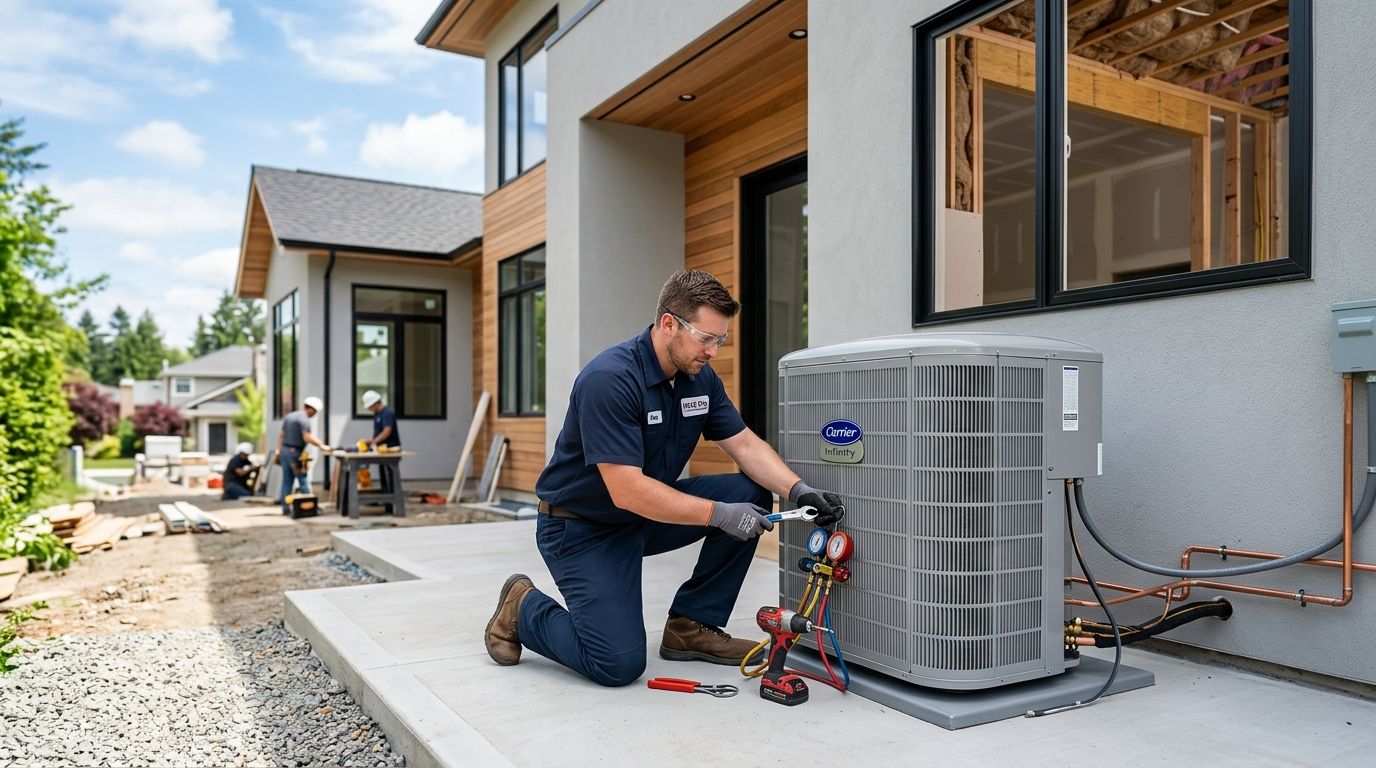
Heat pump technology built for cold climates has closed the gap with gas furnaces significantly since 2020, and by 2026 a properly sized unit handles Missouri's winter lows without relying on backup heat strips as often as older models did. A cold-climate heat pump moves heat instead of generating it, working as both your heating and cooling system in one unit.
Cold-climate heat pump pros:
- One system replaces both the furnace and the AC
- Handles Missouri winter temperatures without constant backup heat
- Lower operating cost than electric resistance heat
Cold-climate heat pump cons:
- Homes with older, lower-amperage electrical panels may need an upgrade before installation
- Performance drops during the coldest snaps of the year without supplemental heat
Best for: homeowners who want one system handling both seasons and are willing to check panel capacity first. Verdict: install after an electrician confirms your panel can support it — otherwise budget for that upgrade alongside the unit.
3. High-efficiency furnace + AC pairing: best for homes keeping existing ducts
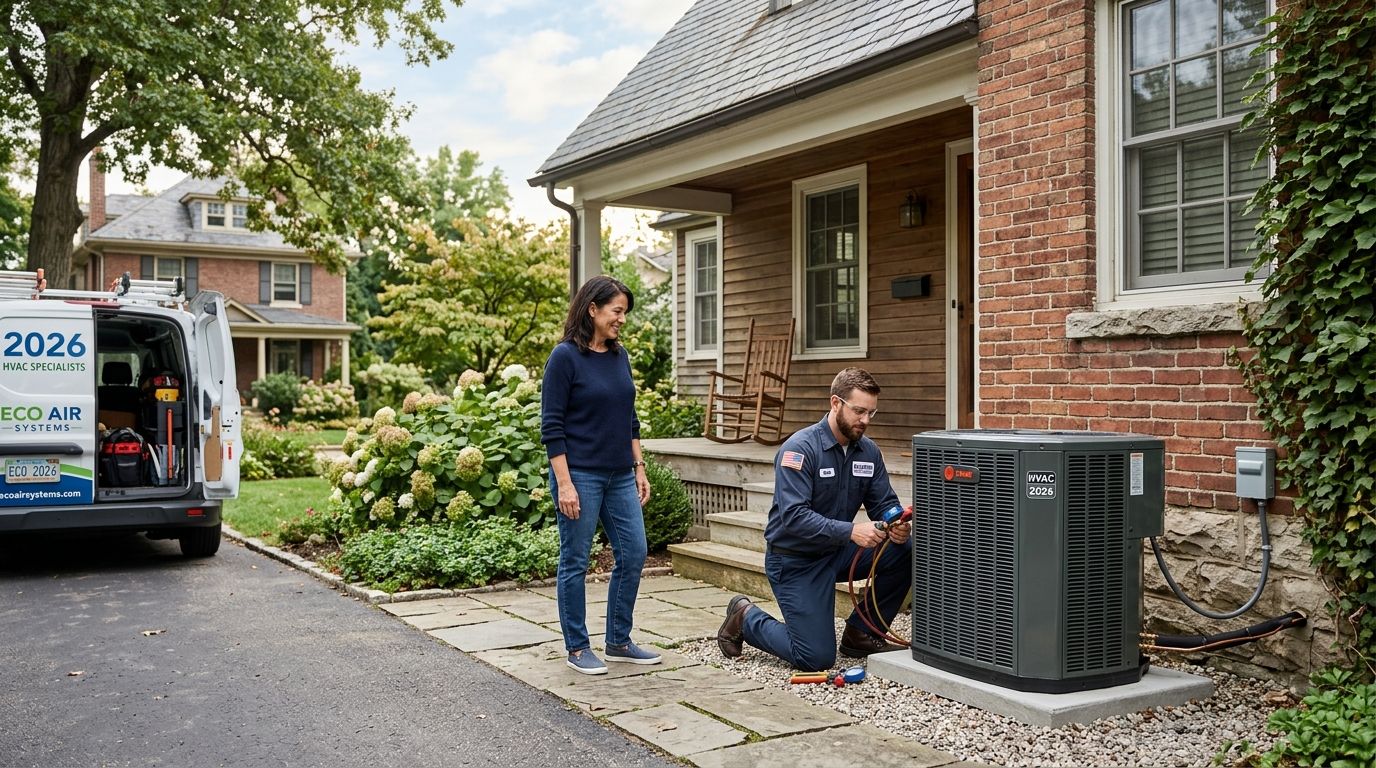
If your older home already has functioning ductwork, ripping it out to switch systems rarely makes sense. A matched furnace and AC pairing uses what's already there, and any HVAC technician in the region can service or repair it without specialized training.
Furnace + AC pairing pros:
- Works with ductwork already installed in the house
- Widely serviced, so repair techs and parts are easy to find
- Familiar system for most homeowners, no new controls to learn
Furnace + AC pairing cons:
- Efficiency gains are limited if the existing ducts are leaky, undersized, or poorly insulated
- Two separate systems (furnace and AC) instead of one combined unit
Best for: homes with sound, sized-right ductwork already in place. Verdict: install once ducts are inspected and sealed — otherwise you're paying for efficiency the ducts can't deliver.
4. Zoned system with smart thermostats: best for uneven temperatures floor to floor
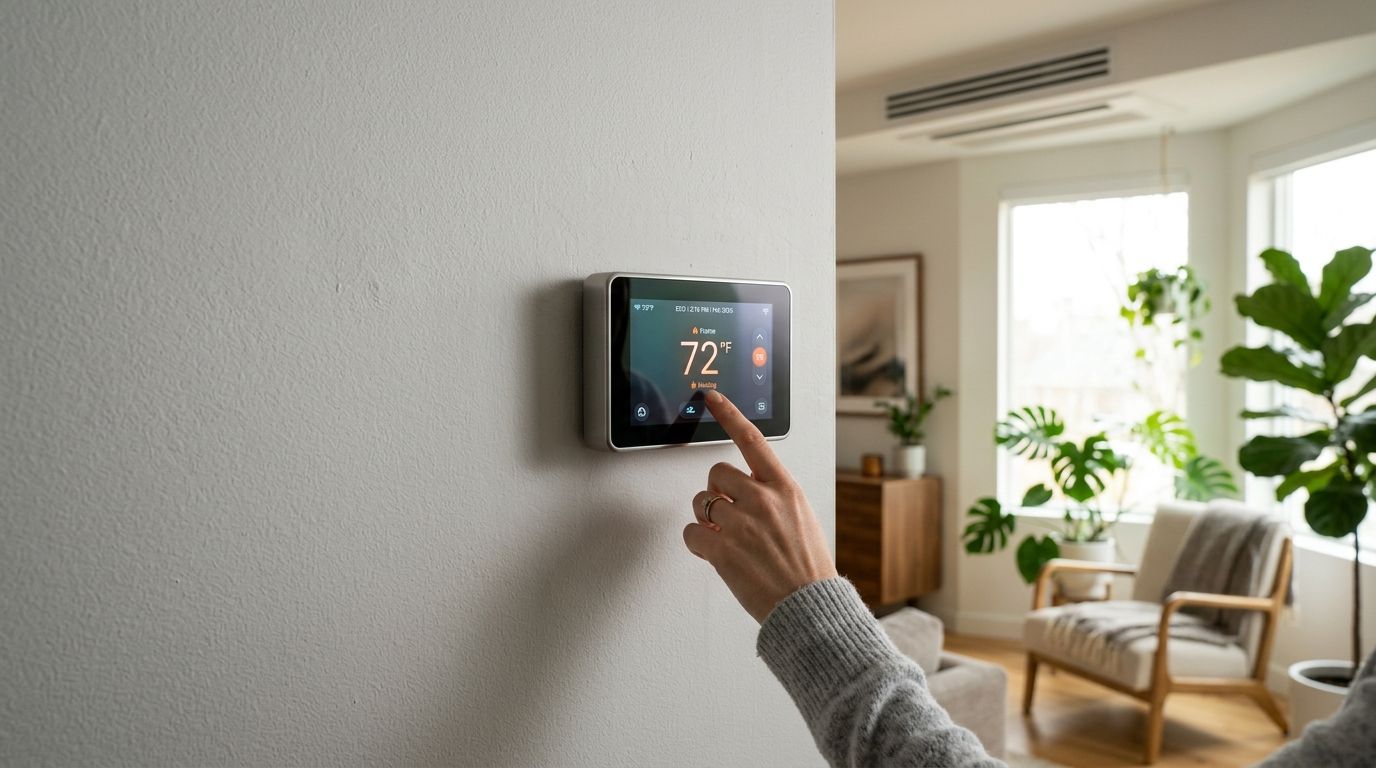
Older two- and three-story homes are notorious for a hot upstairs and a cold basement, because a single thermostat on the main floor can't account for stack effect and uneven insulation. Adding zoning dampers with smart thermostats for HVAC systems lets each floor run its own schedule and setpoint.
Zoned system pros:
- Fixes the classic old-house problem of one floor too hot, another too cold
- Smart thermostats add scheduling and remote control on top of zoning
- Works alongside a furnace, AC, or heat pump you already have
Zoned system cons:
- Adding dampers to existing ductwork means some rework, not a plug-and-play install
- More components mean more parts that can eventually need service
Best for: multi-story homes where one thermostat isn't cutting it. Verdict: install if temperature complaints are floor-specific rather than house-wide — pair it with whichever heating and cooling system already suits your ductwork.
5. Whole-home dehumidifier add-on: best for damp basements and crawlspaces
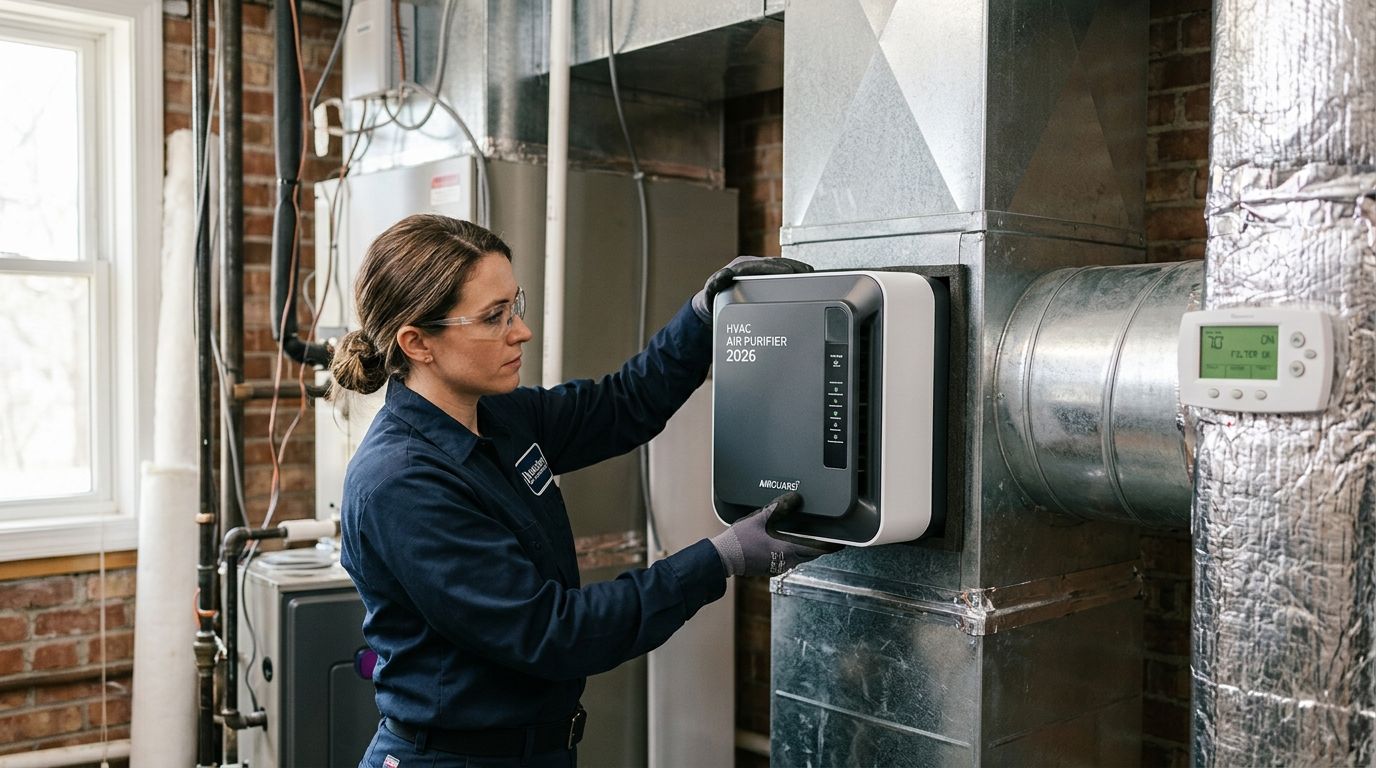
Older homes around the lake often have stone or block foundations that were never sealed against moisture, and Missouri summer humidity finds its way in regardless of how well your AC is sized. A whole-home dehumidifier ties into your existing ductwork and pulls moisture out year-round, not just when the AC happens to run.
Whole-home dehumidifier pros:
- Controls humidity independently of whether the AC is actively cooling
- Reduces musty odor, mold risk, and condensation in basements and crawlspaces
- Ties into ductwork you already have, no separate zone needed
Whole-home dehumidifier cons:
- Doesn't heat or cool the house on its own, it's a supplement
- Needs an existing forced-air system to connect to
Best for: homes with a damp basement, musty crawlspace, or summer condensation problems. Verdict: consider it as an add-on to whichever system you choose above, not a standalone fix.
Not sure which system fits your house
Get a free quote for your specific home before you decide.
How this list was ranked
Each system is ranked against the six criteria above — ductwork compatibility, electrical capacity, zoning ability, humidity control, installation disruption, and cold-weather performance. Every entry owns a distinct use case, so this reads as a decision tree based on your house's condition in 2026, not a single "winner takes all" leaderboard.
If your house has no ductwork and you're weighing a full duct retrofit, a mini-split almost always costs less disruption than cutting chases through plaster and joists.
Which HVAC system should you choose?
Start with what your house already has. No ductwork means a ductless mini-split system is the practical starting point in 2026. Existing, sound ductwork points toward a high-efficiency furnace and AC pairing or a cold-climate heat pump, depending on your electrical panel. Uneven temperatures between floors call for zoning on top of whichever core system you pick, and a damp basement or crawlspace calls for a dehumidifier add-on regardless of which heating and cooling system you land on.
FAQ
What's the best HVAC system for an older home in 2026?
For homes with no existing ductwork, a ductless mini-split system is the best fit in 2026 because it avoids cutting new duct chases into old walls or ceilings. Homes with sound existing ducts do better with a cold-climate heat pump or a matched furnace and AC pairing.
Do ductless mini-splits work well in homes without ductwork?
Yes, ductless mini-split systems are built specifically for homes without ductwork, running refrigerant lines through a small wall opening instead of full duct chases. They're one of the more common retrofit choices for pre-1960s homes around the Lake of the Ozarks.
Can a heat pump handle cold winters in Missouri?
A properly sized cold-climate heat pump handles most Missouri winter temperatures without relying heavily on backup heat. Homes with older electrical panels should have an electrician confirm panel capacity before installation.
Is it worth replacing old ductwork instead of switching to ductless?
It depends on how extensive the retrofit is: cutting new duct chases through plaster, log, or masonry construction usually costs more and disrupts more of the house than installing a ductless mini-split system. If ducts already exist and just need sealing, repairing them is often the cheaper option.
How do I know if my old home needs a dehumidifier?
Musty odor, visible condensation, or mold spots in a basement or crawlspace are the clearest signs. A whole-home dehumidifier ties into your existing ductwork and controls moisture year-round, independent of when the AC runs.
What's the difference between a zoned system and separate mini-splits?
A zoned system uses dampers inside one central duct system to control temperature by floor or area, while separate mini-splits are independent units with their own indoor heads. Zoning works when ductwork already exists and just needs uneven distribution fixed.
Should I upgrade my thermostat before replacing the whole system?
A smart thermostat alone won't fix ductwork or zoning problems, but it's a reasonable first step if your only complaint is scheduling or remote control. Pair it with zoning if the real problem is one floor running hotter or colder than another.
How much does a new furnace cost in Missouri in 2026?
Furnace pricing varies by home size, efficiency rating, and installation complexity, so get a home-specific quote rather than relying on a general number. A local HVAC contractor can walk through your ductwork and electrical setup before quoting.
One last thing
The system that looks most efficient on paper isn't the best HVAC system for your older home if your ductwork or electrical panel can't support it — check those two things before comparing brands or efficiency ratings in 2026.