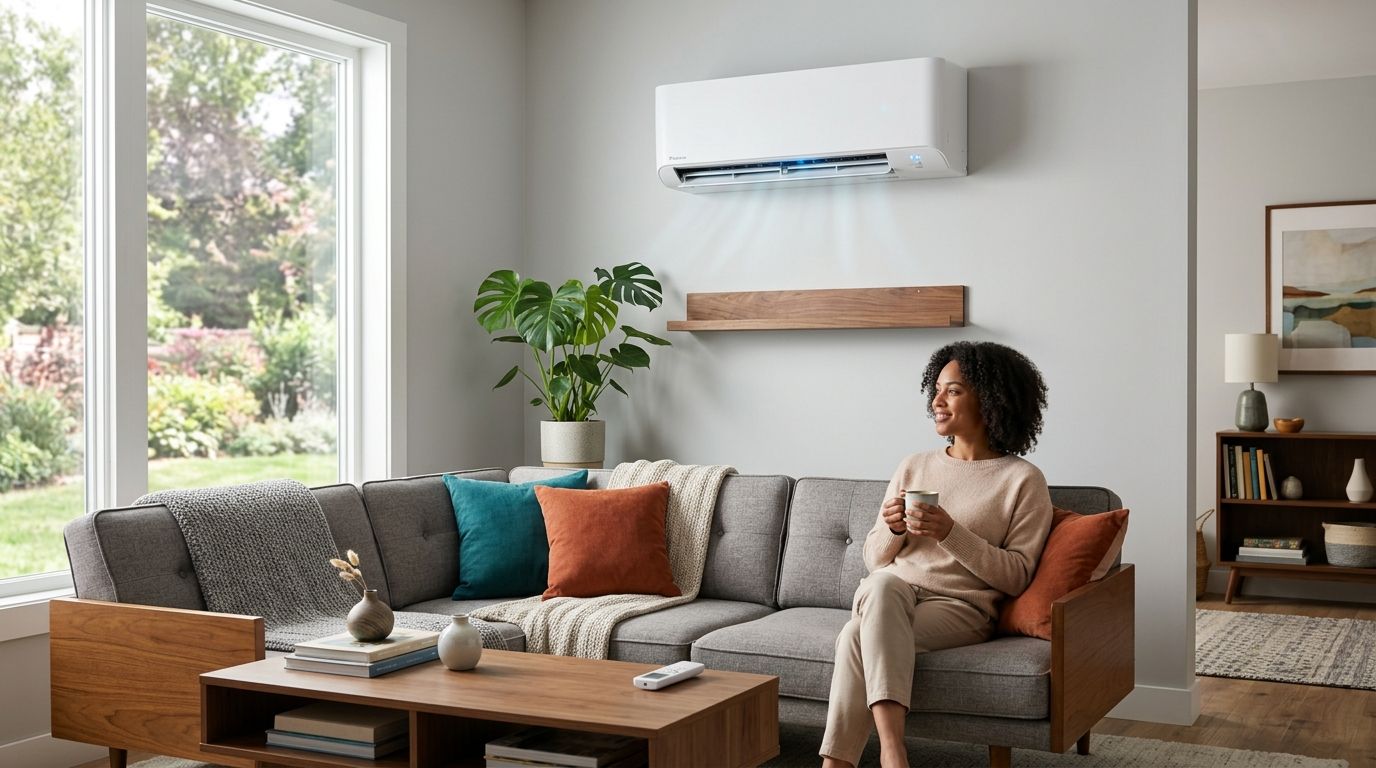
Ductless mini split systems let Lake of the Ozarks homeowners heat and cool a room, an addition, or an entire house without tearing into ductwork, and the brand you pick determines whether that system delivers a decade of quiet comfort or a string of repair calls.
- Mitsubishi Electric is the best overall pick among the best ductless mini split systems in 2026 for cold-climate heating down to -13°F.
- Daikin wins for whole-home multi-zone installs with up to 8 indoor units on one outdoor condenser.
- Fujitsu General is the quietest option for bedrooms and home offices.
- LG leads on smart home integration through its ThinQ app.
- Pioneer is the budget pick for homeowners comfortable with pre-charged line sets.
Why this matters
Missouri winters at the Lake of the Ozarks swing from mild afternoons to nights well below freezing, and a mini split that can't keep pulling heat at low outdoor temperatures leaves you running a backup system more than the brochure suggested. The same logic applies in reverse each summer, when a poorly matched system short-cycles and never really dries the air.
A lot of homeowners shopping ductless systems are also comparing them against the best heat pumps for cold climates, since a mini split is technically a heat pump with its own indoor and outdoor unit instead of a single central cabinet. That distinction matters for anyone deciding between a full duct-based heat pump and a zoned ductless setup for a bonus room, garage conversion, or whole-house retrofit.
What makes the best ductless mini split systems
- Cold-climate heating performance below 5°F outdoor temperature
- Zoning flexibility — single-zone for one room versus multi-zone for a whole floor
- Noise level of both the indoor head and outdoor condenser
- SEER2 efficiency rating and what that means for the electric bill
- Smart control — app scheduling, voice assistant support, remote diagnostics
- Warranty coverage and how easy replacement parts are to source locally
Best ductless mini split systems at a glance
| System | Best For | Standout Feature | Key Limitation |
|---|---|---|---|
| Mitsubishi Electric | Cold-climate whole-house comfort | Hyper-Heat compressor rated to -13°F | Requires specialty-trained installers |
| Daikin | Whole-home multi-zone installs | Up to 8 indoor units on one condenser | Zoning app varies by product line |
| Fujitsu General | Quiet bedrooms and offices | Indoor units built for library-quiet operation | Fewer high-capacity outdoor options |
| LG | Smart home integration | ThinQ app plus voice-assistant compatibility | Mixed app reliability in user reviews |
| Carrier | Light commercial spaces | Larger-capacity condensers for shops and offices | Less common in single-zone residential builds |
| Pioneer | Budget-conscious homeowners | DIY-friendly, pre-charged line sets | Shorter warranty terms than premium brands |
1. Mitsubishi Electric: best ductless mini split system for cold-climate heating
Mitsubishi Electric's Hyper-Heat line is built around a variable-speed compressor engineered to keep producing heat when outdoor air drops well below freezing, down to -13°F on select models. That makes it the system contractors reach for first when a Missouri homeowner wants a mini split to carry real heating load through January, not just take the edge off.
Mitsubishi Electric pros:
- Heating output holds up at outdoor temperatures most competitors can't match
- Wide range of indoor unit styles: wall-mount, ceiling cassette, floor console
- Long track record in the ductless category since the technology entered the U.S. market
Mitsubishi Electric cons:
- Installation and warranty registration require Mitsubishi-trained technicians
- Premium positioning means fewer entry-level configurations
Best for: homeowners who want a mini split as a primary heat source through a real Missouri winter. Verdict: Buy.
2. Daikin: best ductless mini split system for whole-home multi-zone installs
Daikin's multi-zone systems connect as many as 8 indoor units to a single outdoor condenser, which is the configuration that makes sense for a house that needs zoned comfort in four or five rooms without four or five separate outdoor units cluttering the exterior wall.
Daikin pros:
- Handles large multi-zone layouts efficiently from one condenser
- Broad indoor unit lineup covering wall, ceiling, and floor mounts
- Strong efficiency ratings on higher-tier product lines
Daikin cons:
- Control interface and app experience differ across product series
- Adding zones later can require condenser capacity planning up front
Best for: whole-home retrofits where several rooms need independent zoning. Verdict: Buy.
3. Fujitsu General: best ductless mini split system for quiet operation
Fujitsu General built its reputation on indoor units engineered to run at very low sound levels, which matters most in bedrooms, nurseries, and home offices where a humming unit on the wall becomes the thing you notice at 2 a.m.
Fujitsu General pros:
- Indoor units run notably quieter than many competing brands
- Compact wall-mount design fits tight interior spaces
- Reliable cooling and heating performance in moderate climates
Fujitsu General cons:
- Fewer high-capacity outdoor condenser options for larger multi-zone jobs
- Smart control features lag behind LG and Mitsubishi
Best for: bedrooms, offices, and any room where noise is the deciding factor. Verdict: Buy.
4. LG: best ductless mini split system for smart home integration
LG leans on its ThinQ app and voice-assistant compatibility to give homeowners remote scheduling and zone-by-zone control from a phone, which appeals to anyone already running a smart thermostat or smart-home hub elsewhere in the house.
LG pros:
- ThinQ app covers scheduling, remote start, and diagnostics
- Voice assistant compatibility for hands-free adjustments
- Competitive efficiency ratings across the residential lineup
LG cons:
- App reliability complaints show up in user reviews more than with some rivals
- Local installer familiarity varies more by region than with Mitsubishi or Daikin
Best for: homeowners who want app-based control layered into an existing smart home setup. Verdict: Hold — solid choice if the smart features matter to you, otherwise Mitsubishi or Daikin cover the core comfort job just as well.
5. Carrier: best ductless mini split system for light commercial spaces
Carrier's ductless lineup includes larger-capacity outdoor condensers built for offices, retail spaces, and small commercial buildings where a single-zone residential unit would be undersized.
Carrier pros:
- Larger capacity options suited to commercial square footage
- Backed by Carrier's long-standing HVAC parts and service network
- Reasonable efficiency ratings for the commercial-capacity tier
Carrier cons:
- Residential single-zone lineup is thinner than Mitsubishi's or Daikin's
- Less common in typical single-family installs, so parts lead times can run longer locally
Best for: small offices, shops, and light commercial buildings needing zoned comfort. Verdict: Buy for commercial applications; Skip for a standard single-room residential install.
6. Pioneer: best budget ductless mini split system
Pioneer sells pre-charged line sets designed for straightforward installation, which keeps the system accessible for homeowners comparing options against a furnace cost guide before committing to any single heating solution.
Pioneer pros:
- Pre-charged line sets simplify the installation process
- Lower cost of entry than premium brands
- Adequate performance for moderate climate zones
Pioneer cons:
- Warranty terms run shorter than Mitsubishi, Daikin, or Fujitsu General
- Cold-climate heating performance falls short of Hyper-Heat class systems
Best for: homeowners prioritizing upfront cost over premium cold-weather performance. Verdict: Hold — fine for a garage or three-season room, not the pick for a primary heat source through a Missouri winter.
How we ranked these systems
Each brand was weighed against the six criteria above: cold-climate heating capacity, zoning flexibility, noise level, SEER2 efficiency, smart control, and warranty coverage. No brand wins on every criterion, which is why the list assigns each one a distinct use case instead of stacking them on a single leaderboard.
Get a mini split quote for your home
Serving Camdenton, Osage Beach, Lake Ozark, Warsaw, and Lebanon.
Which ductless mini split system should you choose in 2026?
For most Lake of the Ozarks homes, Mitsubishi Electric is the default pick in 2026 because the Hyper-Heat compressor keeps producing heat well below freezing, which is the exact condition a Missouri winter delivers most years. Homeowners zoning four or more rooms from one condenser should look at Daikin instead, and anyone prioritizing a silent bedroom install should go with Fujitsu General. If a smart home ecosystem already runs the rest of the house, LG earns its spot; small offices and shops fit better with Carrier; and a tight budget with modest climate demands points toward Pioneer.
Anyone weighing a mini split against a central system replacement should also check the best air conditioner brands for Missouri homes and the best furnace brands before deciding, since a hybrid setup — ductless in an addition, central system in the main house — is common across the region.
FAQ
What is the best ductless mini split system overall in 2026?
Mitsubishi Electric is the best overall ductless mini split system in 2026 because its Hyper-Heat compressor keeps producing heat down to -13°F outdoor air. That makes it the strongest pick for Missouri winters, where a system needs real heating capacity, not just mild-weather cooling.
Is Daikin or Mitsubishi better for a whole-home install?
Daikin is better for whole-home multi-zone installs since it supports up to 8 indoor units on one outdoor condenser. Mitsubishi still wins on raw cold-climate heating performance, so the right answer depends on how many zones you need versus how cold your winters run.
How much does a ductless mini split system cost?
Cost varies by zone count, brand, and installation complexity, so there's no single figure that applies to every home. A licensed installer can quote an exact number after evaluating square footage and the number of indoor units needed.
Do ductless mini splits work well in cold Missouri winters?
Cold-climate rated systems like Mitsubishi's Hyper-Heat line are engineered to keep heating below freezing, down to -13°F on select models. Standard mini splits without cold-climate technology lose efficiency faster as temperatures drop.
Which mini split brand is the quietest?
Fujitsu General is generally the quietest ductless mini split brand, with indoor units built specifically for low-noise operation in bedrooms and offices. Noise levels vary by model, so check the specific indoor unit's rating before buying.
Can one outdoor unit run multiple rooms?
Yes — multi-zone systems from brands like Daikin and Mitsubishi Electric connect up to 8 indoor units to a single outdoor condenser. Each indoor unit can be set to a different temperature independently.
Is a ductless mini split better than central air?
Neither is universally better — mini splits win for additions, garage conversions, and zoned comfort without ductwork, while central systems make more sense for whole-house builds already fitted with ducts. Many homes in 2026 run both systems side by side.
One last thing
Cold-climate mini splits like Mitsubishi's Hyper-Heat line still pull usable heat from air as cold as -13°F by design, which surprises a lot of homeowners who assume any heat pump gives up once the mercury drops. That's the single spec worth checking before writing off a ductless system as a primary heat source for a Missouri winter in 2026.