Picking a smart thermostat is easy. Picking one that actually talks to your furnace, heat pump, or multi-stage AC without tripping a fault code is the part homeowners in the Lake of the Ozarks region get wrong every winter.
- Ecobee Smart Thermostat Premium is the best smart thermostat for hvac overall in 2026, especially for homes with multiple zones.
- Google Nest Learning Thermostat wins for simple single-stage systems and homeowners who want auto-scheduling with zero setup.
- Honeywell Home T9 is the pick for large homes that need multi-room sensors and geofencing.
- Emerson Sensi Touch 2 is the budget and DIY-install option, though it lacks room sensors.
- Heat pump and multi-stage furnace setups need a compatibility check before purchase — a wrong C-wire match causes short-cycling.
Best overall: Ecobee Smart Thermostat Premium. Best for simple systems: Google Nest Learning Thermostat. Best for large homes: Honeywell Home T9. Best budget option: Emerson Sensi Touch 2.
Why this matters
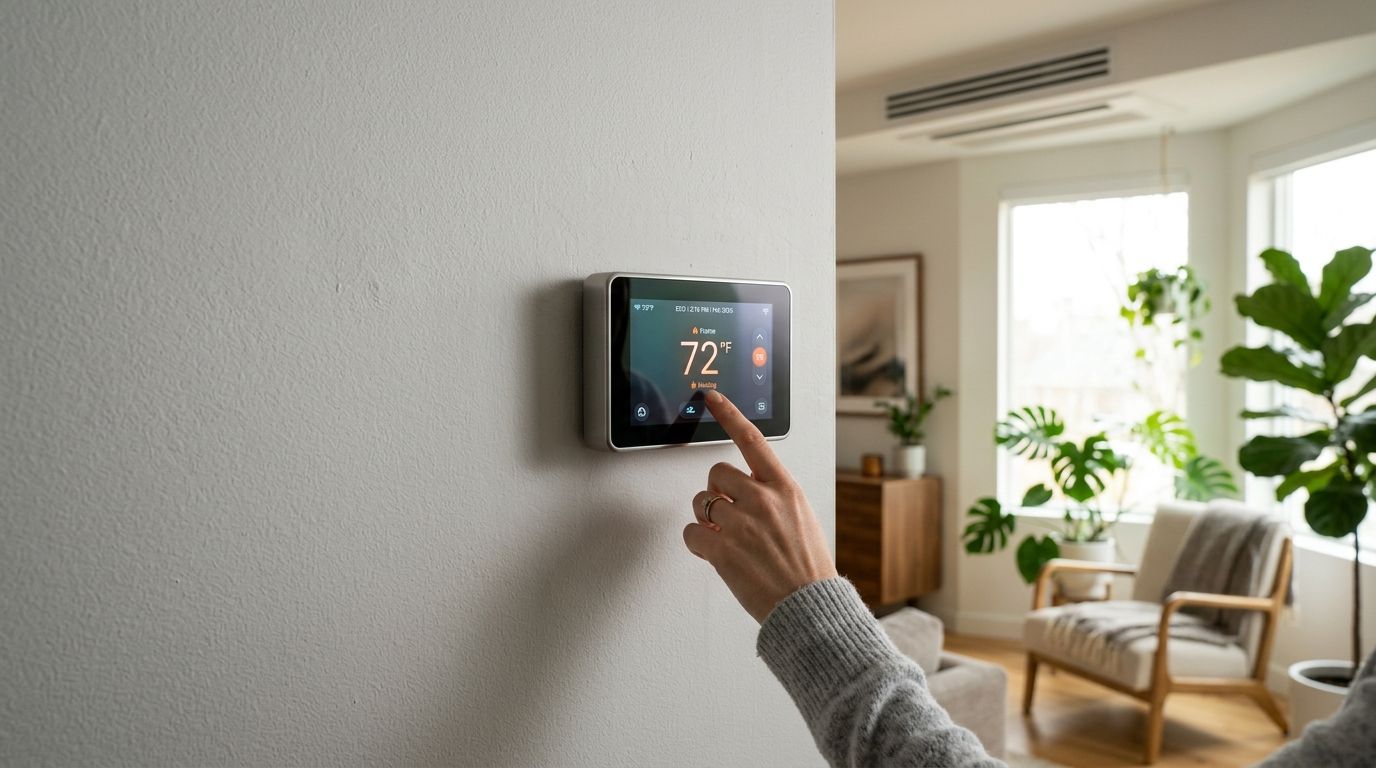
A thermostat is the control panel for your entire HVAC system, not a standalone gadget. Buy the wrong one and you can lock a heat pump into emergency heat mode all winter, or leave a two-stage furnace running on stage one when it needs stage two.
West Heating & Cooling sees this constantly on service calls across Camdenton, Osage Beach, Lake Ozark, Warsaw, and Lebanon: a homeowner installs a thermostat from a big-box store, and it works fine until the first cold snap exposes a wiring mismatch. Getting the compatibility right before you buy saves a service call later in 2026.
What makes the best smart thermostat for HVAC systems
- HVAC compatibility — single-stage, two-stage, and heat pump systems each need different wiring support.
- C-wire requirement — thermostats that need a common wire but don't ship with an adapter cause install headaches.
- Room and zone sensors — matter for homes with uneven heating or cooling between floors.
- Geofencing and scheduling — how well the thermostat adjusts itself when nobody's home.
- Local app reliability — cloud-dependent thermostats can lose scheduling control during an internet outage.
- Ease of professional install — a thermostat a licensed technician can wire correctly the first time.
Smart thermostats at a glance
| Thermostat | Best For | Standout Feature | Key Limitation |
|---|---|---|---|
| Ecobee Smart Thermostat Premium | Multi-zone homes | Included room sensors | Higher upfront setup complexity |
| Google Nest Learning Thermostat | Simple single-stage systems | Auto-schedule learning | No included room sensors |
| Honeywell Home T9 | Large homes | Multi-room sensor network | App can lag on scheduling changes |
| Emerson Sensi Touch 2 | DIY installers, budget buyers | Straightforward wiring diagram in-app | No native room sensor support |
| Amazon Smart Thermostat | Renters, secondary properties | Simple setup, basic scheduling | Limited multi-stage support |
1. Ecobee Smart Thermostat Premium: best smart thermostat for zoned homes
Ecobee's Premium model pairs the thermostat with wireless room sensors that measure temperature (and in some rooms, occupancy) so the system doesn't just chase the hallway thermostat reading. It supports single-stage, two-stage, and heat pump configurations, which covers most of the systems West Heating & Cooling installs and services around the lake.
Ecobee pros:
- Room sensors correct for hot and cold spots between floors
- Broad compatibility with two-stage furnaces and heat pumps
- Built-in air quality monitor on the Premium model
Ecobee cons:
- More sensors mean more setup steps than a single-puck thermostat
- Costs more than basic models when sensors are added
Ecobee pricing: check current pricing directly with the retailer or installer — sensor bundles change the total.
Best for: homes with multiple zones or a finished basement that runs colder than the rest of the house. Verdict: Buy.
2. Google Nest Learning Thermostat: best for simple single-stage systems
Nest's Learning Thermostat builds a schedule automatically from how you adjust the temperature over the first week or two, then keeps refining it. It's a solid match for single-stage furnace and AC setups without room-to-room temperature swings.
Nest pros:
- Learns a schedule without manual programming
- Clean app interface, minimal setup friction
- Auto-adjusts based on local weather data
Nest cons:
- No native room sensors without buying Nest's separate temperature sensor
- Less suited to complex two-stage or heat pump wiring than Ecobee
Best for: homeowners with a single-zone system who want the thermostat to do the scheduling work. Verdict: Buy for simple systems, Hold if your home has uneven zones.
3. Honeywell Home T9: best for large homes needing multi-room tracking
The T9 uses smart room sensors similar to Ecobee's approach but leans on Honeywell's longer track record with commercial and residential HVAC controls. It handles larger square footage well when paired with enough sensors to cover every wing of the house.
Honeywell T9 pros:
- Multiple room sensors supported per thermostat
- Geofencing adjusts temperature based on phone location
- Familiar Honeywell wiring terminals for technicians
Honeywell T9 cons:
- App has been reported to lag during schedule changes
- Sensor bundles add setup time for larger homes
Best for: larger homes (2,500+ square feet) with more than two distinct temperature zones. Verdict: Buy.
4. Emerson Sensi Touch 2: best budget and DIY-install option
Sensi Touch 2 skips room sensors and fancy learning algorithms in favor of a straightforward, reliable thermostat with an in-app wiring guide built for homeowners doing their own install. It still supports standard two-stage configurations.
Sensi pros:
- In-app wiring diagrams built for non-professional installers
- Lower complexity than sensor-based models
- Works with Alexa and Google Assistant
Sensi cons:
- No room sensor ecosystem
- Scheduling features are more basic than Ecobee or Nest
Best for: budget-conscious homeowners comfortable following a wiring guide. Verdict: Buy if you're installing it yourself; Hold if your system includes a heat pump with auxiliary heat strips — get that checked first.
5. Amazon Smart Thermostat: best entry-level option
This is the bare-bones pick — basic scheduling, Alexa integration, and a lower learning curve than the sensor-based models above. It's a reasonable fit for a rental property or a secondary home that doesn't need zone-by-zone control.
Amazon Smart Thermostat pros:
- Simple setup for basic single-stage systems
- Low complexity for tenants or secondary properties
Amazon Smart Thermostat cons:
- Limited support for multi-stage or heat pump systems
- No room sensor option
Best for: rental units and secondary properties with simple HVAC setups. Verdict: Skip if you have a heat pump or two-stage furnace; Buy for a basic single-stage rental.
How this list was ranked
Each thermostat was measured against the six criteria above: HVAC compatibility, C-wire handling, sensor support, scheduling intelligence, app reliability, and how straightforward the install is for a licensed technician. Ecobee and Honeywell scored highest on zone control; Nest and Sensi scored highest on simplicity; Amazon's model scored lowest on compatibility range, which is why it's ranked last.
Not sure which thermostat fits your system?
Get a compatibility check before you buy — free quote, no obligation.
Which smart thermostat should you choose?
If your home has more than one temperature zone or a finished lower level, Ecobee Smart Thermostat Premium is the safest buy for 2026. If your system is a straightforward single-stage furnace and AC, the Google Nest Learning Thermostat gets you 90% of the benefit with a fraction of the setup work. Homes running a heat pump system need extra care during setup — auxiliary heat strips and defrost cycles get confused by the wrong thermostat settings, which is where a professional wiring check pays off before the first cold week of the season.
Homes with older two-stage furnaces should also confirm compatibility against the actual furnace brands installed in the house — some older multi-stage units need an added relay that a DIY install skips.
FAQ
What is the best smart thermostat for HVAC systems in 2026?
The Ecobee Smart Thermostat Premium is the best overall pick for 2026 because it supports single-stage, two-stage, and heat pump systems with room sensors included. Google Nest Learning Thermostat is the better fit for simple single-stage homes.
Is a smart thermostat compatible with a heat pump?
Most modern smart thermostats, including Ecobee, Nest, and Honeywell Home T9, support heat pump systems, but auxiliary heat and defrost settings need to be configured correctly. A wrong setting locks the system into expensive emergency heat mode.
Do smart thermostats need a C-wire?
Many smart thermostats need a common wire (C-wire) for continuous power, and older homes around the Lake of the Ozarks often don't have one already run. Some models include a power adapter to work around this; others require adding the wire during install.
Can I install a smart thermostat myself?
Basic single-stage systems can often be handled with a DIY install, especially with models like the Emerson Sensi Touch 2 that include in-app wiring guides. Two-stage furnaces and heat pump systems carry more risk of a wiring mismatch and are safer left to a licensed technician.
Are room sensors worth it for a smart thermostat?
Room sensors are worth it for homes with more than one distinct temperature zone, such as a finished basement or a second story that runs warmer. Ecobee and Honeywell Home T9 both support multi-room sensor networks; single-zone homes don't need them.
Does a smart thermostat work with a two-stage furnace?
Ecobee, Nest, and Honeywell Home T9 all support two-stage furnace configurations, but the Amazon Smart Thermostat has more limited multi-stage support. Confirming your furnace's stage configuration before buying avoids a return or a service call.
How much does it cost to have a smart thermostat professionally installed?
Installation cost varies by home and wiring complexity, so it's best to get a direct quote rather than rely on a general estimate. A technician can also confirm whether your existing wiring supports the thermostat model you're considering.
One last thing
The detail most homeowners miss in 2026: a thermostat rated for "heat pump compatible" doesn't automatically know how many stages of auxiliary heat your system has. That setting lives in the thermostat's install menu, not the box, and getting it wrong is the single most common reason a heat pump runs on expensive backup heat all winter instead of the efficient compressor cycle.