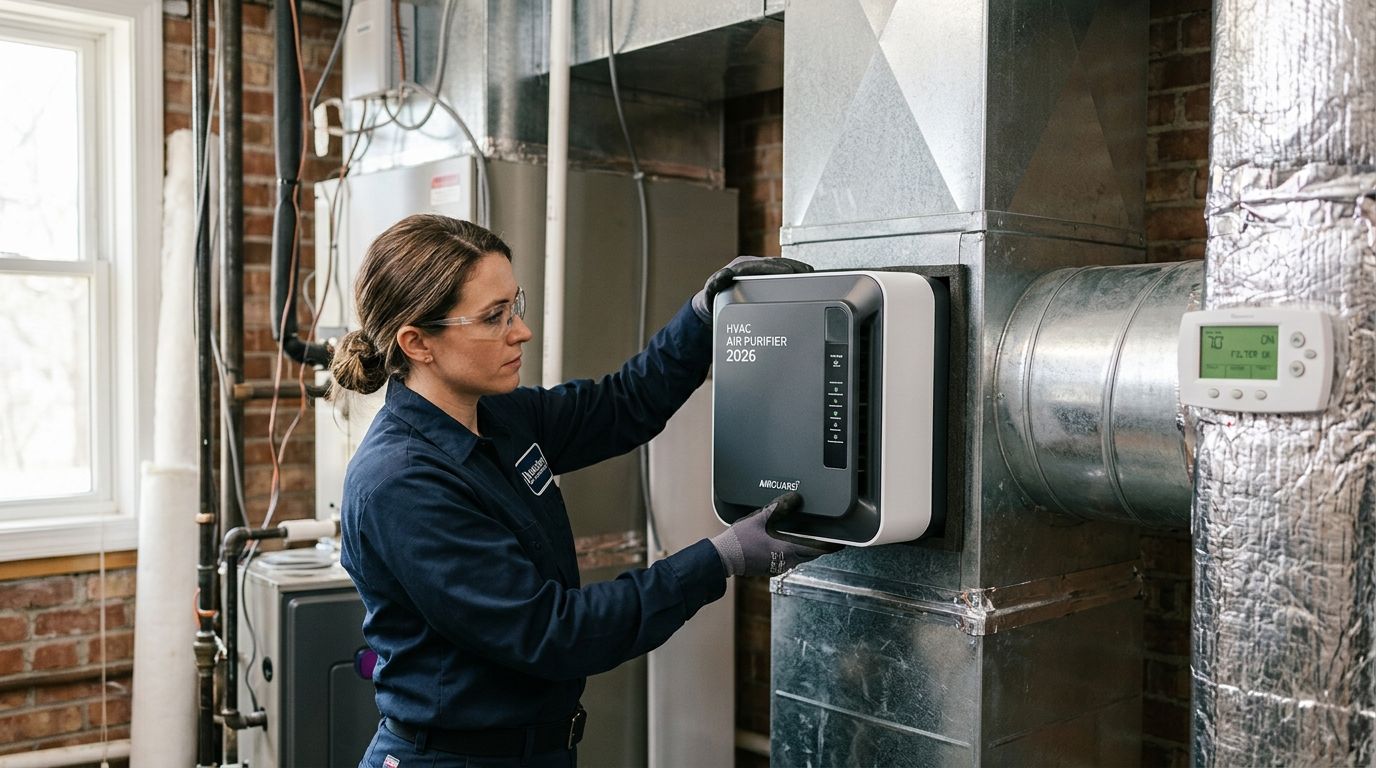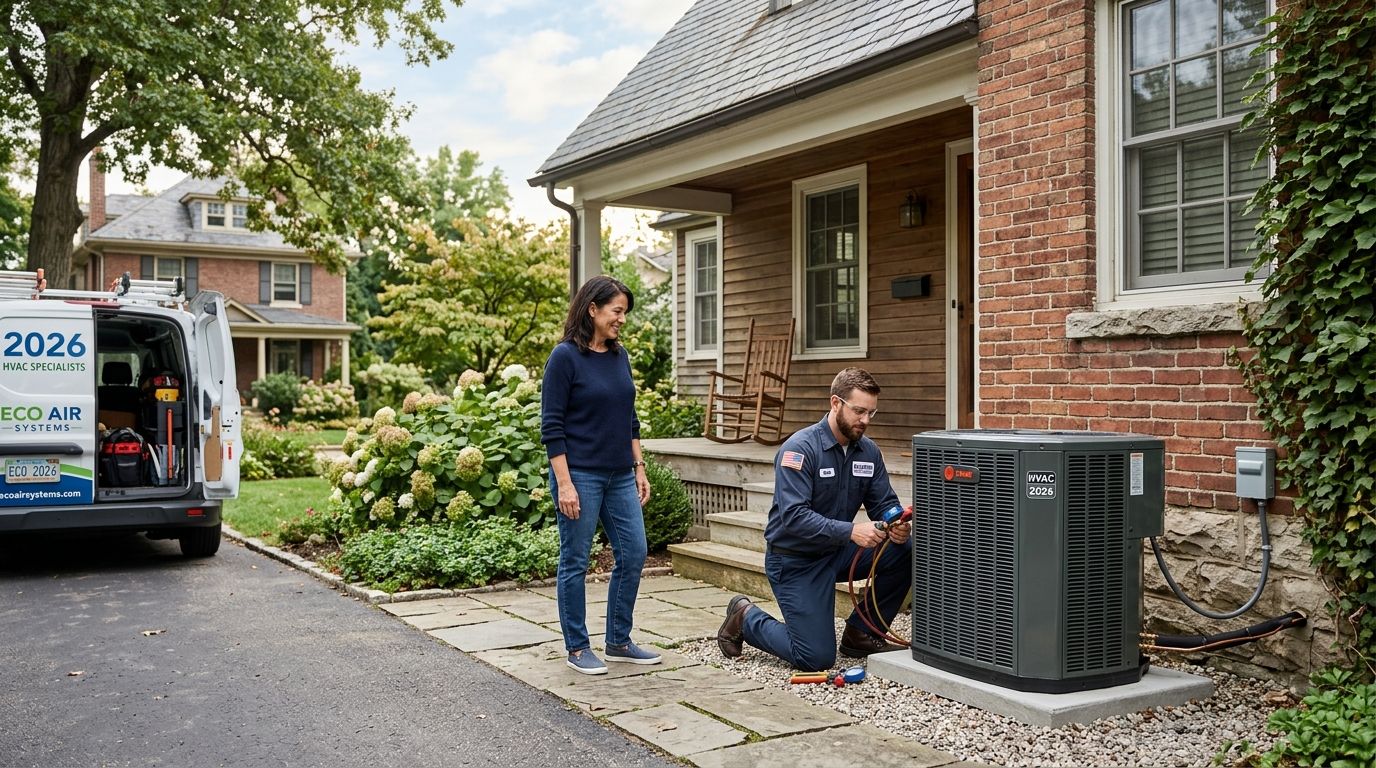
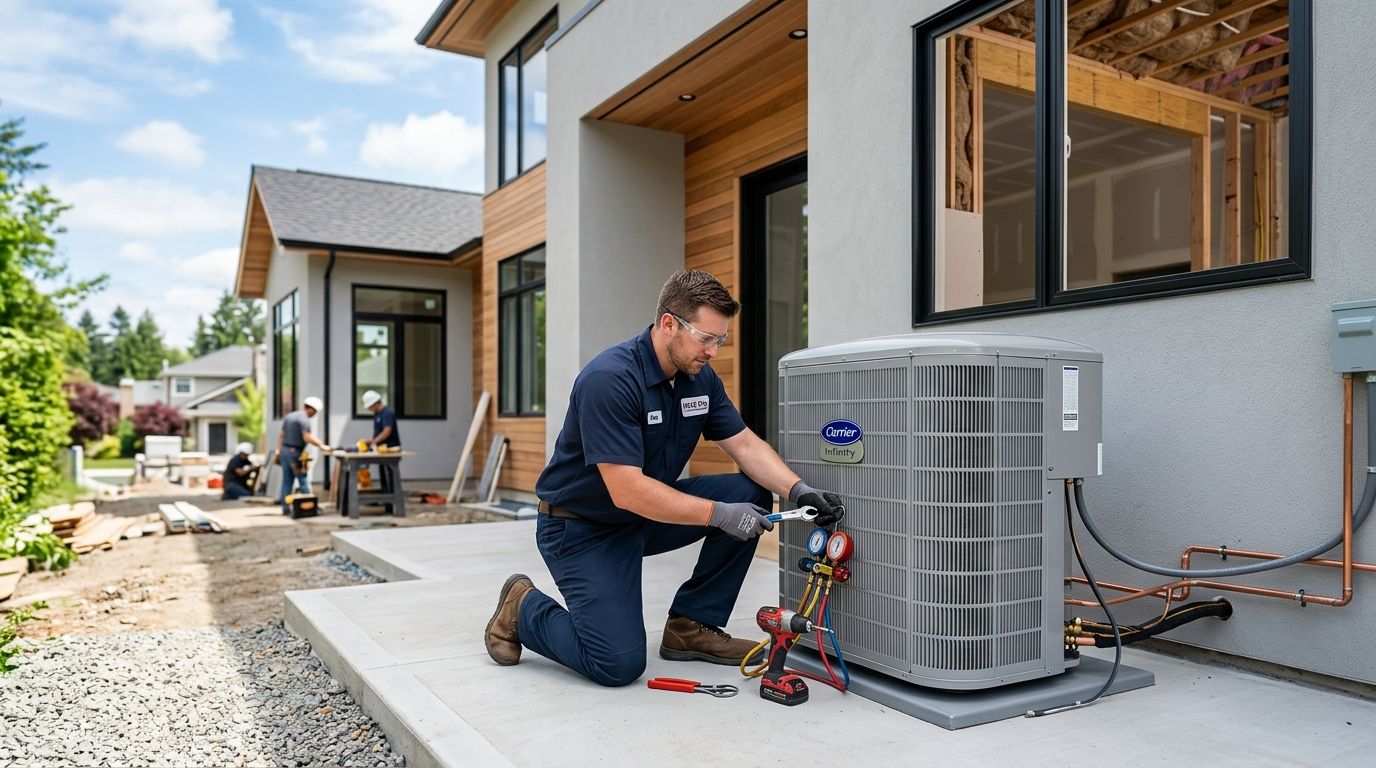
Best overall for new construction at the Lake of the Ozarks: dual-fuel (hybrid) systems. Best for cold Missouri winters: furnace and central AC split systems. Best for additions or rooms with no ductwork: ductless mini-split systems. Best for long-term energy savings: heat pump systems. Best for fine-tuned comfort control: smart thermostat-integrated systems.
- Dual-fuel systems win best overall for new construction in Camdenton, Osage Beach, and Lake Ozark because they switch between a heat pump and gas furnace automatically.
- Furnace and central AC split systems remain the safest pick when a build needs proven cold-weather heating below freezing.
- Ductless mini-split systems fit additions, garages, and bonus rooms where running new ductwork isn't practical.
- Heat pump systems alone cut long-term operating costs but need backup heat strips for the coldest Missouri nights.
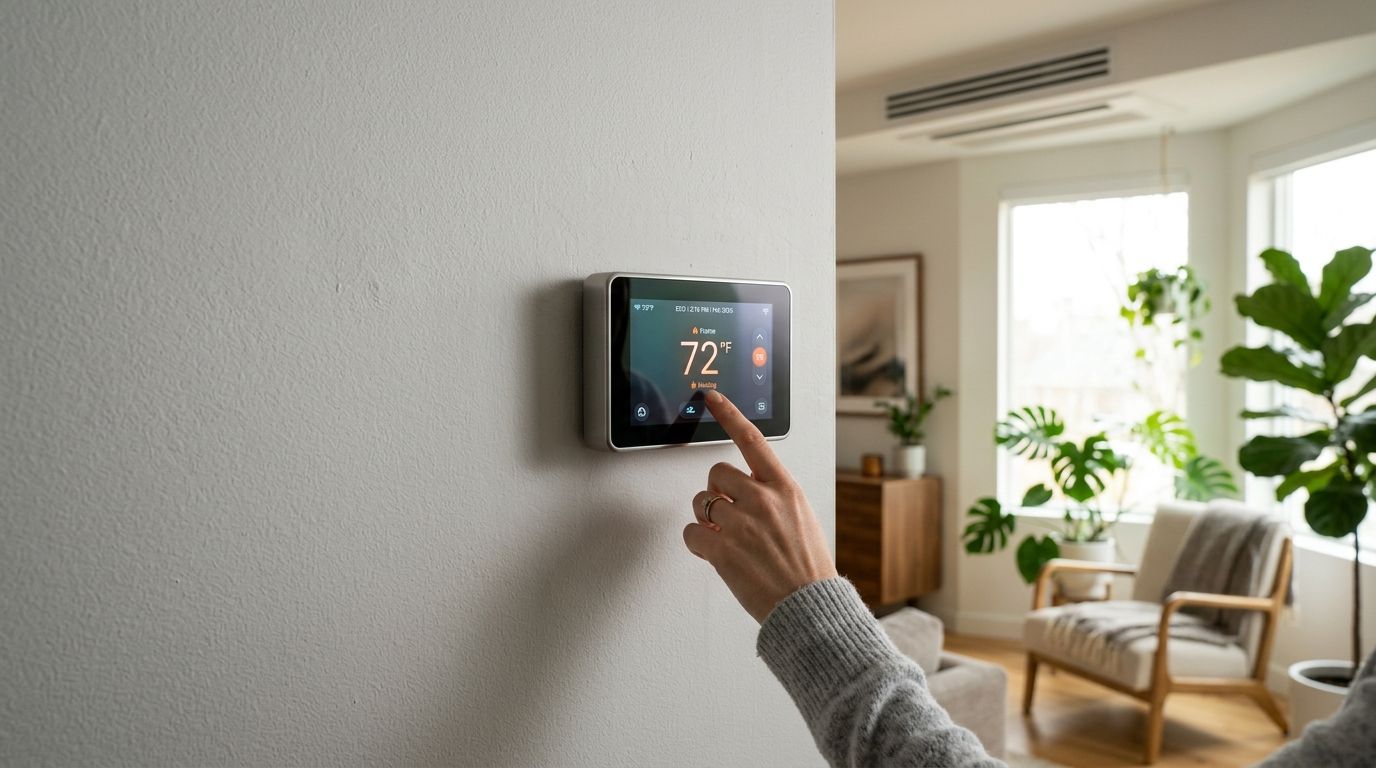
- Smart thermostat-integrated systems are worth adding to any of the four above, not a standalone choice.
Why this matters
A new-construction HVAC decision gets made once, then lives inside the walls for a decade or more. Ductwork routing, gas line placement, and electrical panel sizing all get locked in before drywall goes up, so picking the wrong system type in 2026 means living with it, or paying to retrofit around it, in 2036.
The Lake of the Ozarks area sits in a climate that swings hard: humid, sticky summers and winters that regularly drop below freezing. That combination is exactly why a single-fuel system that works great in Phoenix or Miami underperforms here. Builders in Camdenton, Osage Beach, Lake Ozark, Warsaw, and Lebanon need a system matched to both extremes, not just one.
The heat pump systems built for cold climates category matters most here because straight heat pumps lose capacity as outdoor temperatures fall, and Missouri winters test that limit more than a mild-climate buyer expects.
What makes the best HVAC system for new construction
- Climate fit — handles both 90-degree humid summers and sub-freezing winter nights without relying on backup strip heat for weeks at a time
- Ductwork compatibility — matches what's already drawn into the builder's blueprint, since redesigning duct runs mid-build is expensive
- Zoning flexibility — supports separate temperature control for bonus rooms, additions, and multi-story layouts
- Efficiency standard — meets current federal SEER2 and AFUE efficiency baselines rather than installing a discontinued or minimum-spec unit
- Electrical and gas readiness — fits the amperage and gas line capacity already planned into the build, not requiring a change order after the fact
- Local service support — backed by a contractor who can service the specific system type in the area long after installation
Best HVAC systems for new construction at a glance
| System type | Best for | Standout feature | Key limitation |
|---|---|---|---|
| Dual-fuel (hybrid) system | Overall new construction | Automatic switching between heat pump and gas furnace | Needs both gas line and electrical circuit planned in |
| Furnace + central AC split system | Cold Missouri winters | Consistent heat output regardless of outdoor temperature | Two separate units to maintain over their lifespan |
| Ductless mini-split system | Additions and no-duct spaces | Installs without any new ductwork | Indoor head units are visible on the wall |
| Heat pump system | Long-term energy savings | Single system handles heating and cooling | Loses heating capacity in the coldest stretches |
| Smart thermostat-integrated system | Comfort control and tuning | Room-by-room scheduling and remote adjustment | Adds a layer of setup, not a system on its own |
1. Dual-fuel (hybrid) systems: best HVAC system for overall new construction
A dual-fuel system pairs a heat pump with a gas furnace and switches between the two automatically based on outdoor temperature. The heat pump handles heating and cooling through most of the year, and the furnace kicks in only when temperatures drop low enough that the heat pump loses efficiency.
For a Lake of the Ozarks build, that split makes sense: mild fall and spring days run efficiently on the heat pump, and the coldest January nights get full furnace output without the system straining.
Dual-fuel pros:
- Covers both climate extremes without oversizing either component
- Lower operating cost than a furnace-only system across a full year
- Extends equipment life since neither unit runs at full capacity constantly
Dual-fuel cons:
- Requires both a gas line and a dedicated electrical circuit in the build plan
- Higher upfront system complexity than a single-fuel setup
- Needs a contractor who properly sets the switchover temperature or efficiency gains disappear
Best for: New builds where the gas line is already planned and the owner wants the lowest year-round operating cost.
Verdict: Buy if the builder can accommodate both fuel types; this is the system to spec first for the area's climate.
2. Furnace + central AC split systems: best HVAC system for cold Missouri winters
This is the traditional setup: a gas furnace for heating, a separate central air conditioner for cooling, sharing the same ductwork. It's been the default for decades because it's straightforward to install, service, and replace piece by piece.
For a build where reliable heat output matters more than shaving operating costs, this configuration doesn't ask any questions on the coldest night of the year the way a heat-pump-only system does.
Furnace + AC pros:
- Full heat output regardless of how cold it gets outside
- Furnace and AC can be replaced independently as each ages out
- Widely serviced, so parts and technicians are easy to find long-term
Furnace + AC cons:
- Two separate systems means two separate maintenance schedules
- Gas furnace requires a gas line the build must plan for
- Not as efficient as a hybrid setup during shoulder-season months
Pairing the furnace with one of the air conditioner brands rated for Missouri homes keeps both halves of the system matched for efficiency and warranty coverage.
Best for: New construction where gas heat is non-negotiable and simplicity of service matters more than squeezing out extra efficiency.
Verdict: Buy for owners who want the most predictable, easiest-to-service option in 2026.
3. Ductless mini-split systems: best HVAC system for additions and no-duct spaces
A ductless mini-split runs refrigerant lines instead of ductwork, connecting an outdoor compressor to one or more indoor wall-mounted units. That makes it the only realistic option for a bonus room, detached garage conversion, or addition built after the main ductwork is already sealed up.
Ductless mini-split pros:
- Zero ductwork required, so it fits additions the original plan didn't account for
- Each indoor unit controls its own zone independently
- Efficient for heating and cooling a single room or small addition
Ductless mini-split cons:
- Indoor head units are visible on the wall, which some owners don't want
- Not practical as the sole system for a full multi-room new build
- Multiple zones mean multiple indoor units to maintain
Details on capacity and zoning options are in the ductless mini-split systems guide for anyone weighing this against a full ducted system.
Best for: Additions, bonus rooms, and detached spaces where extending ductwork isn't practical or affordable.
Verdict: Buy for the specific room or addition it's built for; Skip as a whole-home primary system.
4. Heat pump systems: best HVAC system for long-term energy savings
A standalone heat pump moves heat rather than generating it, which is why it can cool a house in summer and heat it in winter using one piece of outdoor equipment. That single-system design is the main reason it costs less to run year over year than a furnace-and-AC combination.
The tradeoff shows up on the coldest nights, when a heat pump's capacity drops and it leans on backup electric resistance heat, which is far less efficient than the heat pump's normal operation.
Heat pump pros:
- One system handles both heating and cooling
- Lower operating cost than furnace-only heating across most of the year
- Fewer moving parts than a two-system furnace-and-AC setup
Heat pump cons:
- Heating capacity drops as outdoor temperature falls
- Backup heat strips add to the electric bill during the coldest stretches
- Not the top pick without a backup plan for sub-freezing Missouri nights
Best for: Owners prioritizing year-round efficiency who are comfortable with backup heat covering the coldest days.
Verdict: Hold for a full climate solution; pair it with backup heat or reconsider the dual-fuel option above.
5. Smart thermostat-integrated systems: best HVAC system for comfort control
This isn't a fifth system type so much as a layer added on top of any of the four above. A smart thermostat gives room-by-room scheduling, remote access, and usage tracking that a standard thermostat doesn't offer, and it works with dual-fuel, furnace-and-AC, heat pump, or zoned mini-split setups alike.
Smart thermostat pros:
- Works with nearly any of the system types above
- Lets owners adjust schedules remotely instead of guessing at a wall panel
- Surfaces runtime data that helps a contractor diagnose issues faster
Smart thermostat cons:
- Adds a setup step during commissioning, not a plug-and-play addition
- Some models need a common wire that older wiring plans skip
- Doesn't replace choosing the right core system first
Compatibility details are covered in the smart thermostats for HVAC systems guide before locking in a model with the builder's electrical plan.
Best for: Any new build owner who wants tighter control over comfort and energy use without changing the core system.
Verdict: Buy as an add-on to whichever core system tops this list for the build.
Get your new-build HVAC specced right
Talk through system options before the ductwork gets locked in.
How we ranked these HVAC systems
Each system type was weighed against the six criteria above: climate fit, ductwork compatibility, zoning flexibility, efficiency standard, electrical/gas readiness, and local service support. Dual-fuel systems scored highest because they're the only option built specifically to handle both Missouri temperature extremes without compromise. Systems that require an add-on (backup heat, extra zoning) or that only solve part of the problem (mini-splits for a single room) ranked lower as whole-home solutions, even though each earns its own "best for" slot.
Which HVAC system should you choose for new construction in 2026?
If the build plan already includes a gas line, spec a dual-fuel system — it's the best all-around match for the area's climate swings in 2026 and beyond. If gas isn't part of the plan or the owner wants the simplest long-term service model, the furnace and central AC split system is the safer default. Reserve ductless mini-splits for the specific rooms ductwork can't reach, and treat a smart thermostat as the finishing layer on top of whichever core system gets chosen.
Don't finalize the system type without checking indoor humidity control too — the whole-home dehumidifier guide covers a common gap in humid Missouri summers that the HVAC system alone doesn't fully solve.
FAQ
What is the best HVAC system for new construction in Missouri?
A dual-fuel (hybrid) system pairing a heat pump with a gas furnace is the best overall choice for new construction at the Lake of the Ozarks in 2026, since it handles both humid summers and sub-freezing winters efficiently. Furnace and central AC split systems are the safer default when a gas line is already planned but a hybrid setup isn't.
Is a heat pump better than a furnace for new construction?
A standalone heat pump costs less to run for most of the year but loses heating capacity in the coldest stretches, so it needs backup heat strips or a hybrid furnace pairing to cover Missouri winters. A furnace paired with central AC gives more consistent heat output without that gap.
Do ductless mini-splits work for a whole new home?
Ductless mini-split systems work best for additions, bonus rooms, or spaces without existing ductwork, not as the primary system for an entire new-construction home. They're a strong complement to a ducted system rather than a full replacement.
How much does a new furnace cost in Missouri?
Furnace costs vary by size, efficiency rating, and installation complexity, and a full price breakdown is covered in West Heating & Cooling's furnace cost guide for the area. Getting a quote for the specific build is the fastest way to get an accurate number.
Should I add a smart thermostat during new construction?
Yes, adding a smart thermostat during new construction is the easiest time to run the needed wiring, and it works with dual-fuel, furnace-and-AC, or heat pump systems alike. Waiting until after the build means retrofitting wiring that's simple to plan for now.
What HVAC system is most energy-efficient for new construction?
Heat pump systems and dual-fuel systems are the most energy-efficient options for new construction in 2026, since both use heat-transfer technology instead of generating heat directly. Dual-fuel systems edge ahead for Missouri because they add furnace backup for the coldest days without sacrificing shoulder-season efficiency.
Does new construction need a whole-home dehumidifier with the HVAC system?
A whole-home dehumidifier isn't required, but it solves humidity problems that Missouri's humid summers create even with a properly sized HVAC system. It's worth planning into the build alongside whichever core system gets chosen.
One last thing
The system type matters less than the sizing. An oversized dual-fuel or furnace-and-AC system short-cycles, wastes energy, and wears out faster than a correctly sized unit, even if it's the "right" system type on paper. Get a load calculation done on the actual blueprint before locking in equipment size, not just system type, for the 2026 build.