Furnace filters trap dust. They don't touch viruses, mold spores, or the smoke smell that lingers after a wildfire haze rolls through the Ozarks. If you want cleaner air moving through your ductwork in 2026, you need a purifier built to work with the HVAC system you already have — not a countertop unit that only cleans one room.
- Aprilaire Whole-Home Air Purifier wins overall for allergy and asthma households running MERV 16 filtration.
- RGF REME HALO is the pick for odor and airborne germ control since it treats air inside the duct itself.
- Honeywell Electronic Air Cleaner is the budget-friendly whole-home option for dust-heavy homes.
- Best air purifiers for HVAC systems in 2026 fall into three categories: media filtration, ionization, and electronic precipitation.
- Any of these needs correct sizing against your blower's static pressure rating — get that checked before you buy.
Why this matters
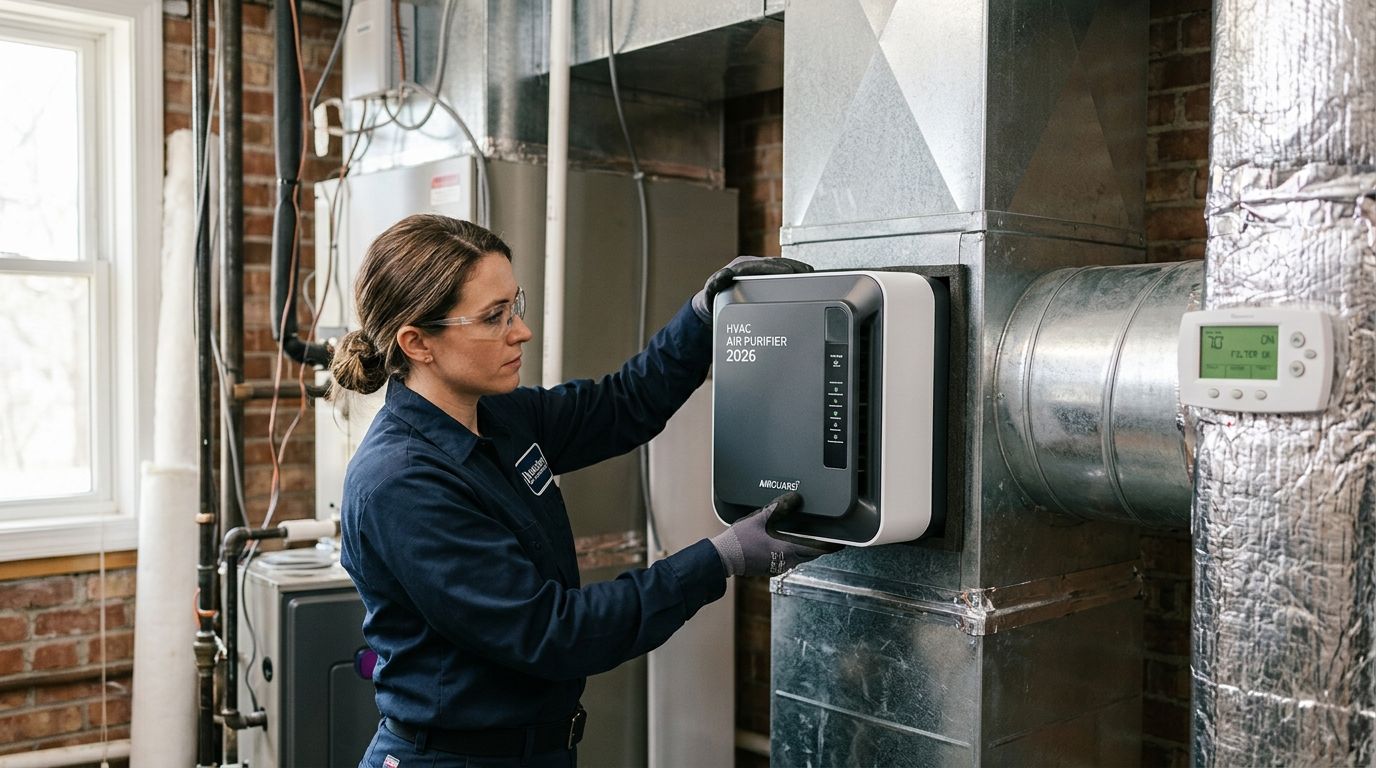
A whole-home air purifier ties into your return duct or air handler and treats every cubic foot of air your furnace or AC pushes through the house. That's a different job than a $200 tabletop HEPA unit, and it's why the wrong pick can restrict airflow and shorten the life of your blower motor. West Heating & Cooling sees this mistake often: homeowners buy a high-MERV filter online, drop it into a system designed for MERV 8, and wonder why the furnace runs longer cycles and the house still feels stuffy.
Getting this right matters more in Missouri's Lake of the Ozarks climate, where humidity swings and seasonal pollen create real indoor air quality problems on top of standard dust and pet dander. The right whole-home purifier addresses the specific pollutant in your house — allergens, odors, or germs — instead of trying to do everything at once.
What makes the best air purifier for an HVAC system
- Filtration technology — media filter (MERV-rated), ionization/UV, or electronic precipitation, each targets different particles
- Duct and blower compatibility — the unit has to match your existing system's static pressure without choking airflow
- Maintenance interval — how often filters, cells, or bulbs need replacing
- What it actually removes — allergens, mold spores, bacteria, viruses, or odors are not the same problem
- Installation complexity — in-duct units require a licensed HVAC technician; some retrofit easier than others
- Noise and airflow impact — a purifier that adds static pressure can make your furnace or AC work harder
At a glance
| Purifier | Best for | Standout feature | Key limitation |
|---|---|---|---|
| Aprilaire Whole-Home Air Purifier | Allergy and asthma households | Media filtration up to MERV 16 | Filter changes needed more often than a standard MERV 8 |
| RGF REME HALO | Odor and airborne germ control | In-duct ionization treats air as it passes | Doesn't filter out solid particulates on its own |
| Honeywell Electronic Air Cleaner | Budget-conscious whole-home upgrade | Electrostatic plates, washable cells | Requires periodic manual cleaning of cells |
| Lennox PureAir | Combined filtration plus UV in one cabinet | MERV 16 media filter paired with UV-C | Larger cabinet needs more install space |
| Trane CleanEffects | High-dust or pet-heavy homes | Electronic media air cleaner rated for very fine particulate | Higher upfront system integration complexity |
1. Aprilaire Whole-Home Air Purifier: best for allergy and asthma households
Aprilaire's whole-home units use deep-pleated media filters rated up to MERV 16, which is well beyond the MERV 8 filter that ships with most stock furnaces. The filter sits in a cabinet installed directly into your return ductwork, so every bit of air the system moves passes through it before reaching your living space.
Aprilaire pros:
- MERV 16 rating captures far more fine particulate than a standard disposable filter
- Filter cabinet design reduces filter changes to roughly twice a year in many households
- Works passively — no electrical component to fail
Aprilaire cons:
- Higher MERV media filters can add static pressure if your blower isn't sized for it
- Doesn't address odors or airborne pathogens the way UV or ionization does
- Replacement filters cost more than standard fiberglass filters
Aprilaire verdict: Buy if allergies or asthma are the main household complaint and your system has the blower capacity to handle a higher-MERV filter.
2. RGF REME HALO: best for odor and airborne germ control
The REME HALO installs inside your main supply duct and uses ionization technology to treat air as it moves past the unit, targeting airborne bacteria, mold spores, and odor-causing compounds rather than just trapping particles on a filter.
REME HALO pros:
- Treats air actively rather than only filtering what passes through
- Addresses odor sources — cooking smells, pet odor, smoke — that media filters miss
- Compact in-duct footprint doesn't require a separate cabinet
REME HALO cons:
- Doesn't replace a filter — you still need standard filtration for solid particulate
- Ionization cells need periodic replacement to keep performing
- Installation requires precise duct placement, so it's not a DIY job
REME HALO verdict: Buy if odor and germ concerns outweigh allergy symptoms in your house, and pair it with your existing filter rather than as a standalone fix.
3. Honeywell Electronic Air Cleaner: best budget-friendly whole-home option
Honeywell's electronic air cleaners use electrostatically charged plates to pull particles out of the airstream, then trap them on washable collector cells instead of disposable filter media.
Honeywell pros:
- Washable cells mean no recurring filter purchase
- Solid capture rate on dust and pet dander for the cost tier
- Simpler install profile than a UV or media-plus-UV combo unit
Honeywell cons:
- Cells need manual cleaning every few weeks to keep performance up
- Less effective on odors and airborne pathogens than ionization units
- Electronic components mean more moving parts that can eventually fail
Honeywell verdict: Buy if you want a whole-home upgrade over disposable filters without the ongoing filter-replacement cost of a media system.
4. Lennox PureAir: best for combined filtration plus UV in one cabinet
Lennox PureAir pairs a MERV 16 media filter with a UV-C lamp in a single cabinet, so it filters particulate and treats airborne microorganisms in one install rather than stacking two separate devices.
Lennox PureAir pros:
- Combines two purification methods without needing separate duct penetrations
- MERV 16 filtration plus UV covers both particulate and biological contaminants
- Single maintenance schedule instead of juggling two systems
Lennox PureAir cons:
- Larger cabinet needs more mechanical room clearance
- UV bulb replacement is an added recurring cost beyond the filter
- Best matched to Lennox-compatible systems for the cleanest integration
Lennox PureAir verdict: Buy if you want filtration and UV treatment without running two separate install projects.
5. Trane CleanEffects: best for high-dust or pet-heavy homes
Trane CleanEffects is an electronic media air cleaner built to capture very fine particulate, including much of what standard filters let through, using an electronically charged media panel instead of disposable filter media.
Trane CleanEffects pros:
- Rated for very fine particulate capture, useful in homes with multiple pets
- No disposable filter to buy — the cell is cleaned rather than replaced
- Designed to integrate with Trane systems for consistent airflow performance
Trane CleanEffects cons:
- Best performance comes from pairing with a Trane-matched system
- Initial system integration is more involved than a drop-in filter cabinet
- Cell cleaning still requires a scheduled maintenance routine
Trane CleanEffects verdict: Buy if pet dander and dust are the dominant complaint and your system is already a Trane platform.
How we ranked these
Each purifier above was scored against the six criteria listed earlier — filtration technology, blower compatibility, maintenance interval, contaminant type, install complexity, and airflow impact. None of these units is a universal winner because allergy control, odor control, and pet dander control call for different technology. That's why the list reads as five different answers to five different household problems rather than one leaderboard.
“A MERV 13 filter dropped into a system built for MERV 8 restricts airflow before it improves anything.”
Which air purifier should you choose?
If allergies or asthma symptoms are the main driver, Aprilaire's MERV 16 media filtration is the default pick for 2026. If odor or airborne germ exposure is the bigger concern — cooking smells, pet odor, illness spreading through the house — the REME HALO's in-duct ionization is the better fit. Budget-first households land on Honeywell; homes running heavy pet traffic do better with Trane CleanEffects or Lennox PureAir depending on whether UV treatment matters to you.
None of these installs correctly without checking your blower's static pressure rating and duct layout first. That's a job for a licensed HVAC technician, not a filter swap you do on a Saturday afternoon.
Get your system checked before you buy
West Heating & Cooling can confirm your blower handles the purifier you're considering.
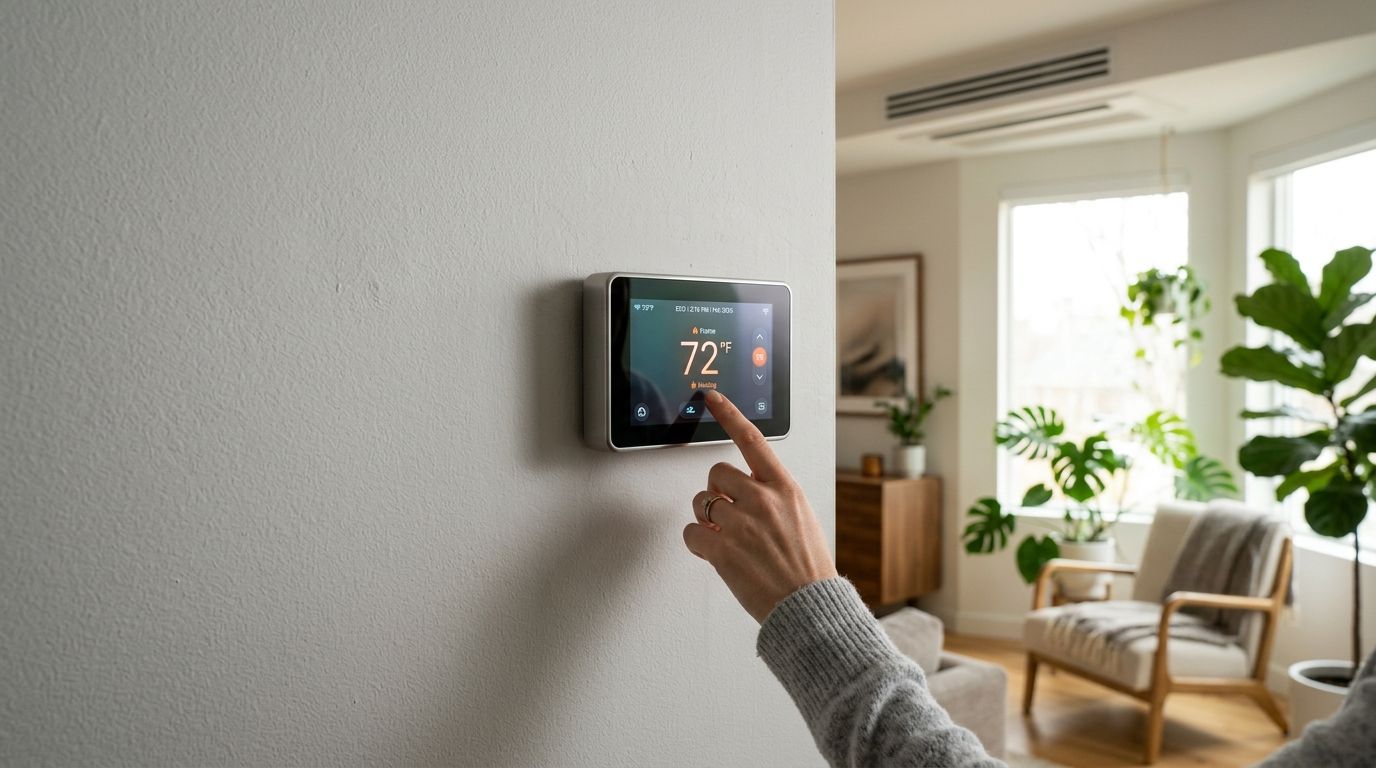
Whole-home air quality isn't just about the purifier — humidity control matters just as much for mold and allergen growth. If your Lake of the Ozarks home runs damp in summer, pair whatever purifier you choose with proper whole-home dehumidifiers rather than treating purification as a standalone fix. And if you're running a smart thermostat setup, check that it's compatible with your purifier's fan-cycling requirements — see the guide on smart thermostats for HVAC systems before you finalize either purchase.
FAQ
What's the best air purifier for an HVAC system in 2026?
Aprilaire's Whole-Home Air Purifier is the best overall pick for 2026 thanks to MERV 16 media filtration that handles allergens without added electrical components. Households focused on odor or germ control should look at the RGF REME HALO instead.
Is a whole-home air purifier better than a portable HEPA unit?
A whole-home unit treats every room the ductwork reaches, while a portable HEPA unit only cleans the room it sits in. For a full house, the whole-home option is the more effective choice, but it needs correct sizing against your existing system.
Does a whole-home air purifier restrict airflow?
A higher-MERV media filter or added UV cabinet can add static pressure if your blower wasn't sized for it. That's why matching the unit to your system's capacity matters more than the MERV rating alone.
How often do whole-home air purifier filters need replacing?
Media filters like Aprilaire's MERV 16 cabinet typically need replacement roughly twice a year, compared to monthly for a standard MERV 8 filter. Electronic units like Honeywell and Trane CleanEffects use washable cells instead of disposable filters.
Can I install a whole-home air purifier myself?
In-duct units like the REME HALO or a media cabinet require precise duct placement and static pressure calculations, so they're not a DIY install. A licensed HVAC technician handles the ductwork modification and system testing.
Do air purifiers help with wildfire smoke and seasonal allergies?
Media filtration rated MERV 13 or higher captures much of the fine particulate found in smoke and pollen. Combining it with UV treatment, as Lennox PureAir does, adds coverage against mold spores and airborne microorganisms too.
What's the difference between ionization and electronic air cleaners?
Ionization units like the REME HALO treat air actively as it passes through the duct, targeting odors and pathogens. Electronic air cleaners like Honeywell and Trane CleanEffects use charged plates to pull particulate out of the airstream onto a collector cell.
One last thing
The single biggest mistake homeowners make in 2026 isn't picking the wrong purifier brand — it's skipping the static pressure check. A purifier that's technically superior on paper still underperforms, and can shorten blower life, if it's fighting against a system that wasn't built to push air through it.