Furnace filters are not one-size-fits-all when allergies are the problem — the wrong MERV rating either lets pollen and pet dander sail through or chokes your blower motor trying to stop it. This guide ranks the filter types that actually cut allergens in a Missouri home without wrecking your HVAC system's airflow.
- The best furnace filters for allergies in 2026 are MERV 13 pleated filters — they trap pollen, dust mites and pet dander without straining most residential blowers.
- A 4-5 inch media filter cabinet controls whole-home allergens with less static pressure than a 1-inch filter.
- HEPA bypass filtration is the strongest option for asthma or severe allergy cases, but it needs a dedicated bypass system, not a standard filter slot.
- Washable electrostatic filters cut long-term filter costs for households with pets if you clean them on schedule.
- MERV 8 pleated filters are the budget floor for mild seasonal allergies — go higher if symptoms persist.
Why this matters
Lake of the Ozarks springs and falls bring heavy pollen counts, and humid lake-area basements breed mold spores that a cheap fiberglass filter never catches. West Heating & Cooling services furnaces across Camdenton, Osage Beach, Lake Ozark, Warsaw and Lebanon, and filter complaints — stuffy air, dust buildup, allergy flare-ups indoors — are one of the most common service calls in 2026.
The filter you buy at the hardware store isn't graded by marketing copy, it's graded by MERV, a scale from 1 to 20 set by ASHRAE that measures how small a particle the filter traps. Get the MERV rating wrong in either direction and you either breathe allergens or overwork your equipment.
Best overall: MERV 13 pleated 1-inch filter. Best for severe allergies and asthma: HEPA bypass filtration. Best for whole-home allergy control: a 4-5 inch media filter cabinet. Best for pet allergies: washable electrostatic filter. Best budget option: MERV 8 pleated filter.
What makes the best furnace filter for allergies
- MERV rating — higher numbers trap smaller particles like pollen (MERV 9+), pet dander (MERV 11+) and fine dust (MERV 13+)
- Airflow resistance — a filter rated above what your furnace's blower can handle chokes airflow and shortens equipment life
- Filter depth — 1-inch filters need monthly changes during allergy season; 4-5 inch media filters last 6-12 months
- Compatibility — not every furnace cabinet accepts a thick media filter or a HEPA bypass without modification
- Change frequency — a filter that traps allergens well but gets ignored for six months does nothing for allergy symptoms
Furnace filters for allergies at a glance
| Filter type | Best for | Standout feature | Key limitation |
|---|---|---|---|
| MERV 13 pleated (1-inch) | Overall allergy control | Traps pollen, mold spores, pet dander | Restricts airflow on older, low-power blowers |
| 4-5 inch media cabinet | Whole-home allergy control | Large surface area, low static pressure | Needs cabinet space; not a drop-in swap |
| HEPA bypass system | Severe allergies, asthma | Traps 99.97% of particles down to 0.3 microns | Requires dedicated bypass unit, not a standard slot |
| Washable electrostatic | Pet dander, long-term cost | Reusable, no monthly filter to buy | Loses charge if not cleaned on schedule |
| MERV 8 pleated (1-inch) | Mild seasonal allergies, budget | Cheapest option that beats fiberglass | Misses fine dust and smaller pollen grains |
1. MERV 13 pleated filter: best furnace filter for allergies overall
A MERV 13 pleated filter is the sweet spot for most Missouri homes dealing with seasonal allergies. It catches pollen, mold spores, and most pet dander while staying within the airflow tolerance of the average residential furnace built in the last 15 years.
MERV 13 pleated filter pros:
- Traps particles as small as 0.3 to 1 micron, covering pollen, dander, and mold spores
- Fits standard 1-inch filter slots with no equipment changes
- Widely available at hardware stores and HVAC suppliers
MERV 13 pleated filter cons:
- Needs replacement every 60-90 days during heavy allergy season, sooner with pets
- Older or undersized blower motors can struggle with the added resistance
- Doesn't match HEPA-level filtration for severe asthma cases
Best for: homeowners with moderate seasonal allergies and a furnace less than 15 years old. Verdict: Buy.
2. 4-5 inch media filter cabinet: best furnace filter for whole-home allergy control
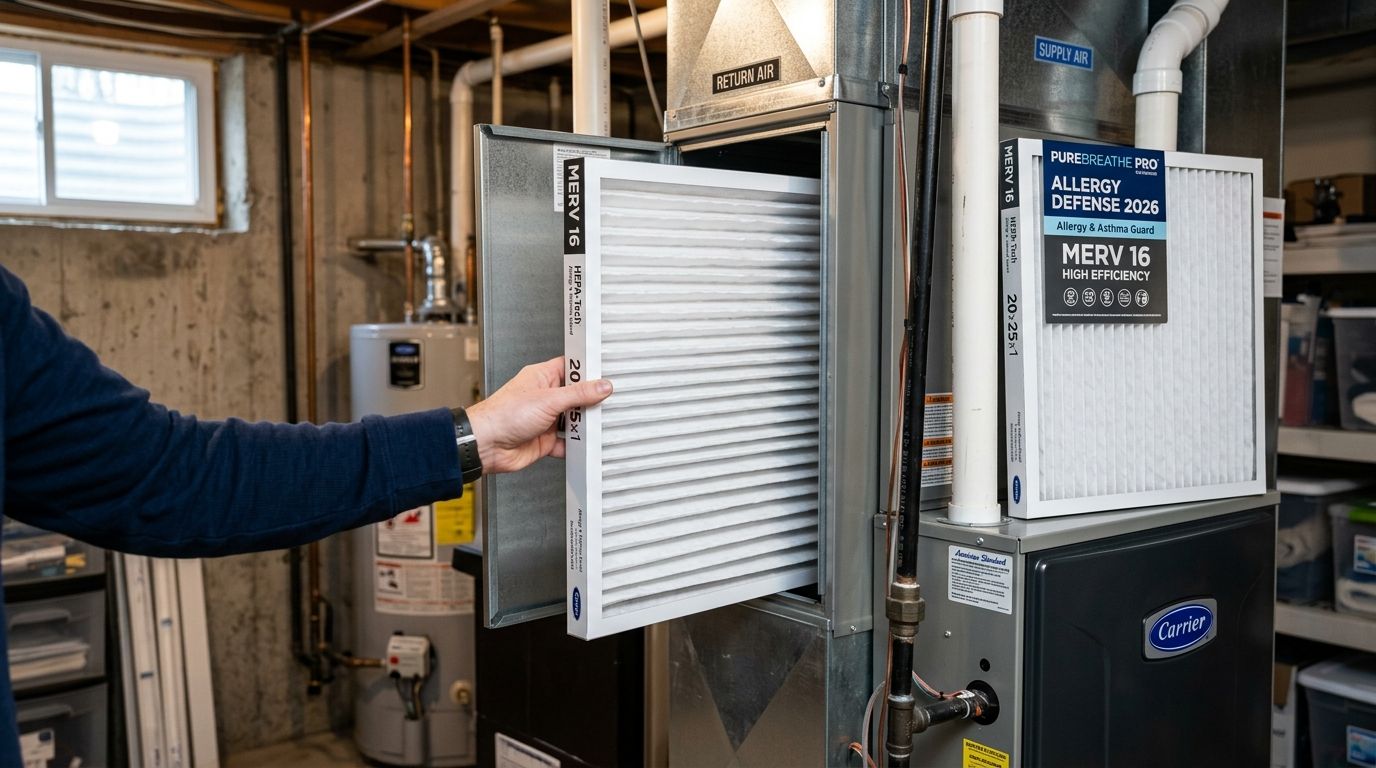
A media filter cabinet replaces the thin 1-inch slot with a 4-5 inch pleated filter that has far more surface area. More surface area means the filter can hit MERV 13 or higher filtration without the static pressure penalty a thin filter carries.
Media filter cabinet pros:
- Filters more air per pass than a 1-inch filter at the same MERV rating
- Changed once every 6-12 months instead of monthly
- Puts less strain on the blower motor over time
Media filter cabinet cons:
- Requires physical cabinet installation, not a simple filter swap
- Higher upfront setup than a standard filter slot
- Not every furnace layout has room for the extra depth
Best for: households ready to modify the furnace cabinet for long-term allergy control. Verdict: Buy if your furnace has the clearance; otherwise Hold until your next furnace service.
3. HEPA bypass filtration: best furnace filter for severe allergies and asthma
HEPA filtration traps 99.97% of particles down to 0.3 microns — the standard referenced in EPA indoor air quality guidance. A standard furnace filter slot can't hold true HEPA media because the airflow resistance is too high for a normal blower, so HEPA in a ducted system runs through a dedicated bypass unit alongside the furnace, not inside it.
HEPA bypass pros:
- The strongest allergen capture rate of any option on this list
- Removes fine dust, mold spores, and most airborne allergens that lower-MERV filters miss
- Pairs well with a whole-home air purifier setup for homes with asthma or severe allergy diagnoses
HEPA bypass cons:
- Not a drop-in filter — requires a separate bypass installation
- Higher upfront investment than any pleated or washable filter
- Overkill for households with mild, seasonal-only symptoms
Best for: anyone with a doctor-diagnosed asthma or severe allergy condition in the household. Verdict: Buy if symptoms are severe; Skip for mild seasonal sniffles.
4. Washable electrostatic filter: best furnace filter for pet dander
Electrostatic filters use a charged mesh to attract dander and dust instead of a dense weave to trap it. Because they're reusable, they cut the ongoing cost of buying replacement filters every month, which matters most in homes with multiple pets shedding year-round.
Washable electrostatic filter pros:
- Reusable — no recurring filter purchases
- Effective against pet dander and larger dust particles
- Commonly rated in the MERV 8 to MERV 10 range depending on manufacturer
Washable electrostatic filter cons:
- Loses electrostatic charge and effectiveness if not cleaned every 2-4 weeks
- Lower ceiling on fine particle capture than MERV 13 pleated or HEPA
- Washing and drying properly takes more effort than tossing a disposable filter
Best for: pet owners who will commit to a cleaning schedule instead of a monthly filter swap. Verdict: Buy for disciplined households; Wait if you tend to forget maintenance tasks.
5. MERV 8 pleated filter: best furnace filter for mild allergies on a budget
MERV 8 is the baseline pleated filter most furnaces ship compatible with out of the box. It's a real step up from bare fiberglass filters, but it misses a meaningful share of fine pollen and mold spores that trigger allergy symptoms.
MERV 8 pleated filter pros:
- Fits every standard 1-inch filter slot with zero airflow concerns
- The lowest-cost option on this list
- Better than fiberglass for basic dust and larger pollen
MERV 8 pleated filter cons:
- Misses smaller pollen grains and most mold spores
- Not sufficient for pet dander control in multi-pet homes
- Requires the same 60-90 day change schedule as higher-MERV filters, so the savings shrink over a year
Best for: renters or homeowners with mild, occasional allergy symptoms who need a low-cost starting point. Verdict: Buy as a baseline, then upgrade to MERV 13 if symptoms persist past two weeks.
How we ranked these
Each filter type was weighed against the five criteria above: MERV rating, airflow resistance, filter depth, furnace compatibility, and realistic change frequency. MERV 13 pleated filters won overall because they hit the strongest allergen capture rate that still fits a standard furnace slot without a cabinet retrofit. HEPA and media cabinets rank higher on raw filtration but lower on convenience, which is why they're positioned for specific use cases rather than best overall.
Not sure which filter fits your furnace?
Get a free quote and a filter recommendation for your system.
Which furnace filter should you choose?
If you're dealing with normal seasonal allergies and your furnace is under 15 years old, buy a MERV 13 pleated 1-inch filter and change it every 60-90 days through pollen season. Step up to a 4-5 inch media cabinet if you're already planning furnace service in 2026 and want fewer filter changes long-term. Reserve HEPA bypass filtration for households managing asthma or a severe allergy diagnosis, and skip straight past MERV 8 if symptoms haven't improved after one full filter cycle. A whole-home dehumidifier pairs well with any of these filters in the humid Lake of the Ozarks climate, since mold spores thrive in damp basements regardless of what filter sits upstream.
FAQ
What's the best furnace filter for allergies in 2026?
A MERV 13 pleated 1-inch filter is the best overall furnace filter for allergies in 2026 because it traps pollen, mold spores and most pet dander without exceeding the airflow limits of most residential furnaces.
Is a higher MERV rating always better for allergies?
No. MERV ratings above 13 restrict airflow enough to strain a standard 1-inch filter slot on many furnaces, so higher ratings only make sense in a media cabinet or HEPA bypass system built to handle the added resistance.
Can I put a HEPA filter in my furnace?
A true HEPA filter won't fit a standard 1-inch furnace filter slot because it's too dense for a normal blower to push air through. HEPA-level filtration in a ducted system requires a separate bypass unit installed alongside the furnace.
How often should I change a furnace filter for allergy control?
Change a 1-inch pleated filter every 60-90 days during allergy season, or every 30 days if you have pets. A 4-5 inch media filter typically lasts 6 to 12 months before it needs replacing.
Do washable furnace filters work for pet allergies?
Washable electrostatic filters help with pet dander and larger dust particles, but only if they're cleaned every 2 to 4 weeks. Skipping cleanings lets the electrostatic charge fade and filtration drops off fast.
What's the difference between a 1-inch and 4-5 inch furnace filter?
A 4-5 inch media filter has far more surface area than a 1-inch filter, so it can hit the same or higher MERV rating with less airflow resistance and needs replacing far less often.
Will a MERV 13 filter hurt my furnace's blower motor?
A MERV 13 filter is safe for most furnaces built in the last 15 years, but older or undersized blower motors can struggle with the added resistance. A quick check during routine maintenance confirms compatibility.
One last thing
Most allergy sufferers upgrade the filter and stop there, but dirty ductwork undoes a MERV 13 filter fast — allergens sitting in the ducts recirculate every time the blower kicks on. Pairing a higher-MERV filter with an HVAC maintenance plan that includes duct inspection closes that gap before the 2026 allergy season peaks.