Small businesses along the Lake of the Ozarks — a storefront in Osage Beach, a diner in Camdenton, a professional office in Lake Ozark — don't run on the same HVAC playbook as a house. Here's the ranked breakdown of which commercial systems fit which small business setup in 2026, and why.
- Rooftop packaged units are the best commercial hvac systems for small business retail and restaurant buildings in 2026.
- Ductless mini-split systems win for small offices that need room-by-room zoning without new ductwork.
- VRF systems handle multi-tenant strip malls where different suites need heating and cooling at the same time.
- Packaged heat pumps consolidate two seasons into one system for businesses ready to drop gas furnaces.
- Split systems with a gas furnace remain the practical retrofit for older commercial buildings with existing ducts.
Why this matters
A residential contractor's rule of thumb — a ton of cooling per 400-600 square feet — doesn't hold for a commercial space with a walk-in cooler, a kitchen hood, or a lobby full of foot traffic all day. Commercial HVAC sizing runs off a Manual N or similar load calculation that accounts for occupancy, equipment heat, and ventilation code minimums most homeowners never think about.
Get the system type wrong and you're either running a unit that short-cycles all summer or one that can't keep up during a July heat wave at the lake. West Heating & Cooling handles both the load calculation and the install for small businesses across Camdenton, Osage Beach, Lake Ozark, Warsaw, and Lebanon, and the equipment choice below is the same conversation that happens on every commercial site visit.
What makes the best commercial HVAC system for a small business
- Load match to square footage — undersized equipment runs constantly, oversized equipment short-cycles and leaves humidity behind
- Zoning flexibility — how many separately controlled areas the building actually needs
- Missouri climate performance — summer humidity plus winter cold snaps that hit single digits some years
- Service access — rooftop units keep technicians out of the customer-facing space during repairs
- Energy efficiency — commercial minimum efficiency standards changed in 2023 and equipment bought since then runs leaner
- Install disruption — how much the building has to shut down during replacement
Commercial HVAC systems at a glance
| System | Best For | Standout Feature | Key Limitation |
|---|---|---|---|
| Rooftop Packaged Unit (RTU) | Standalone retail and restaurants | Frees up all interior floor space | Needs crane rigging for replacement |
| Ductless Mini-Split | Small offices needing zoning | Independent room-by-room control | Indoor heads are visible on walls |
| VRF System | Multi-tenant strip malls | Heats and cools different zones at once | Most complex install of the group |
| Packaged Heat Pump | Year-round efficiency | One system replaces AC plus furnace | Needs backup heat in deep cold snaps |
| Split System + Gas Furnace | Older building retrofits | Widest parts and tech availability | Inherits any existing ductwork issues |
1. Rooftop Packaged Units (RTU): best commercial HVAC system for standalone retail and restaurants
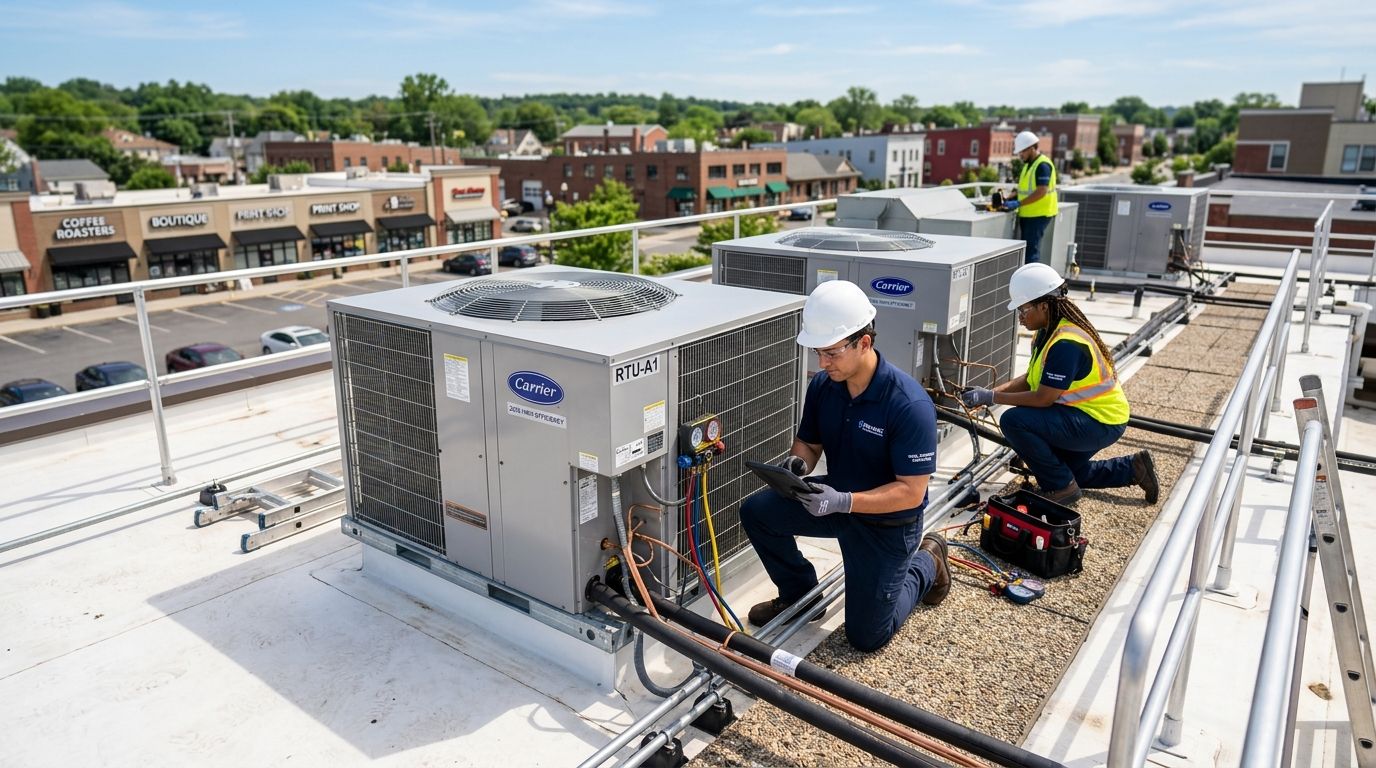
An RTU is a single self-contained unit mounted on the roof that handles heating, cooling, and often ventilation for the whole building. It's the default choice for strip mall units, standalone restaurants, and single-tenant retail because everything lives outside the customer-facing space.
Rooftop packaged unit pros:
- Frees up interior floor space entirely — no indoor equipment closet needed
- Technicians service the unit from the roof without walking through the store
- Handles the high ventilation rates restaurants need for kitchen exhaust makeup air
Rooftop packaged unit cons:
- Replacement requires crane rigging in most cases, which adds coordination and cost
- A single unit is a single point of failure if it's the only system on the building
- Limited zoning — the whole space runs off one thermostat unless you add zone dampers
Best for: single-tenant storefronts and restaurants with a straightforward open layout. Verdict: Buy.
2. Ductless Mini-Split Systems: best commercial HVAC system for small offices needing zoning
A mini-split pairs an outdoor compressor with one or more indoor wall or ceiling-mounted heads, and each zone runs independently with no ductwork required. That makes it the fastest retrofit option for a building that was never set up with ducts in the first place.
Ductless mini-split pros:
- Room-by-room temperature control without touching the walls or ceiling for ductwork
- Minimal construction disruption — installs go in over a day or two, not weeks
- Works in buildings with no existing ductwork, common in older converted commercial spaces
Ductless mini-split cons:
- Indoor heads are visible on the wall or ceiling, which some storefronts don't want
- Cost per zone adds up fast once you're past four or five rooms
- Filters need more frequent cleaning in dusty commercial environments than in a home
See the full breakdown on ductless mini-split systems for zone counts and layouts that fit small office suites.
Best for: small offices, salons, or professional suites with several separate rooms. Verdict: Buy.
3. Variable Refrigerant Flow (VRF) Systems: best commercial HVAC system for multi-tenant strip malls
VRF runs a single outdoor condenser network feeding multiple indoor units that can heat one zone and cool another simultaneously. That's the difference-maker for a strip mall where one tenant runs a kitchen and the next door tenant runs a quiet office with a totally different load.
VRF pros:
- Some zones heat while others cool at the same time off one outdoor system
- Scales to a dozen or more indoor units without adding separate outdoor condensers
- Precise zone control cuts wasted conditioning in vacant or low-traffic suites
VRF cons:
- The most complex install of any system on this list, with refrigerant piping runs that need an experienced contractor
- Service calls take longer because there are more components between the outdoor unit and each zone
- Not cost-effective for a single small tenant space — VRF earns its keep across multiple zones
Best for: strip malls and mixed-use buildings with several tenants sharing one roof. Verdict: Buy for multi-tenant properties, Skip for a single small storefront.
4. Packaged Heat Pump Systems: best commercial HVAC system for year-round efficiency
A packaged heat pump handles both heating and cooling through refrigerant cycle reversal instead of pairing a separate gas furnace with an AC unit. For a small business trying to consolidate two systems into one and cut a gas line out of the building entirely, this is the pick.
Packaged heat pump pros:
- One system covers both seasons instead of maintaining a furnace and an AC unit separately
- No combustion means no gas line, venting, or annual combustion safety check
- Efficiency holds up well through Missouri's long shoulder seasons
Packaged heat pump cons:
- Output drops during sustained stretches below 20°F without a backup heat strip
- Equipment cost runs higher upfront than a straight split system plus furnace combo
- Needs a technician who understands the balance point where backup heat kicks in
Check heat pump performance in cold climates before choosing this route for a building that runs unheated overnight in winter.
Best for: small businesses ready to consolidate heating and cooling into one system. Verdict: Buy.
5. Split System with Gas Furnace: best commercial HVAC system for older building retrofits
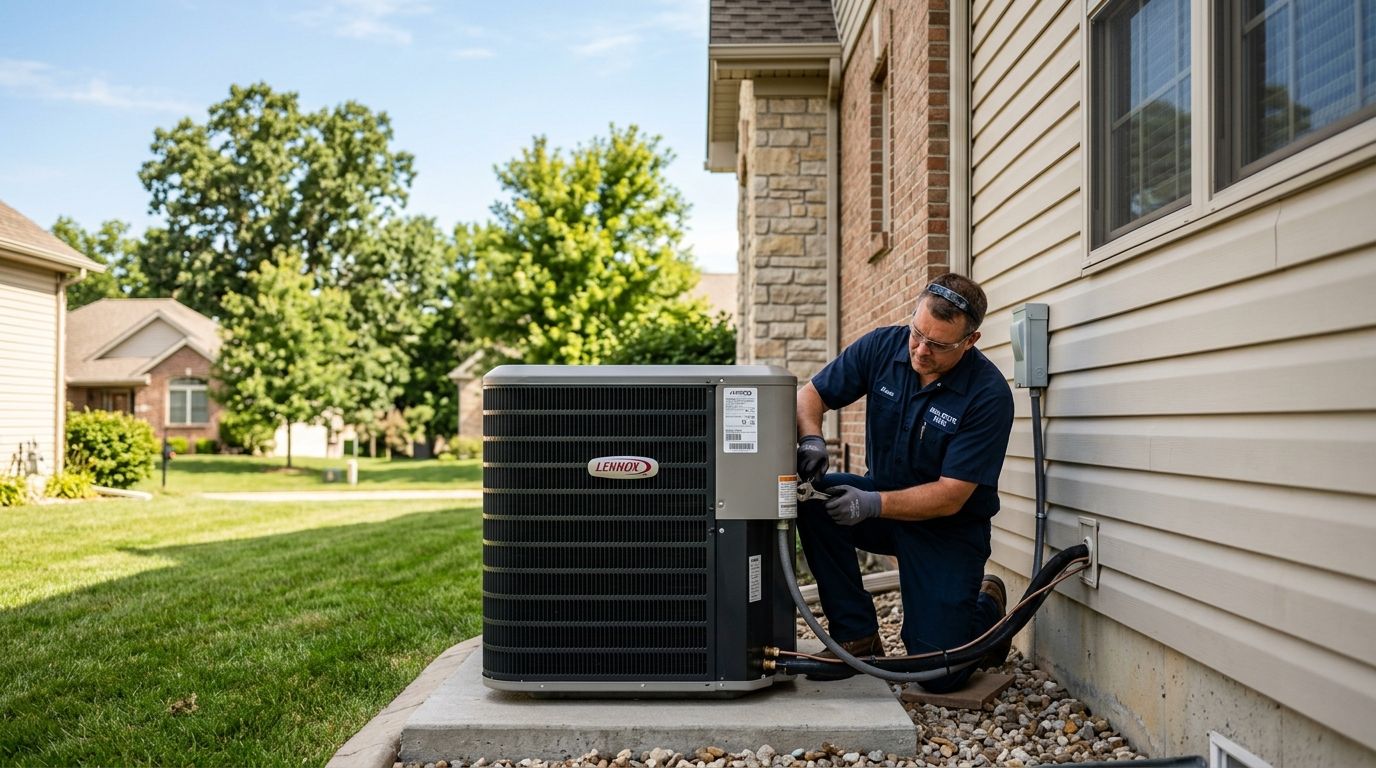
This is the layout most Lake of the Ozarks commercial buildings already have — an outdoor condenser and an indoor furnace or air handler connected by ductwork, usually left behind by a prior tenant. It's the least glamorous option on this list, and often the most practical one.
Split system with gas furnace pros:
- Parts and technicians are the most widely available of any system here
- Retrofits into existing ductwork without redesigning the building's mechanical layout
- Gas furnace backup handles Lake of the Ozarks cold snaps without relying on a heat strip
Split system with gas furnace cons:
- Any ductwork leaks or undersized returns left by the previous tenant carry over into the new system
- Less zoning flexibility than mini-splits or VRF
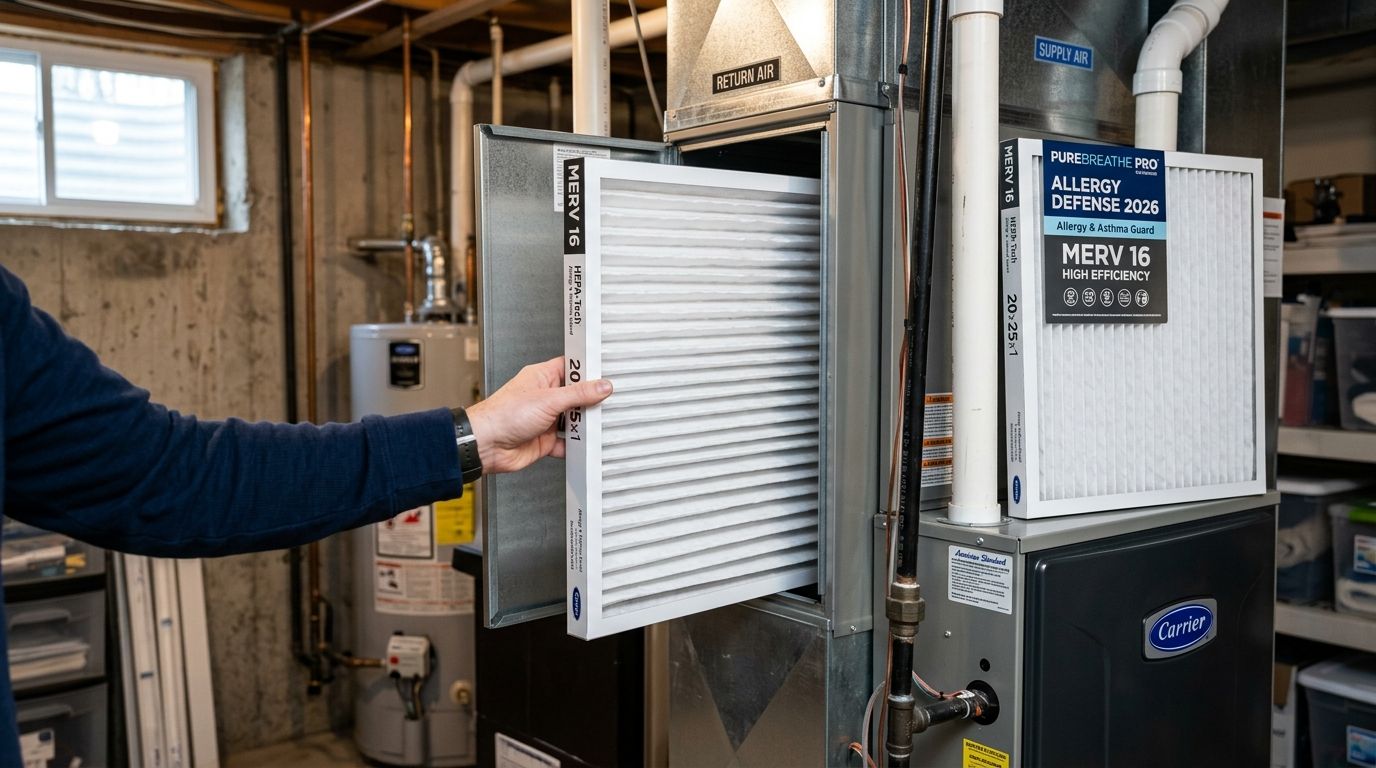
- Requires indoor floor or closet space for the furnace and air handler
“If the ductwork was undersized for the last tenant's kitchen equipment, a new furnace won't fix that on its own — it just runs the same bad ducts harder.”
Best for: older commercial buildings on a tight retrofit budget with ductwork already in decent shape. Verdict: Buy for the right building, Hold if the ducts need work first.
How we ranked these systems
Each system was weighed against the criteria above — load match, zoning, Missouri climate performance, service access, efficiency, and install disruption. No system wins on every criterion; that's why the ranking splits by use case instead of naming one universal winner. For a side-by-side on where each system lands cost-wise relative to the others, compare HVAC systems by price before locking in a decision.
Which commercial HVAC system should you choose?
Start with a load calculation on the actual building, not the previous tenant's equipment plaque. For a standalone storefront or restaurant, a rooftop packaged unit is the default pick in 2026. For a multi-tenant strip mall with different loads next door to each other, VRF earns the extra install complexity. For an older building where the ductwork is sound, a split system with a gas furnace is the lower-friction retrofit.
Get a commercial HVAC quote
Load calculation and system recommendation for your building, no guesswork.
FAQ
What's the best commercial HVAC system for a small retail store?
A rooftop packaged unit is the best commercial HVAC system for most small retail stores in 2026 because it keeps equipment off the sales floor entirely. It also handles the higher ventilation loads a busy storefront needs without adding indoor equipment.
Is a ductless mini-split system good for a small business office?
Yes, ductless mini-splits work well for small offices because each room gets its own zone without adding ductwork. They install faster than a full ducted retrofit, usually in a day or two per zone.
How much does a commercial HVAC system cost for a small business?
Cost depends on building square footage, tonnage required, and which system type you choose, so a load calculation and site visit is the only way to get an accurate number. Request a quote based on your specific building rather than a generic estimate.
VRF vs rooftop packaged units — which is better for a small business?
Rooftop packaged units win for a single-tenant storefront, while VRF wins once you have multiple tenants with different heating and cooling needs at the same time. VRF's advantage disappears on a single small footprint where the extra install complexity isn't justified.
Can I retrofit a ductless mini-split into an older commercial building without ductwork?
Yes, that's exactly the scenario ductless systems are built for since they don't require any ducts at all. Each indoor head connects to the outdoor unit through a small refrigerant line set run through a wall.
What size commercial HVAC system does a small business need?
Sizing depends on square footage, occupancy, kitchen or equipment heat load, and ventilation code requirements, not a flat square-footage rule. A proper load calculation is the only reliable way to land on the right tonnage.
Do commercial HVAC systems need different permits than residential systems?
Commercial installs typically fall under different code requirements for ventilation and equipment access than residential jobs. Check with your local building department before finalizing equipment selection.
One last thing
Most small business owners size a new system off the plaque rating on the equipment the last tenant left behind, without asking whether that tenant walled off rooms, added kitchen equipment, or changed the foot traffic pattern. A tonnage that fit a quiet nail salon rarely fits a taqueria that just moved into the same 1,200 square feet — the load calculation has to start over with every new use, not carry forward from the last occupant.