Furnaces, heat pumps, ductless units, and full system replacements all get lumped into one Google search, but they don't belong on the same price tier. This breaks HVAC systems ranked by price into clear categories for 2026, so you know which tier fits your house before a contractor ever walks through the door.
- Ductless mini-split systems rank as the lowest-cost hvac systems ranked by price for single rooms and additions in 2026.
- Full HVAC systems built for new construction sit at the top of the price range; heat pumps and furnace-and-AC combos fall in between.
- Smart thermostats and air quality add-ons cost less than replacing a whole system and pay back through lower energy use.
- West Heating & Cooling installs every tier, from single-zone mini-splits to full new-construction systems, across the Lake of the Ozarks.
Why this matters
Most homeowners searching for hvac systems ranked by price expect one number per system type. That's not how installed cost works — ductwork condition, house size, and how many zones you need move the price more than the brand on the box.
A furnace-only swap in a house with working ducts costs less than swapping both the furnace and the AC, which costs less than a full system built for a home with no ductwork at all. Rank the categories first, then let a contractor price your specific house against the tier you land in. For a detailed breakdown of what drives furnace pricing specifically in this region, the furnace cost guide for Missouri homes covers the line items in full.
Best overall value for a single room or addition: ductless mini-split systems. Best for whole-home replacement without new ductwork: a central AC paired with a standard furnace. Best for cold-climate, year-round efficiency: heat pump systems rated for sub-zero performance. Best premium tier: a full HVAC system designed for new construction.
What makes a fair HVAC price ranking
- Installed cost relative to other categories, not one dollar figure per model
- Whether existing ductwork is usable or needs new runs
- Efficiency rating — SEER2 for cooling, AFUE for gas heat, HSPF for heat pumps
- Zoning and room-by-room control versus whole-house coverage
- How the system performs in Missouri's cold snaps and humid summers
- Whether it's a full system replacement or an add-on to what's already installed
HVAC systems ranked by price at a glance
| System type | Best for | Standout feature | Key limitation |
|---|---|---|---|
| Ductless mini-split | Single rooms, additions | No ductwork needed | Multiple heads required for whole-home coverage |
| Smart thermostat upgrade | Existing furnace or AC | Cheapest efficiency gain | Doesn't fix an aging or undersized system |
| Central air conditioner | Whole-home cooling with existing ducts | Wide range of SEER2 ratings | Needs functioning ductwork already in place |
| Standard furnace replacement | Reliable winter heat | AFUE up to 95%+ available | Doesn't address cooling |
| Heat pump system | Year-round heating and cooling | One system for both jobs | Backup heat strip needed in coldest stretches |
| Whole-home air quality add-ons | Allergy-prone households | Targets humidity and allergens directly | Doesn't heat or cool on its own |
| Full new-construction system | Ground-up builds, complete replacements | Sized to the house from day one | Highest scope, longest install timeline |
1. Ductless mini-split systems: best HVAC system for rooms without ductwork
A mini-split mounts an indoor head on a wall or ceiling and runs a refrigerant line to an outdoor compressor — no ducts, no plenum, no new vents cut into drywall. It's the ductless mini-split system category built specifically for additions, converted garages, or a bonus room over a garage that the main system never reaches.
Ductless mini-split pros:
- Lowest installed cost among the full categories in this hvac systems ranked by price list for a single zone
- No ductwork required, which cuts labor scope substantially
- Independent temperature control room by room
- Functions as a heat pump, so it heats and cools from one unit
Ductless mini-split cons:
- Limited coverage per head; multiple units needed for whole-home use
- Indoor unit is visible on the wall, not hidden behind a vent
- Not always enough as the sole heat source through Missouri's coldest stretches without backup
Best for: single rooms, additions, workshops. Verdict: Buy if you need one or two zones and don't already have ductwork to tie into.
2. Smart thermostat upgrades: best add-on for an existing furnace or AC
A smart thermostat doesn't replace anything — it pairs with the furnace or AC already installed and manages when that equipment runs. It's the cheapest line item on this entire ranking because there's no equipment swap involved, just a control upgrade.
Smart thermostat pros:
- Lowest cost of any option on this list
- Schedule and remote control without touching the core system
- Compatible with most existing furnace and AC setups
Smart thermostat cons:
- Doesn't fix an aging or undersized system underneath it
- Savings depend on how the household actually uses the schedule
Best for: homeowners not ready for a full system replacement. Verdict: Buy as a first step before a bigger spend, not a substitute for one.
3. Central air conditioner replacement: best HVAC system for whole-home cooling in Missouri summers
A standard central AC ties into existing ductwork and cools the entire house evenly, unlike a mini-split's zone-by-zone approach. It sits mid-tier on this ranking because the equipment itself is well established, but labor and refrigerant line work still add up. Browse air conditioner brands built for Missouri homes to compare the models this category covers.
Central AC pros:
- Cools the whole house evenly through existing ducts
- Wide range of SEER2 ratings to match budget and efficiency goals
- Familiar technology with a long service track record
Central AC cons:
- Requires usable ductwork already in place
- Doesn't address the heating side of the house
- Higher cost than a mini-split for a single-zone need
Best for: existing homes with usable ducts and a straightforward cooling replacement. Verdict: Buy when the ductwork is sound and the old unit is simply worn out.
4. Standard furnace replacement: best HVAC system for reliable winter heat
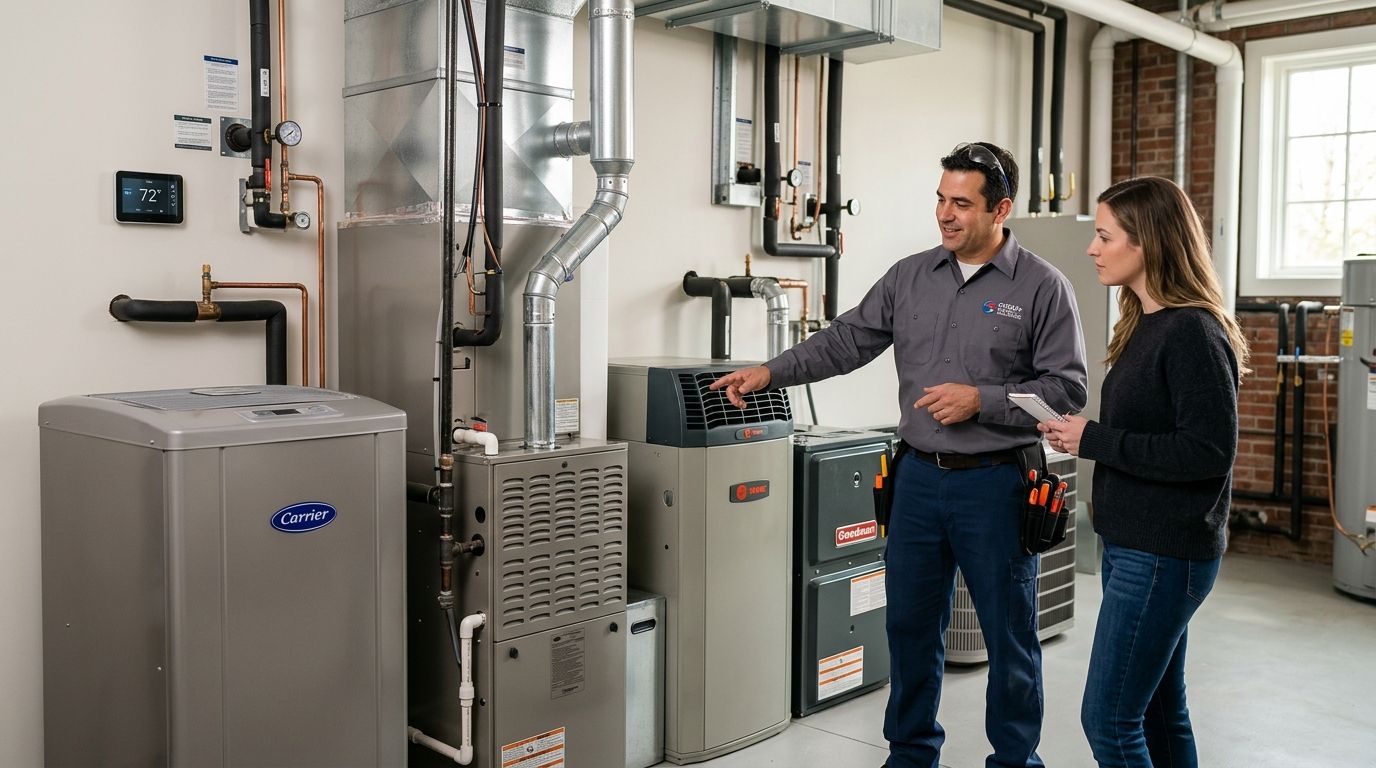
A gas furnace remains the most common heating system for existing Missouri homes with ductwork already installed. AFUE ratings on new furnaces run from baseline models up to 95% or higher, meaning less fuel wasted per heating cycle. West Heating & Cooling installs furnace brands across this efficiency range, and the earlier furnace cost guide breaks down what pushes the price up or down for a given house.
Standard furnace pros:
- Proven technology with decades of service history
- High-AFUE models cut fuel use noticeably over older units
- Pairs directly with existing ductwork
Standard furnace cons:
- Gas units need venting and gas line access
- Doesn't cool the house on its own
- Higher-AFUE models cost more upfront than baseline models
Best for: existing homes needing heat only, or a budget-conscious replacement of an aging furnace. Verdict: Buy when the ducts are fine and the furnace is the only failing component.
Get your system priced for 2026
West Heating & Cooling quotes furnace, AC, heat pump, and mini-split installs across the Lake of the Ozarks.
5. Heat pump systems: best HVAC system for year-round heating and cooling in cold climates
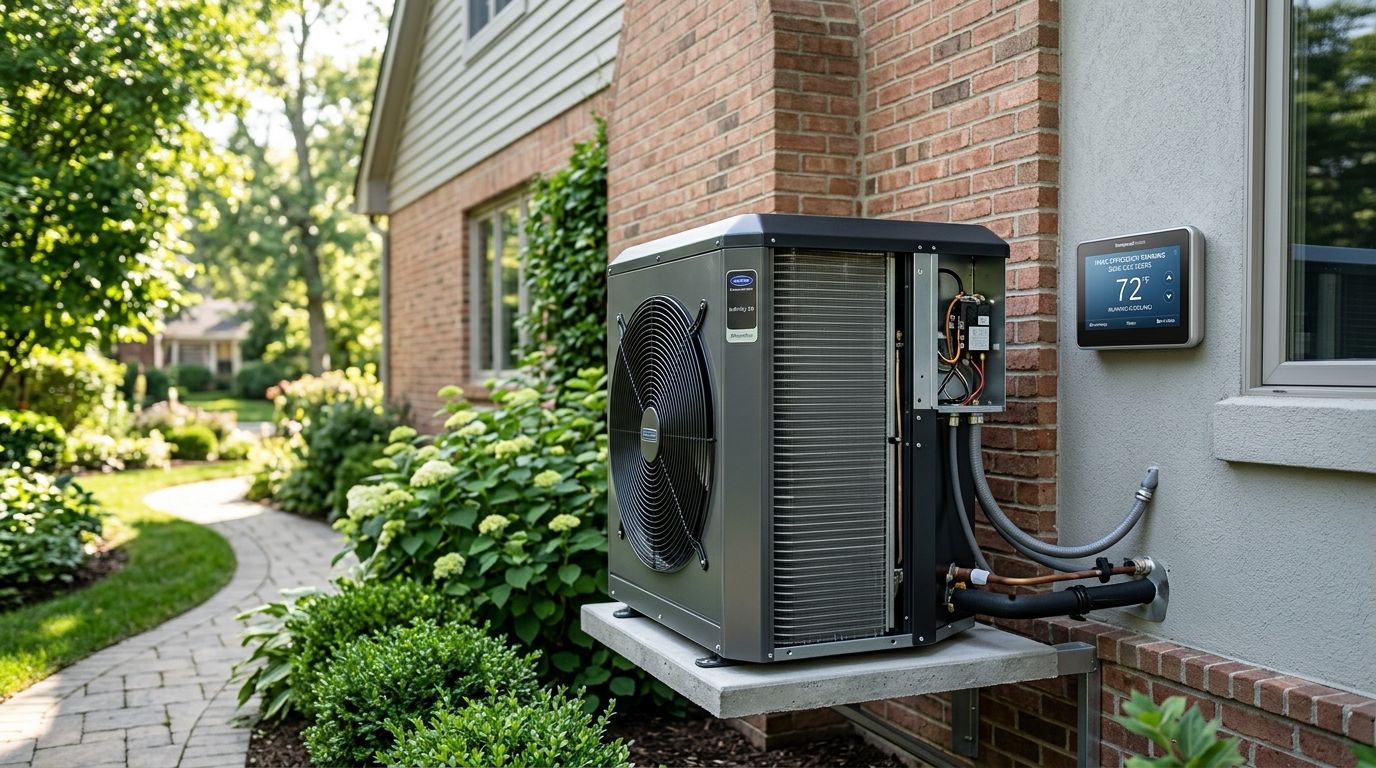
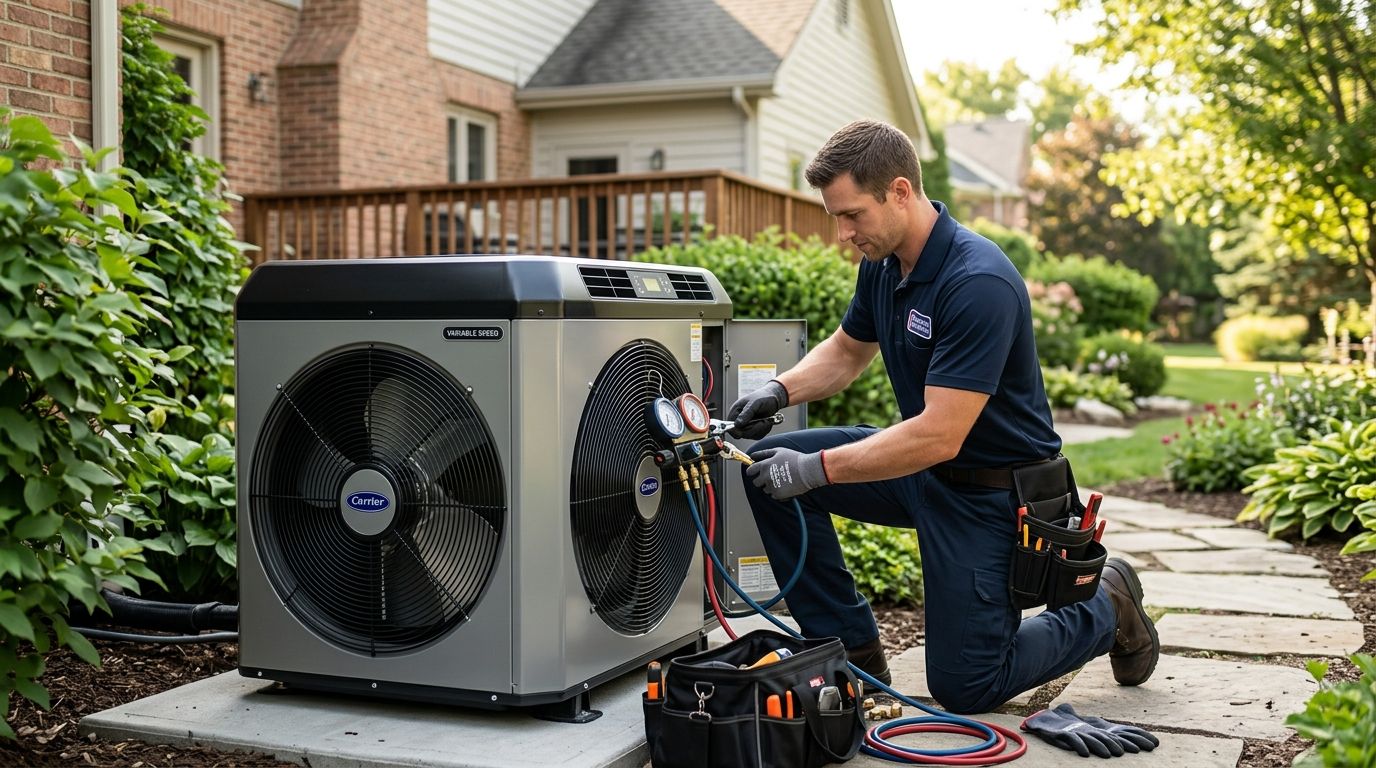
A heat pump moves heat instead of burning fuel, running in reverse to cool the house in summer and heat it in winter from one piece of outdoor equipment. Cold-climate models are rated to keep working well below freezing, which matters for a Missouri winter. Compare heat pumps built for cold climates if you're weighing this against a furnace-and-AC combo.
Heat pump pros:
- Heats and cools from a single system
- No gas line required
- Cold-climate models rated for sub-zero performance
Heat pump cons:
- Higher upfront cost than an AC-only swap
- Often needs a backup heat strip for the coldest stretches
- Correct sizing matters more here than with a standard furnace
Best for: homeowners replacing both furnace and AC at once. Verdict: Buy if both halves of your system are due for replacement anyway.
6. Whole-home air quality add-ons: best upgrade for allergy-prone households
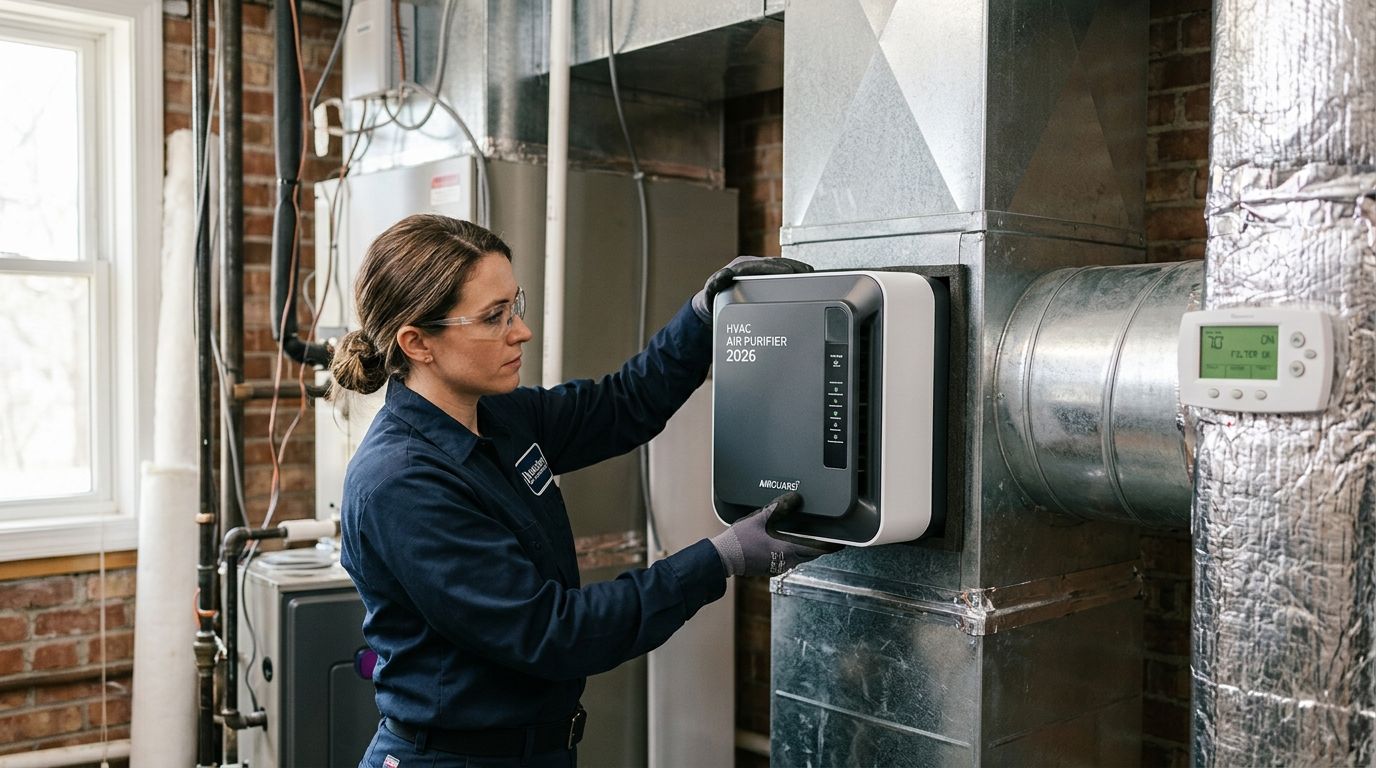
Whole-home dehumidifiers and air purifiers tie into existing ductwork rather than replacing the core furnace or AC. They cost less than a full system swap because they're add-on equipment, not the primary heating or cooling source.
Air quality add-on pros:
- Cheaper than replacing the core furnace or AC
- Targets humidity and airborne allergens directly
- Works alongside a system that's already functioning fine
Air quality add-on cons:
- Doesn't heat or cool the house
- Adds a component with its own filter or maintenance schedule
- Not a fix for an undersized or failing core system
Best for: houses with humidity or allergy complaints and a core system that's otherwise fine. Verdict: Hold — bundle this in once you've settled the main furnace or AC decision, rather than buying it first.
7. Full HVAC system for new construction or complete replacement: best for ground-up builds
When there's no existing ductwork, no existing equipment, or the current system is beyond repair, the whole HVAC package gets designed and installed together. This is the highest tier on this hvac systems ranked by price list because it includes ductwork, equipment, and controls as one project instead of a single swap.
Full system pros:
- Sized correctly for the house from day one, no compromises for old ductwork
- All components matched for efficiency instead of mixed and mismatched
- Longest expected service life since nothing is inherited from a prior install
Full system cons:
- Highest total scope of any category on this list
- Longest install timeline
- Requires more upfront decisions on zoning and equipment sizing
Best for: new construction and homes needing a complete mechanical overhaul. Verdict: Buy when there's genuinely no usable system left to build around; Skip this tier if a targeted repair or single-component swap still solves the problem.
How this ranking works
Each category above is placed by installed cost relative to the others, not a single dollar figure, since ductwork condition and house size shift the actual number for every project. The order also weighs ductwork requirements, efficiency ratings like SEER2 and AFUE, zoning flexibility, and how well each option handles Missouri's swing between summer humidity and winter cold.
Which HVAC system should you choose in 2026?
If your ductwork is sound and one component failed, replace that component alone — a furnace or an AC, not both. If both are near the end of their service life, a heat pump or a matched furnace-and-AC combo makes more sense than replacing them separately over two different years. If you're building new or gutting an older home's mechanical room entirely, budget for the full system category from the start rather than patching an old layout piece by piece.
FAQ
What's the cheapest HVAC system to install in 2026?
Ductless mini-split systems cost the least among full HVAC categories, since they skip ductwork entirely and cover one or two rooms. A smart thermostat upgrade costs even less but only works alongside a system you already own.
Is a heat pump cheaper than a furnace and AC combo?
A heat pump typically runs close to or slightly above a matched furnace-and-AC combo upfront, but it replaces two pieces of equipment with one. Cold-climate models add cost but keep working through a Missouri winter.
How much does a new furnace cost in Missouri?
Installed cost depends on AFUE rating, house size, and whether existing ductwork is usable. The furnace cost guide for Missouri homes breaks down what drives that number up or down for a specific house.
Is a ductless mini-split enough to heat a whole house?
Usually not on its own — mini-splits work best per zone, so a whole house typically needs multiple heads or a backup heat source. They're better suited to single rooms and additions.
Do smart thermostats save money on HVAC costs?
Yes, moderately, by scheduling the existing furnace or AC more efficiently. Actual savings depend on how consistently the household uses the schedule rather than overriding it.
What's the most expensive HVAC option in 2026?
A full HVAC system built for new construction or a complete mechanical overhaul sits at the top of the range, since it includes ductwork, equipment, and controls as one project.
Should I replace my furnace and AC at the same time?
It's often cost-effective when both are near the end of their service life, since matched equipment performs better together than mismatched components installed years apart.
How long do HVAC systems last before replacement makes sense?
Furnaces typically run 15 to 20 years and central air conditioners closer to 10 to 15 years before efficiency losses and repair frequency make replacement the better call.
One last thing
The lowest sticker price on this list isn't always the cheapest real-world choice. A mini-split installed room by room across a whole house, three or four heads deep, can end up costing more per square foot than a straightforward central AC and furnace swap — the category that looks cheapest on paper only wins when you're actually covering one or two zones, not the whole floor plan.