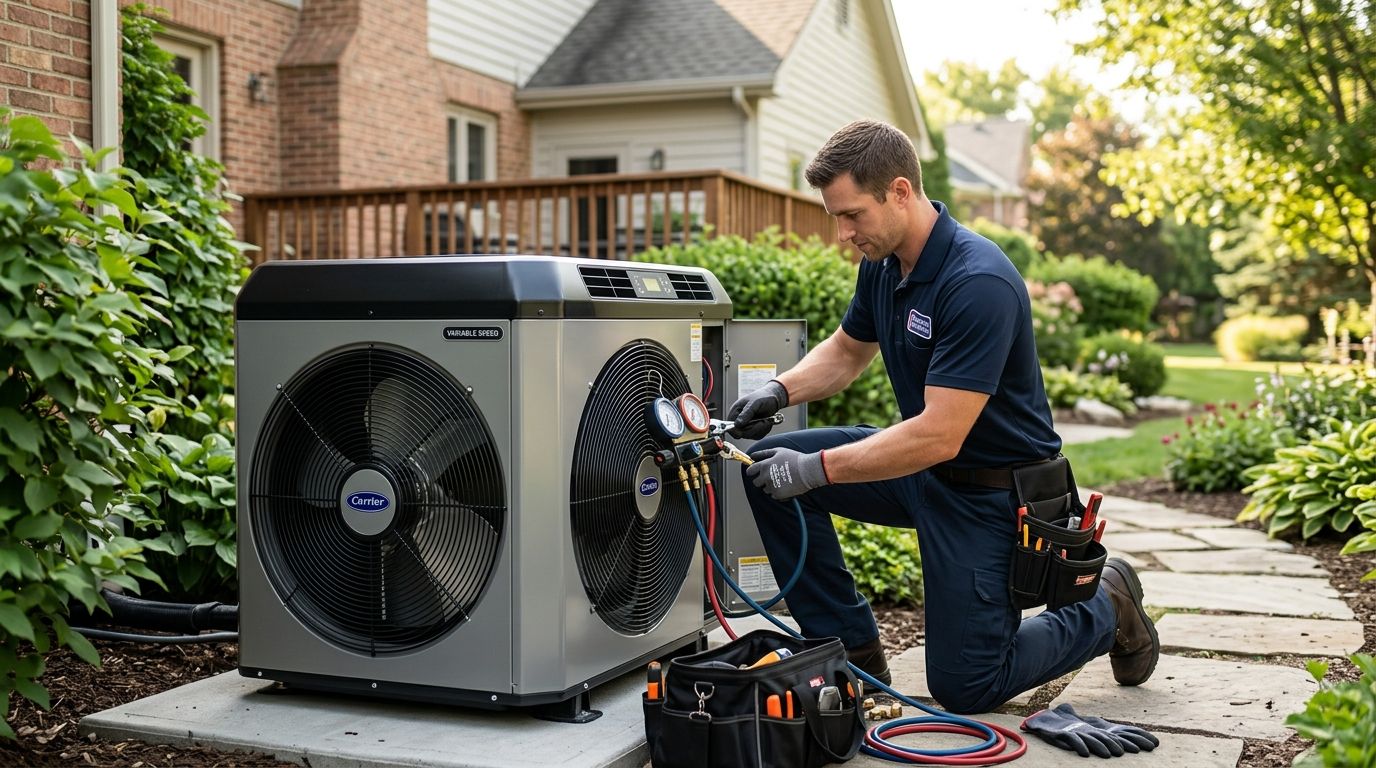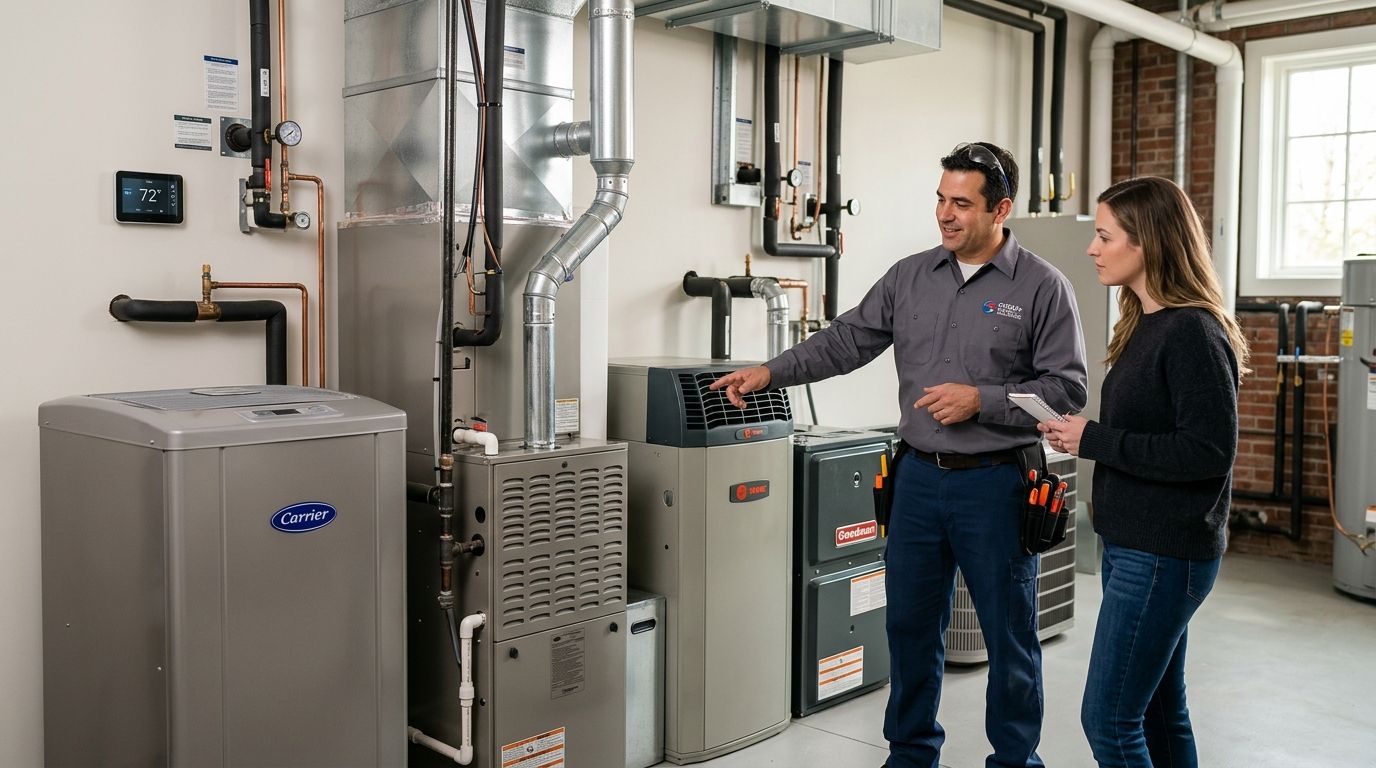
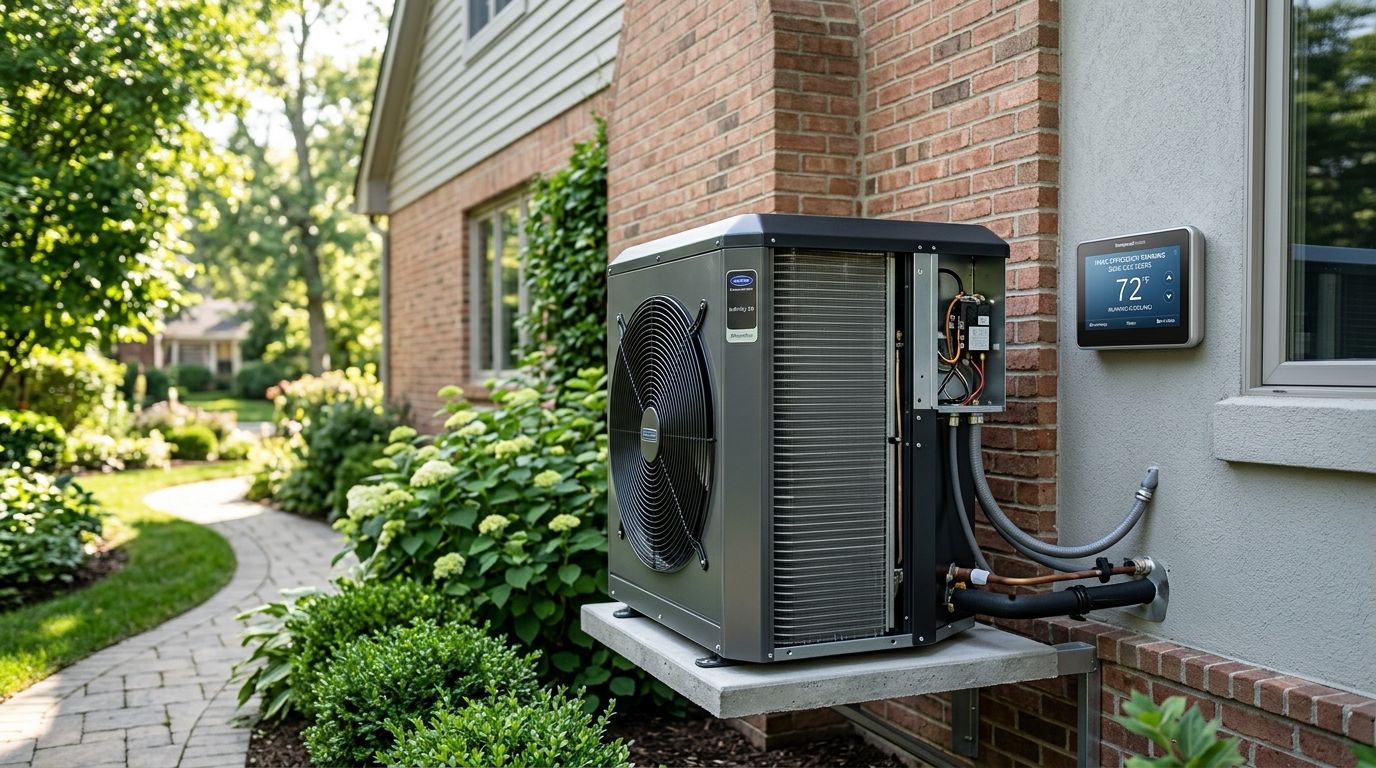
Trane leads HVAC brands ranked by energy efficiency in 2026, with variable-speed heat pumps and air conditioners built to run well above the federal efficiency floor. Lennox pushes the ceiling higher for anyone chasing the single highest SEER2 rating on the market. American Standard matches most of Trane's engineering at a lower trim level, and Goodman is the honest budget pick for homeowners who just need to clear Missouri's 2026 minimum efficiency standard.
- Trane wins hvac brands ranked by energy efficiency in 2026 for overall performance across AC and heat pump lines.
- Lennox posts the highest SEER2 ceiling of any major brand sold in Missouri right now.
- American Standard delivers close to Trane-level efficiency at a lower equipment tier.
- Goodman is the budget choice that still clears the 14.3 SEER2 federal minimum.
- Daikin leads ductless mini-split efficiency for zoned additions and older homes.
Why this matters
The Department of Energy raised the efficiency floor in January 2023, replacing the old SEER scale with SEER2 and setting Missouri's minimum at 14.3 SEER2 for split-system air conditioners and 7.5 HSPF2 for heat pumps. Every brand sold in 2026 has to clear that bar, so the real question isn't whether a unit is "efficient" — it's how far above the floor it sits and how consistently it holds that rating across summer humidity and Ozark-region cold snaps.
Lake of the Ozarks homes see both extremes in the same year: sticky, humid summers that punish single-stage compressors and winter lows that expose undersized heat pumps. A brand that ranks well nationally can still underperform locally if the model line isn't matched to that swing. That's the gap this ranking is built to close, and it's why the best air conditioner brands for Missouri homes breakdown goes deeper on local matching than a national spec sheet ever will.
What makes the best energy-efficient HVAC brand
- SEER2 and HSPF2 ratings across the full lineup, not just one flagship model
- Compressor staging — variable-speed beats two-stage, two-stage beats single-stage for real-world efficiency
- Depth of ENERGY STAR certified models, since a brand with one certified unit isn't the same as a brand with ten
- Smart thermostat and zoning compatibility, which cuts runtime waste independent of the equipment's rated efficiency
- Documented performance in humid, variable climates like central Missouri, not just lab conditions
HVAC brands ranked by energy efficiency: at a glance
| Brand | Best for | Standout feature | Key limitation |
|---|---|---|---|
| Trane | Overall efficiency | Variable-speed compressors across most AC and heat pump lines | Higher upfront equipment cost |
| Lennox | Maximum SEER2 ceiling | Inverter-driven systems rated above 26 SEER2 | Thinner parts and service network in rural areas |
| American Standard | Value-efficiency balance | Shares Trane's core engineering at a lower trim | Fewer smart-connectivity options on base models |
| Carrier | Connected, load-matched efficiency | Communicating controls that modulate output in real time | Proprietary thermostat needed for full function |
| Daikin | Ductless mini-split efficiency | Inverter mini splits built for room-by-room zoning | Ducted whole-home options less common locally |
| Rheem | Furnace efficiency at mid-tier cost | Modulating gas furnaces with condensing technology | Fewer high-SEER2 AC options than Trane or Lennox |
| Goodman | Budget-minimum compliance | Single-stage systems that clear the 14.3 SEER2 floor | Efficiency ceiling well below premium brands |
1. Trane: best HVAC brand for overall energy efficiency
Trane builds variable-speed compressors into most of its residential AC and heat pump lineup, which means the equipment throttles output instead of cycling fully on and off. That reduces the energy spikes that come with single-stage systems and keeps humidity better controlled through Ozark-region summers.
Trane pros:
- Variable-speed technology spans most of the lineup, not just one flagship
- Strong dealer and parts network across Missouri
- Pairs well with zoning systems for room-by-room control
Trane cons:
- Premium equipment cost relative to Goodman or Rheem
- Top-tier smart features require Trane's own connected thermostat
Best for: homeowners who want the highest confidence in year-round efficiency and are replacing a full system, not patching an old one. Verdict: Buy.
2. Lennox: best HVAC brand for maximum SEER2 rating
Lennox's flagship inverter systems post some of the highest SEER2 ratings sold in 2026, built around compressors that modulate output in fine increments rather than jumping between two or three fixed speeds. That gives Lennox the edge for buyers who want the single highest efficiency number available, full stop.
Lennox pros:
- Highest SEER2 ceiling among mainstream residential brands
- Strong ENERGY STAR representation across mid-to-high tier models
- Quiet operation at low compressor speeds
Lennox cons:
- Fewer independent dealers in smaller Missouri towns
- Parts lead times can run longer outside metro service areas
Best for: buyers who prioritize the top efficiency number over service network density. Verdict: Buy.
3. American Standard: best HVAC brand for value-efficiency balance
American Standard shares a parent company and much of its compressor engineering with Trane, sold under a separate brand at a lower trim level. That gets you a large share of Trane's efficiency performance without paying for Trane's top-shelf smart-home features.
American Standard pros:
- Compressor engineering close to Trane at a lower price tier
- Solid ENERGY STAR presence in the mid-tier lineup
- Widely serviced across mid-Missouri
American Standard cons:
- Smart thermostat integration lags behind Trane's top models
- Flagship efficiency numbers don't quite match Lennox's ceiling
Best for: homeowners who want Trane-adjacent performance without the Trane-level price. Verdict: Buy.
4. Carrier: best HVAC brand for connected, load-matched efficiency
Carrier's Infinity-tier systems use communicating controls that let the indoor and outdoor units talk to each other and adjust output based on real-time load, instead of running on fixed presets. That matters most in a swing climate where a system needs to ramp down gently on a mild October day and ramp up hard during a July heat spell.
Carrier pros:
- Communicating system architecture adjusts output continuously
- Strong integration with connected thermostats for load management
- Good ENERGY STAR coverage at the upper tiers
Carrier cons:
- Full efficiency benefits require Carrier's own compatible thermostat
- Mid-tier models don't outperform American Standard at a similar price point
Best for: homeowners already invested in a smart-home setup who want the HVAC system to talk to it. Verdict: Buy.
5. Daikin: best HVAC brand for ductless mini-split efficiency
Daikin built its reputation on inverter-driven ductless systems, which is a different efficiency problem than whole-home ducted AC. A mini split conditions one room or zone directly, so there's no duct loss to account for — a real factor in older Lake of the Ozarks homes with leaky or undersized ductwork.
Daikin pros:
- Inverter technology tuned specifically for zoned, room-by-room efficiency
- Strong option for additions, sunrooms, and garages without existing ductwork
- No duct losses to offset rated efficiency
Daikin cons:
- Less common as a primary whole-home ducted system in this market
- Multiple indoor heads add upfront complexity for larger homes
Best for: zoned additions, room conversions, or older homes where duct efficiency is already compromised. Verdict: Buy. For a deeper breakdown of zoned systems, the best ductless mini-split systems guide covers sizing by room.
6. Rheem: best HVAC brand for furnace efficiency at a mid-tier price
Rheem's modulating gas furnaces use condensing technology to pull extra heat out of exhaust gas before it leaves the flue, which pushes efficiency well above older single-stage furnace designs. It's a stronger furnace lineup than it is an AC lineup relative to Trane and Lennox.
Rheem pros:
- Condensing furnace technology at a competitive price tier
- Solid mid-range ENERGY STAR furnace options
- Broad dealer network in central Missouri
Rheem cons:
- AC lineup doesn't reach the SEER2 ceiling of Trane or Lennox
- Fewer variable-speed AC options than the top two brands
Best for: homeowners replacing a furnace specifically and prioritizing heating efficiency over AC performance. Verdict: Buy. The best furnace brands breakdown ranks furnace-specific picks in more detail.
7. Goodman: best HVAC brand for budget-minimum efficiency
Goodman's single-stage systems are built to clear the 14.3 SEER2 federal minimum without the variable-speed technology that drives up cost on premium brands. That's a legitimate strategy for a tight budget, not a compromise dressed up as a feature.
Goodman pros:
- Lower equipment cost than Trane, Lennox, or Carrier
- Meets the 2026 federal efficiency minimum reliably
- Widely available parts for straightforward single-stage repairs
Goodman cons:
- Efficiency ceiling caps out well below premium inverter systems
- Fewer ENERGY STAR certified models in the lineup
Best for: budget-constrained replacements where meeting code is the goal, not chasing top efficiency. Verdict: Hold — fine as a stopgap, worth a second look against American Standard if the budget has any flex.
How we ranked these HVAC brands
Each brand is scored against the five criteria above: lineup-wide SEER2 and HSPF2 ratings, compressor staging, ENERGY STAR depth, smart thermostat compatibility, and known performance in humid, variable climates like the Lake of the Ozarks region. Trane and Lennox lead on raw ratings and staging technology; American Standard and Carrier trade a fraction of that ceiling for cost or connectivity; Daikin owns a category of its own in ductless efficiency; Rheem and Goodman serve budget and furnace-specific needs where a premium AC ceiling isn't the priority.
Which HVAC brand should you choose in 2026?
If you're replacing a full system and want the strongest overall efficiency, Trane is the default pick. If a lower duct-loss zoned system fits the space better, Daikin's ductless lineup solves a different problem entirely. Budget-first buyers should look at Goodman first and American Standard second before settling — the gap in real-world efficiency is smaller than the price gap suggests.
FAQ
What is the best HVAC brand for energy efficiency in 2026?
Trane ranks best overall for energy efficiency in 2026 due to variable-speed compressors across most of its AC and heat pump lineup. Lennox posts a higher SEER2 ceiling on its flagship models, but Trane's lineup-wide consistency gives it the overall edge.
Is Lennox more efficient than Trane?
Lennox's top inverter models post higher SEER2 ratings than Trane's flagship line. Trane still wins on overall lineup consistency and local service network across Missouri.
What is the minimum SEER2 rating allowed in Missouri?
Missouri's minimum is 14.3 SEER2 for split-system air conditioners, set by the DOE's 2023 regional efficiency standard. Heat pumps carry a separate 7.5 HSPF2 minimum.
Is American Standard the same as Trane?
American Standard and Trane share a parent company and much of the same compressor engineering, sold under separate brand names. American Standard typically sits at a lower price trim with slightly fewer smart-home features.
Are ductless mini splits more efficient than central AC?
Ductless mini splits avoid the duct losses that reduce a central system's real-world efficiency, which is why Daikin's inverter mini splits perform well in zoned rooms and additions. Whole-home ducted systems can still be more practical for larger, already-ducted homes.
Is Goodman a bad HVAC brand?
Goodman isn't a bad brand, it's a budget brand that reliably clears the 2026 federal efficiency minimum without premium variable-speed technology. It's a reasonable stopgap pick, not a top-tier efficiency choice.
Which HVAC brand has the best heat pump for cold climates?
Trane and Carrier both build heat pumps that hold performance in colder swings, which matters for central Missouri winters that dip well below freezing. Any brand's heat pump still needs correct sizing for the specific home to hit rated efficiency.
How much more efficient are 2026 HVAC systems than older units?
Systems sold in 2026 must clear 14.3 SEER2, well above the 10-13 SEER equipment common in homes installed before the 2006 federal minimum increase. A system installed 15-20 years ago is very likely running below current code.
One last thing
The biggest efficiency loss in a lot of Lake of the Ozarks homes isn't the brand on the outdoor unit, it's ductwork sized for a house that's been added onto twice since installation. A top-tier Trane or Lennox system pushed through undersized or leaky ducts will underperform a mid-tier system installed correctly. Get the ductwork checked before you upgrade the brand.