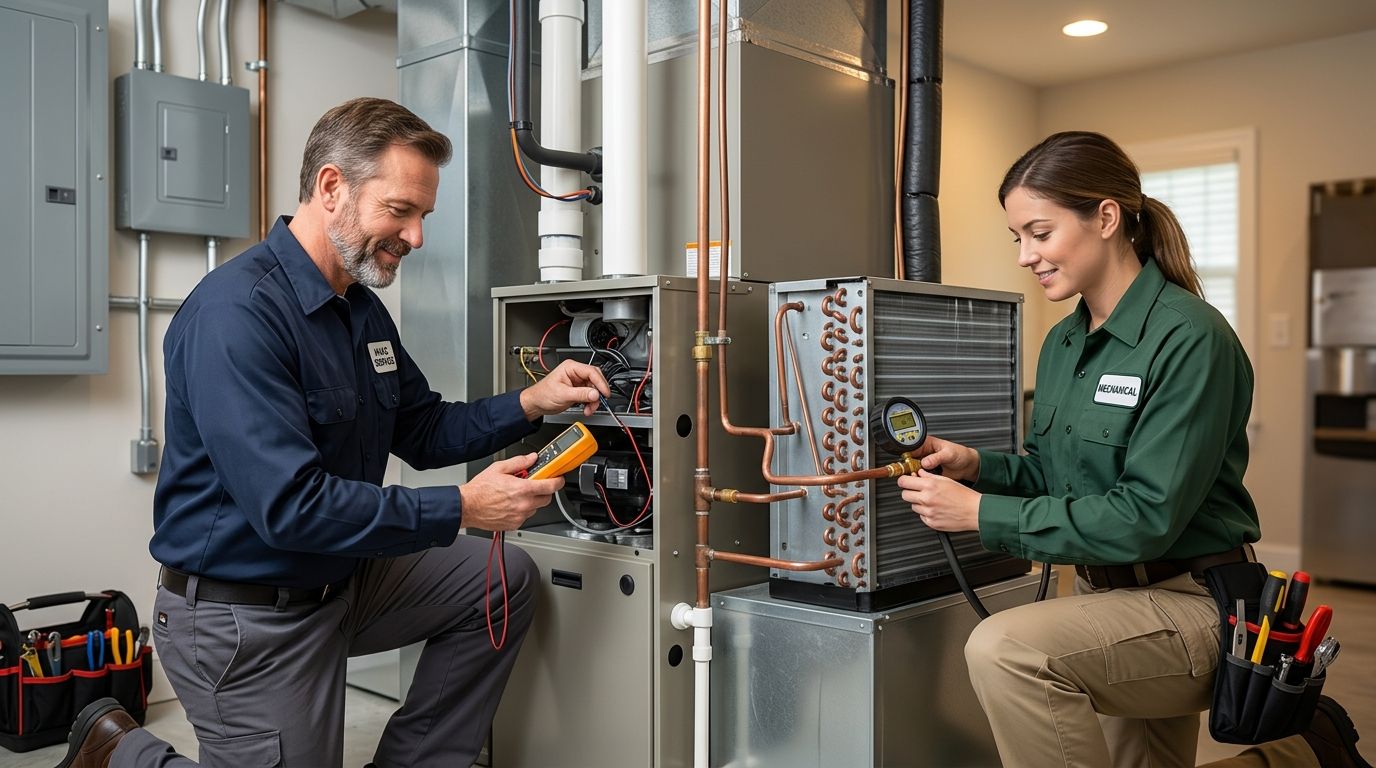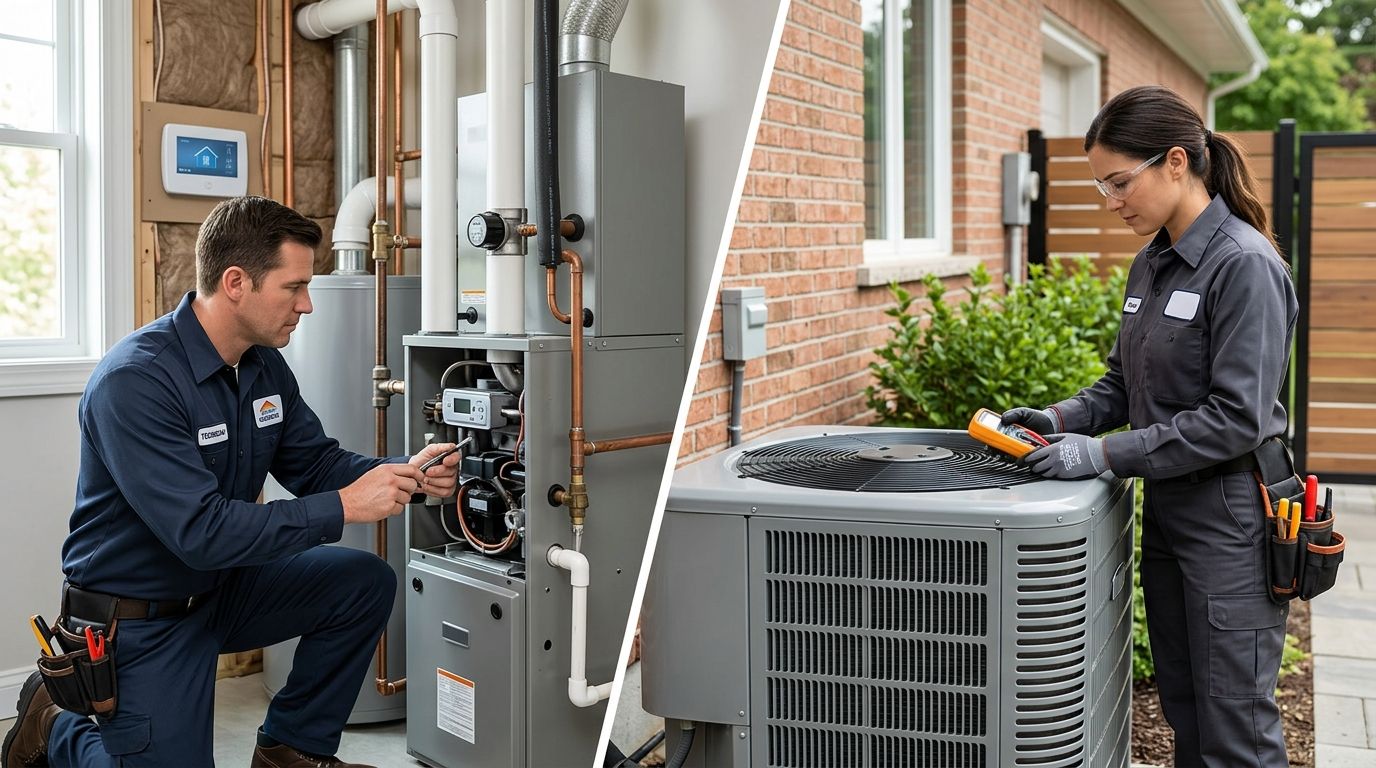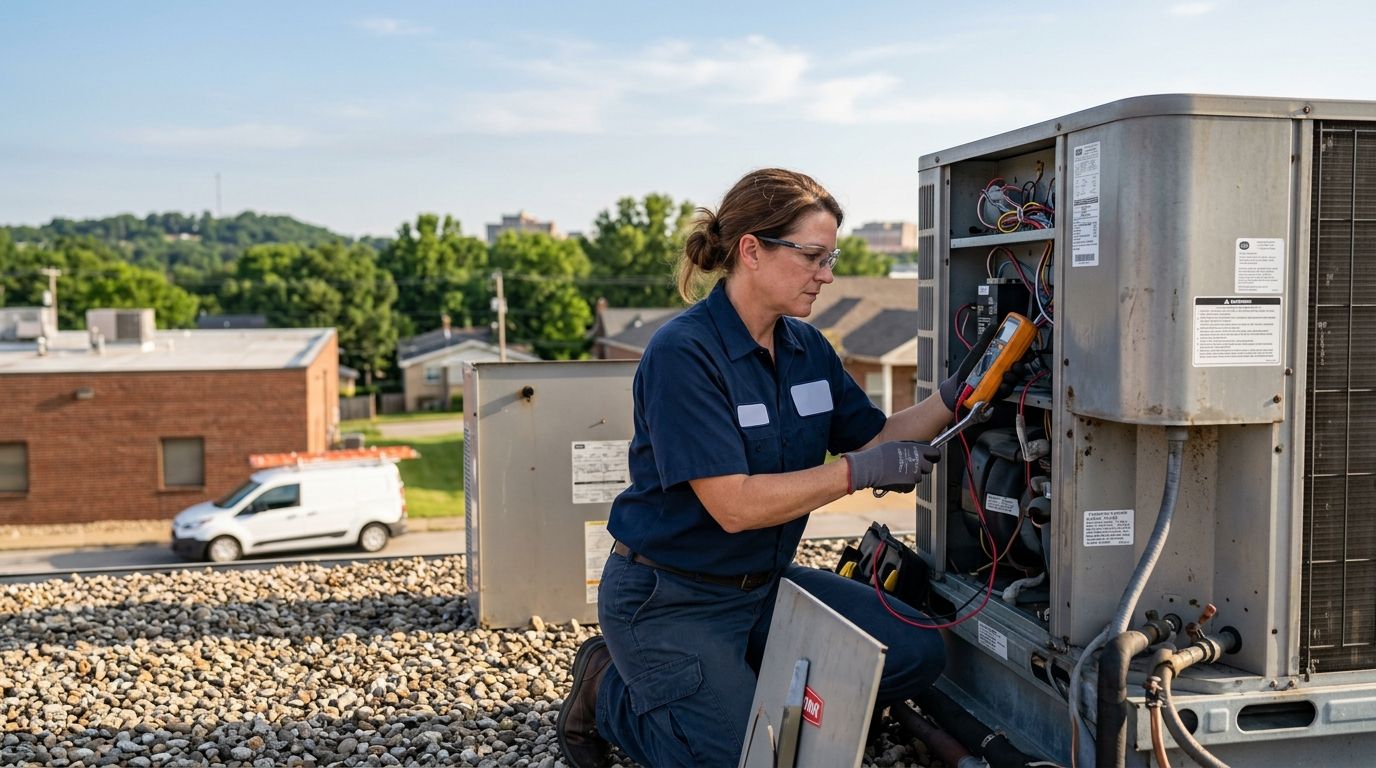
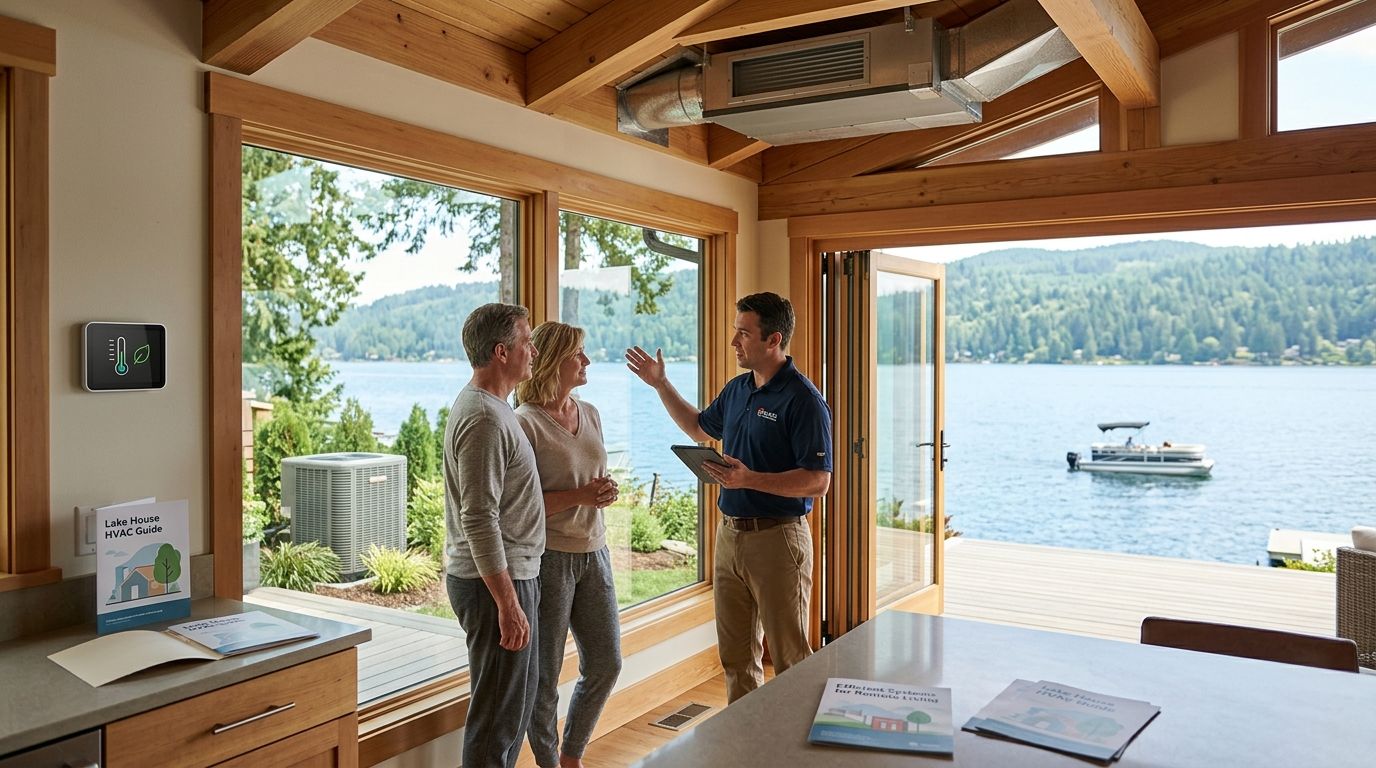
Lake house owners need HVAC systems that handle weeks of vacancy, lake-driven humidity, and freeze risk without anyone walking through the door to check the thermostat. A year-round home gets daily human oversight; a lake house at Lake of the Ozarks might sit empty from a Sunday afternoon until the next long weekend, and the system has to run itself correctly the whole time.
- HVAC for lake house owners means sizing for occupancy patterns, not just square footage, and building in remote monitoring.
- A heat pump built for lake homes handles humidity and temperature swings better than a standard central AC setup alone.
- Freeze protection with a 55°F setpoint is the single most common gap in vacant lake houses during Missouri winters.
- West Heating & Cooling services Camdenton, Osage Beach, Lake Ozark, Warsaw, and Lebanon with installation and 24/7 emergency repair.
Why HVAC matters for lake house owners
A lake house isn't a smaller version of a primary residence problem — it's a different problem. Humidity coming off the water sits in the house longer when nobody's opening windows or running the system daily, which pushes mold and musty odors into closets, boat storage rooms, and lower-level walkouts. A heat pump built for lake homes handles that moisture load and the wider temperature swings between weekday vacancy and weekend occupancy better than equipment sized for a house that's occupied every day.
The other risk is freeze damage. A furnace that fails on a Tuesday in January in an empty house doesn't get noticed until pipes have already split, and by the time an owner drives up from Kansas City or St. Louis, the damage is done. HVAC for lake house owners has to plan for absence, not just comfort.
Size the system for actual occupancy, not square footage alone
A contractor who sizes strictly off square footage will oversize or undersize the equipment for a house that swings between empty and full occupancy in the same week.
- Get a room-by-room load calculation, not a rule-of-thumb estimate based on square footage
- Account for the walkout basement, boat garage, and any bonus rooms separately from the main living space
- Factor in large lake-facing windows, which add heat gain in summer and heat loss in winter
- Ask whether the house is occupied on weekends only, seasonally, or year-round, and size the backup heat accordingly
- Check air conditioner sizing guidance for Missouri homes before locking in equipment tonnage
Add whole-home dehumidification for lake air
Standard central air conditioning pulls some moisture out of the air, but it's not built to manage the humidity load a lake property carries, especially in a house that sits closed up for days.
- Run a portable dehumidifier in the lowest level of the house as a stopgap before any equipment upgrade
- Track indoor humidity with a basic hygrometer — keeping it in the 30-50% range is standard HVAC guidance for preventing mold growth
- Seal crawlspace vents and add a vapor barrier if the house sits on a crawlspace near the water
- Install a whole-home dehumidifier tied into the ductwork so it runs automatically whether anyone's home or not
- Check dehumidifier drain lines each season — a clogged drain in an unoccupied house means standing water nobody catches for weeks
Install remote monitoring before the system needs it
Once sizing and moisture control are handled, the next move is visibility — knowing what the system is doing when nobody's on the property.
Get your lake house HVAC checked before the season changes
Family-owned service for Camdenton, Osage Beach, Lake Ozark, and Warsaw.
- Set a phone or email alert on any smart thermostat so a temperature drop triggers a notification, not a surprise
- Log the setpoint schedule so the system doesn't idle at full comfort temperature for six empty days
- Pair the thermostat with a leak sensor near water heaters, washing machines, and dehumidifier drain pans
- Ask about system diagnostics that flag a failed compressor or ignitor remotely instead of waiting for a service call
- West Heating & Cooling installs and services thermostats built for this kind of remote setup as part of standard HVAC work in the Lake of the Ozarks area
Set freeze protection for vacant winter weeks
A Missouri winter can drop hard and fast, and a lake house with nobody checking on it is the exact scenario freeze protection exists for.
- Never set the thermostat below 55°F when the house will sit empty — this is the standard freeze-protection setpoint used across the HVAC and plumbing trades
- Insulate exposed pipes in crawlspaces, boat garages, and unheated storage areas
- Keep cabinet doors under sinks open on exterior walls so warm air reaches the pipes
- Add a backup heat source or battery-backed thermostat alert for power outages, which are common during winter storms near the lake
- Confirm the furnace has had a working ignitor and flame sensor check before the first hard freeze of the season
Choose equipment built for temperature swings, not steady occupancy
A system designed for a house that's occupied every day of the week doesn't behave the same in a house that swings from empty to full in 48 hours.
- Ask any contractor quoting the job whether the equipment they're proposing is rated for cycling on and off around irregular occupancy
- Favor variable-speed or two-stage equipment over single-stage units, since single-stage systems overshoot temperature swings in intermittently occupied homes
- Get manufacturer warranty terms in writing before signing off on equipment for a seasonal property
- Confirm the ductwork was designed for the house's actual layout, not adapted from a different floor plan
Schedule maintenance around opening and closing the house
A lake house needs a maintenance rhythm that lines up with how the property is actually used, not a generic twice-a-year schedule built for a full-time residence.
- Schedule a system check before the first weekend of heavy summer use and again before winterizing the house
- Replace air filters at every visit — a house that sits closed collects dust differently than one with daily foot traffic
- Clean condenser coils before the cooling season starts, since debris from nearby trees and lake vegetation builds up fast
- Inspect the dehumidifier and its drain line at both seasonal visits
- Ask whether a maintenance plan built around seasonal occupancy is available instead of a standard year-round schedule
Protect the system from lake-area power outages and surges
Lake properties see more storm-driven outages than a lot of inland neighborhoods, and a power surge on an unoccupied system can take out a control board nobody notices for weeks.
- Install a whole-system surge protector at the electrical panel, not just at individual outlets
- Consider a backup power option for the thermostat and control board if outages are frequent in your part of the lake
- Reset and test the system after every outage rather than assuming it restarted correctly
- Keep a record of outage dates so a contractor can check for surge damage during the next maintenance visit
Comparing HVAC options for lake homes
| Option | Best for | Key limitation |
|---|---|---|
| Heat pump | Moderate winters, year-round efficiency, humidity control | Loses efficiency in extended sub-teens outdoor temperatures without backup heat |
| Dual-fuel (furnace + heat pump) | Reliable freeze protection during Missouri cold snaps | Two systems to install, service, and maintain |
| Central AC + gas furnace | Straightforward replacement for homes already piped for gas | No built-in zoning without added equipment |
| Ductless mini-split | Bonus rooms, walkout basements, additions without ductwork | Indoor units are visible; multiple heads needed for whole-house coverage |
A dual-fuel setup is the strongest freeze-protection choice for a lake house that sits vacant through Missouri winters — the gas furnace covers the cold snaps a heat pump alone can't handle efficiently.
Common mistakes lake house owners make
- Sizing off square footage alone. A house that swings between empty and fully occupied needs a load calculation, not a generic per-square-foot estimate.
- Skipping maintenance because nobody's there to complain. An unoccupied house hides problems longer — a failing system just runs worse and worse until someone finally visits.
- Ignoring humidity until it smells like a problem. By the time musty odors show up, moisture damage has usually already started in closets and lower levels.
- No freeze protection plan. Setting the thermostat too low, or not accounting for power outages, is the single biggest cause of pipe damage in vacant lake properties.
- Treating the lake house like the primary residence. Equipment, scheduling, and monitoring all need to be built around irregular occupancy, not daily use.
FAQ
What's the best HVAC system for a lake house?
A dual-fuel system pairing a heat pump with a gas furnace works best for most Lake of the Ozarks lake houses in 2026 because it covers both humidity control and reliable freeze protection during cold snaps. Straight heat pumps work well for moderate winters but need backup heat for extended sub-teens temperatures.
How do I keep my lake house from freezing when nobody's there?
Set the thermostat no lower than 55°F, insulate exposed pipes, and use a remote-monitoring thermostat that alerts you if the temperature drops. This 55°F setpoint is the standard freeze-protection threshold used across the HVAC and plumbing trades.
Do lake houses need a dehumidifier?
Yes, a whole-home dehumidifier tied into the ductwork is worth it for most lake properties, since humidity from the water sits longer in a house that isn't opened up daily. Keeping indoor humidity in the 30-50% range prevents mold growth in closed-up spaces.
Is a heat pump better than a furnace for a lake house?
A heat pump is more efficient for moderate Missouri winters and doubles as the cooling system, but it loses efficiency in extended cold snaps below the teens. Pairing it with a gas furnace as a dual-fuel system covers both scenarios.
How often should HVAC maintenance happen at a seasonal lake house?
Schedule one visit before the first heavy weekend of summer use and another before winterizing the house, rather than a generic twice-a-year schedule. Occupancy patterns at a lake house don't match a full-time residence, so maintenance timing shouldn't either.
Can I monitor my lake house HVAC system remotely?
Yes, a smart thermostat with phone alerts flags temperature drops, and pairing it with leak sensors near water heaters and dehumidifier drain pans catches problems before a return visit. This is the single most useful upgrade for a house that sits empty for stretches.
What size AC unit does a lake house need?
Size comes from a room-by-room load calculation that accounts for large lake-facing windows and irregular occupancy, not a flat square-footage estimate. Oversizing or undersizing both cause short-cycling and poor humidity control in a house that swings between empty and full.
Does a power surge protector matter for lake house HVAC?
Yes, lake properties see more storm-driven outages than many inland areas, and a surge on an unoccupied system can damage a control board nobody notices for weeks. A whole-system surge protector at the panel is cheap insurance against that.
One last thing
The freeze-protection setpoint is the detail most lake house owners get wrong: 55°F, not 62°F or 65°F, is the standard threshold, and setting it too high just burns energy on an empty house while setting it too low risks the exact pipe damage the setpoint exists to prevent. West Heating & Cooling builds maintenance schedules around when the house is actually used, not a generic calendar, which matters more at the lake than almost anywhere else in Missouri.