Lake of the Ozarks homes deal with humidity, shoreline moisture, and Missouri cold snaps that most national heat pump guides never account for. This ranks the heat pump types that actually hold up in Camdenton, Osage Beach, Lake Ozark, and Warsaw in 2026, with a clear pick for full-time living, additions, and part-time lake houses.
- Best heat pumps for lake homes in 2026: variable-speed models win overall for humidity control.
- Ductless mini-splits are the pick for boathouses, additions, and guest cabins without ductwork.
- Cold-climate heat pumps hold rated capacity through Missouri winter drops near 5°F.
- Dual-fuel hybrid systems suit older lake homes with existing furnaces and tight budgets.
- Smart-thermostat pairing matters most for owners who aren't at the lake full time.
Why this matters
A heat pump sized for a subdivision in Springfield or Columbia doesn't automatically work at the lake. Homes near the water carry higher ambient humidity most of the year, seasonal vacancy that leaves nobody around to catch a frozen line, and outbuildings — boathouses, bunkhouses, detached garages — that were never wired for ductwork.
West Heating & Cooling installs and services heat pumps across four lake communities — Camdenton, Osage Beach, Lake Ozark, and Warsaw — and the failure pattern repeats: units that can't dehumidify a lake house through a wet July, and standard heat pumps that stall out on the coldest nights of a Missouri winter. Which system wins depends on how the house is built and how often anyone's actually there in 2026.
The verdict
Best overall for a full-time lake home: variable-speed heat pump. Best for additions, boathouses, and guest cabins: ductless mini-split heat pump. Best budget pick for an older home with existing ductwork: dual-fuel hybrid system.
What makes the best heat pump for a lake home
- Humidity control at partial load — lake air stays humid most of the year, and a unit that only runs full-blast or off can't manage it
- Rated capacity at low outdoor temperatures — Missouri winters drop into single digits, and every heat pump loses capacity as it gets colder
- Zoning for additions, boathouses, and detached buildings that never got ductwork
- Compatibility with the ductwork already in the house, or the lack of it
- Remote monitoring for owners who aren't on-site full time
- A backup heat source for the coldest nights of the year
Heat pumps for lake homes at a glance
| System type | Best for | Standout feature | Key limitation |
|---|---|---|---|
| Variable-speed heat pump | Full-time lake homes | Modulates output to strip humidity at partial load | Needs a qualified installer to set up correctly |
| Ductless mini-split heat pump | Additions, boathouses, guest cabins | No ductwork required, room-by-room control | Multiple indoor heads mean multiple filters to check |
| Dual-fuel hybrid system | Older homes with existing ductwork | Furnace backs up the heat pump below its balance point | Two systems to maintain instead of one |
| Cold-climate heat pump | Whole-house heating in harsh winters | Holds rated capacity down to roughly 5°F | Costs more upfront than a standard heat pump |
| Smart-thermostat-paired heat pump | Seasonal and part-time lake homes | Remote monitoring flags freeze-ups when nobody's home | Depends on the home's Wi-Fi staying up |
1. Variable-speed heat pump: best heat pump for a full-time lake home
A variable-speed heat pump ramps its compressor up or down instead of switching between full-on and full-off. That matters at the lake because most of the humidity problem shows up during the shoulder seasons, when a single-stage unit short-cycles and leaves moisture behind.
Variable-speed heat pump pros:
- Pulls more moisture out of the air per hour of runtime than single-stage units
- Holds a steadier indoor temperature with fewer on/off cycles
- Runs quieter at partial load
Variable-speed heat pump cons:
- Costs more than a single-stage or two-stage unit
- Needs correct commissioning — a poorly set up system won't deliver the humidity benefit
Best for: full-time lake homeowners who fight humidity year-round. Verdict: Buy.
2. Ductless mini-split heat pump: best heat pump for additions, boathouses, and guest cabins
A ductless mini-split runs refrigerant lines to one or more wall- or ceiling-mounted heads instead of pushing air through ducts. For lake properties with a boathouse, a detached bunkhouse, or a room addition that never got tied into the main system, it's usually the only realistic option short of tearing into walls.
Ductless mini-split pros:
- No ductwork needed — installs in a day or two in most single-zone setups
- Each head is controlled independently, so an unoccupied bunkhouse doesn't run 24/7
- Works as a standalone system in a detached structure with its own outdoor unit
Ductless mini-split cons:
- Multiple heads mean multiple filters to clean on a schedule
- Indoor units are visible on the wall or ceiling, which some homeowners don't like
See the full ductless mini-split breakdown for sizing by room and zone count.
Best for: boathouses, additions, and detached guest cabins without existing ductwork. Verdict: Buy.
3. Dual-fuel hybrid system: best heat pump for an older lake home on a budget
A dual-fuel system pairs a heat pump with the gas furnace already installed, switching to the furnace automatically once outdoor temperatures drop below the heat pump's efficient range. For an older lake home with usable ductwork and an existing furnace, it's the lowest-disruption upgrade path.
Dual-fuel hybrid pros:
- Reuses existing ductwork and furnace, cutting installation scope
- Furnace covers the coldest nights so the heat pump doesn't have to be oversized
- Lower upfront cost than a full cold-climate heat pump system
Dual-fuel hybrid cons:
- Two systems to maintain and service instead of one
- Only makes sense if the furnace and ductwork are already in decent shape
Check the HVAC options for older homes guide before deciding whether the existing ductwork is worth keeping.
Best for: older lake homes with working ductwork and a furnace that still has useful life left. Verdict: Buy, with an inspection first.
4. Cold-climate heat pump: best heat pump for harsh Missouri winters
A cold-climate heat pump is built to hold its rated heating capacity at outdoor temperatures well below what a standard heat pump can handle — commonly down to around 5°F, per widely cited ENERGY STAR cold-climate specifications. That matters on the handful of nights each Missouri winter when temperatures at the lake sit in the single digits.
Cold-climate heat pump pros:
- Holds capacity through the coldest stretches of a Lake of the Ozarks winter
- Reduces or eliminates reliance on backup electric resistance heat
- Works as the sole heat source in a well-insulated home
Cold-climate heat pump cons:
- Higher equipment cost than a standard heat pump
- Benefit is wasted on a poorly insulated or drafty older home
See the full cold-climate heat pump ranking for how these units perform as outdoor temperature drops.
Best for: homeowners who want one system to carry the whole heating load through winter. Verdict: Buy.
5. Smart-thermostat-paired heat pump: best heat pump for a seasonal or vacation lake home
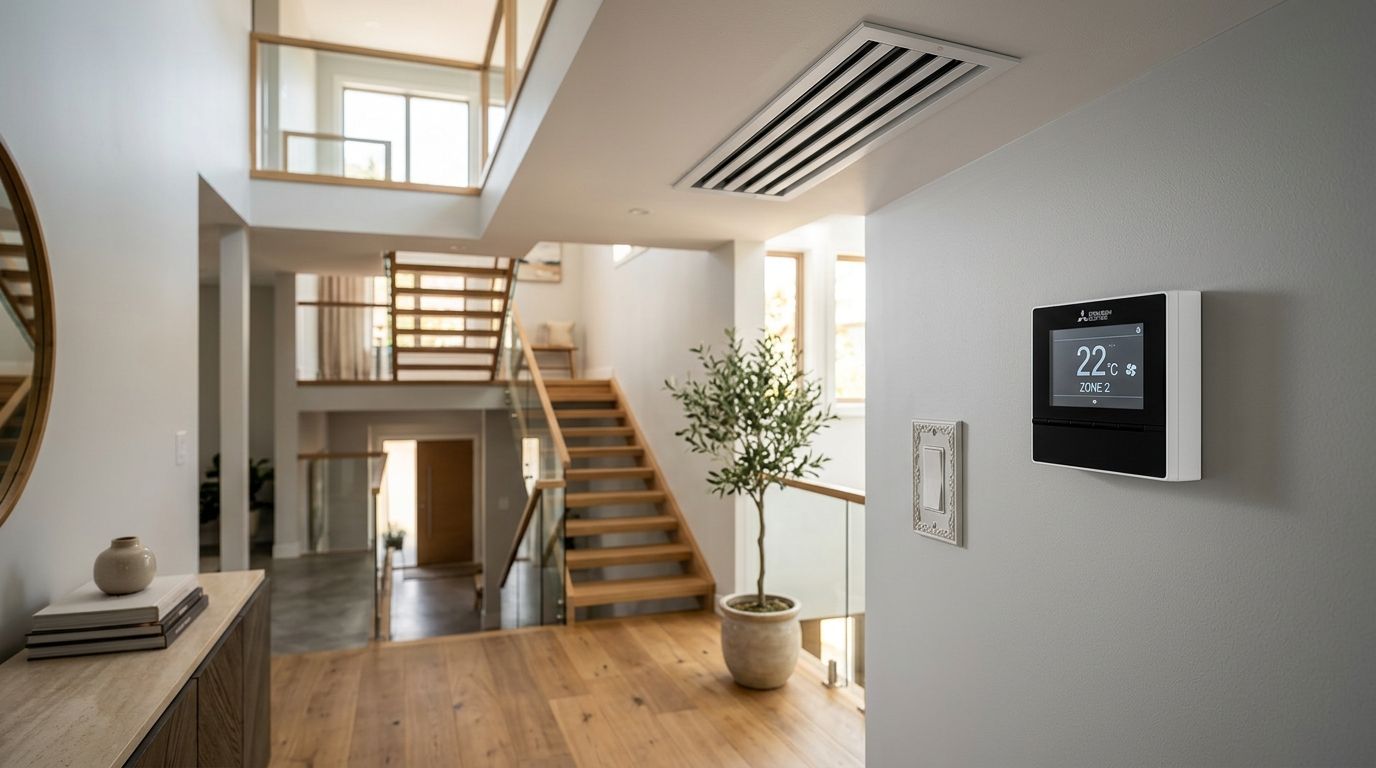
Pairing a heat pump with a connected thermostat gives an owner who isn't at the lake full time a way to check indoor temperature remotely and catch a failure before pipes freeze. On its own it's not a heat pump upgrade — it's a monitoring layer that matters more the less often someone's actually in the house.
Smart-thermostat pairing pros:
- Remote alerts if indoor temperature drops toward freezing
- Lets an owner adjust setback schedules from anywhere
- Works with most heat pump models already in service
Smart-thermostat pairing cons:
- Depends on the home's internet connection staying up
- Doesn't fix an undersized or failing heat pump — it just reports the problem faster
Best for: part-time and seasonal lake homeowners. Verdict: Buy as an add-on, not a standalone fix.
How we ranked these
Each system was weighed against the criteria above: humidity performance at partial load, rated capacity at low outdoor temperatures, zoning flexibility for detached structures, ductwork compatibility, remote monitoring, and backup heat availability. No single system wins on every criterion — that's why the list splits by use case instead of naming one universal winner.
“If a heat pump can't hold capacity below 5°F, it's not a Missouri winter heat pump — it's a mild-climate unit leaning on a heater strip to get through January.”
Which heat pump should you choose for your lake home?
For a full-time home fighting humidity most of the year, the variable-speed heat pump is the default pick in 2026. For a boathouse, addition, or guest cabin with no ductwork, the ductless mini-split wins outright. For an older home with a serviceable furnace and existing ductwork, the dual-fuel hybrid keeps the upgrade cheaper without giving up cold-weather backup. Add a smart thermostat to any of them if the house sits empty for stretches of the year.
Not sure which heat pump fits your lake home?
West Heating & Cooling serves Camdenton, Osage Beach, Lake Ozark, and Warsaw with 24/7 emergency service.
FAQ
What's the best heat pump for a lake home in Missouri?
A variable-speed heat pump is the best overall pick for a full-time Lake of the Ozarks home in 2026 because it manages humidity better than single-stage units. Homes with detached structures or existing furnaces often do better with a ductless mini-split or dual-fuel hybrid instead.
Are ductless mini-splits better than central heat pumps for lake houses?
Ductless mini-splits win specifically for additions, boathouses, and guest cabins that have no existing ductwork. A central variable-speed heat pump is still the better choice for whole-house heating and cooling in the main residence.
Can a heat pump handle Missouri winters without a backup furnace?
A cold-climate heat pump can hold rated capacity down to roughly 5°F and serve as the sole heat source in a well-insulated home. Older or less-insulated homes usually do better with a dual-fuel setup that lets the furnace cover the coldest nights.
How does lake humidity affect heat pump performance?
Higher ambient humidity near the water means a single-stage heat pump that cycles on and off often can't pull enough moisture out of the air. Variable-speed models run longer at lower output, which strips more humidity per hour of runtime.
Is a dual-fuel system better than a straight heat pump for an older lake home?
A dual-fuel system makes sense when the existing furnace and ductwork are still in good shape, since it reuses both and lowers installation cost. If the ductwork needs replacing anyway, a standalone cold-climate heat pump is usually the cleaner long-term choice.
Do heat pumps work in unheated boathouses or bunkhouses?
Ductless mini-split heat pumps are built for exactly this — a detached structure with no ductwork gets its own indoor head and outdoor unit. Central heat pumps can't reach a detached building without running new ductwork or line sets.
How often does a lake home heat pump need maintenance?
Lake homes near the shoreline see faster coil buildup from ambient moisture, so annual maintenance checks matter more than in a typical inland home. A maintenance plan catches refrigerant and coil issues before they turn into a mid-winter breakdown.
Should a vacation lake home heat pump have a smart thermostat?
Yes — a connected thermostat is the only way an owner who isn't on-site full time finds out about a failing system before pipes freeze. It doesn't replace proper equipment sizing, but it closes the gap for seasonal occupancy.
One last thing
Coils near the shoreline foul faster than coils inland — ambient moisture off the lake accelerates the buildup that eventually chokes airflow and drags down efficiency. An annual check before the first cold snap of the season catches that early, and it's cheaper than a mid-January service call in 2026.