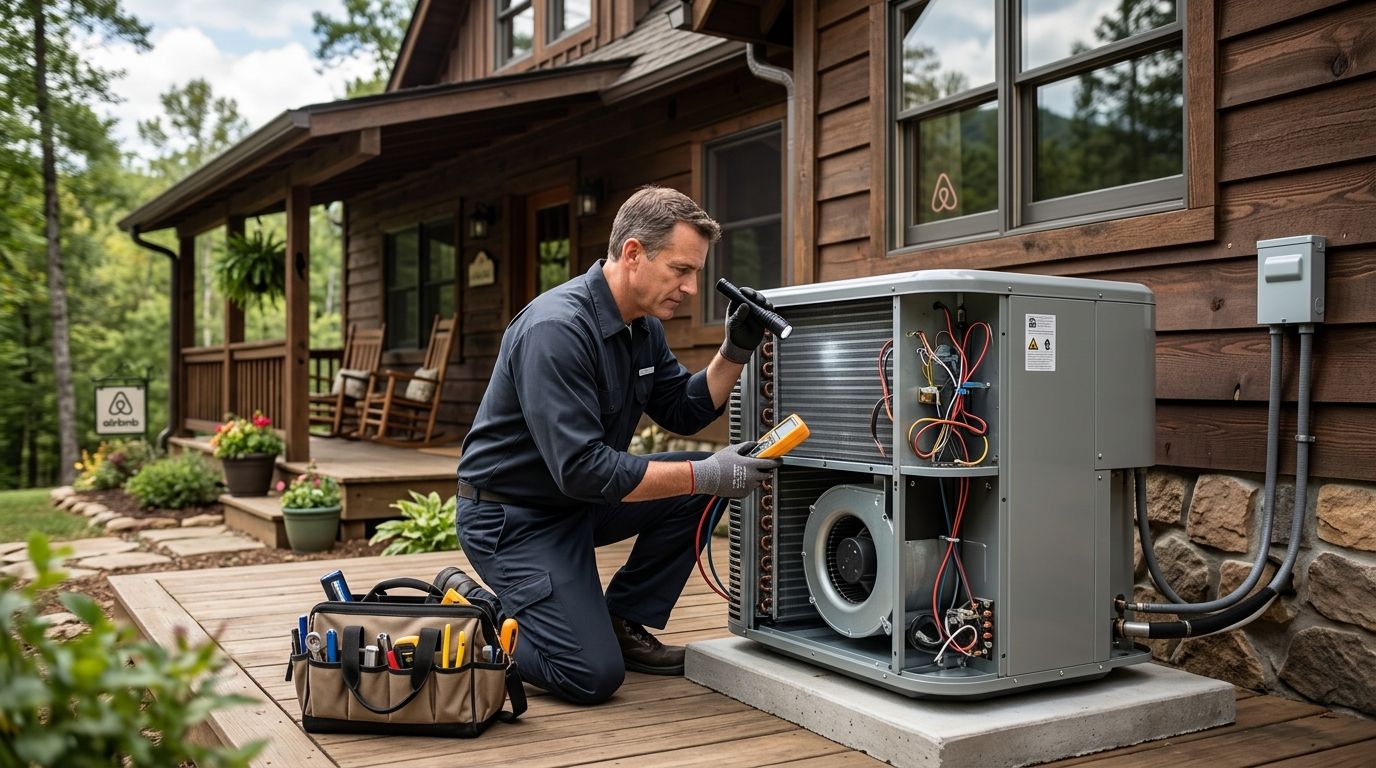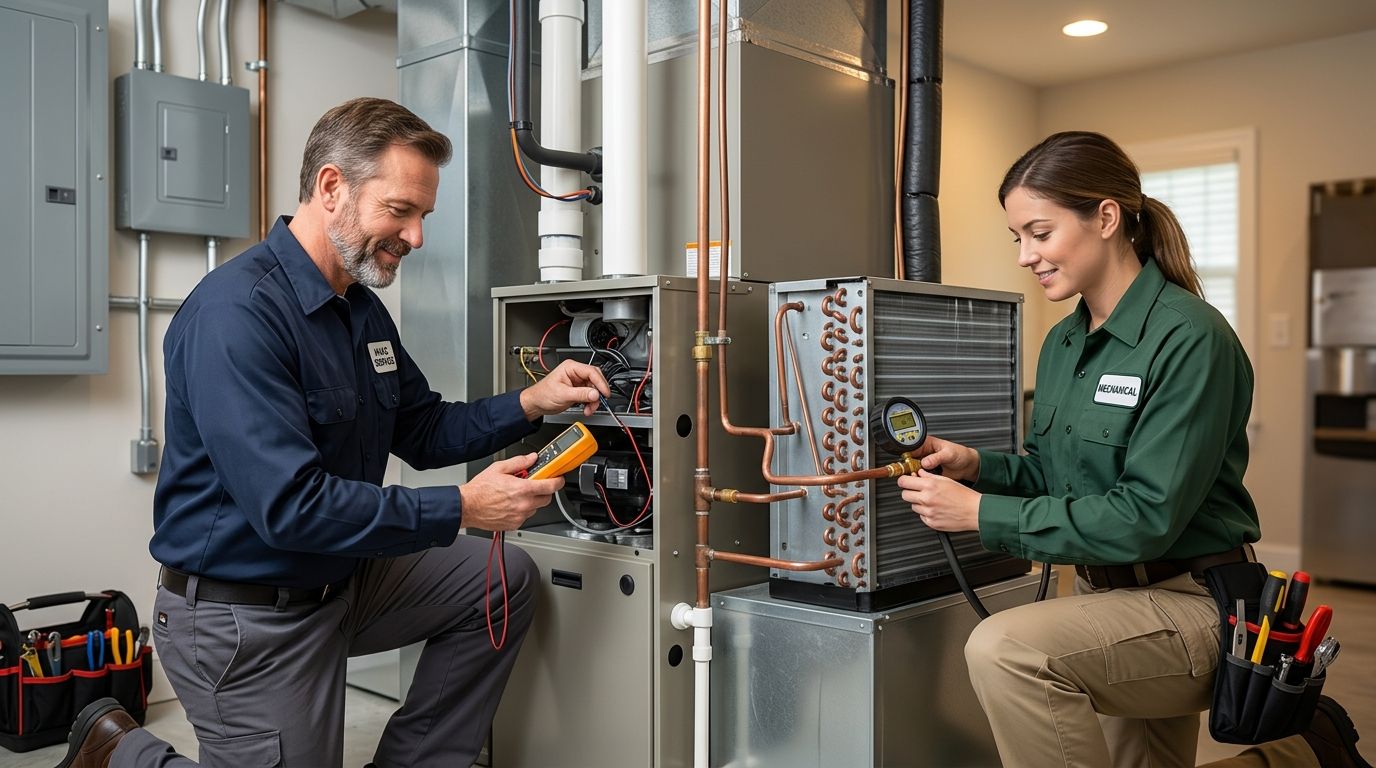

Property management HVAC service contracts are portfolio-wide maintenance and repair agreements that cover every heating and cooling unit across your managed properties under one negotiated arrangement, with the aim of cutting emergency calls and locking in predictable annual costs. A single-family homeowner needs one furnace serviced twice a year. A property manager overseeing a dozen rentals, a small apartment complex, or several lake houses around Camdenton and Osage Beach needs a contract that scales, tracks equipment by unit, and gets a technician on-site fast when a tenant calls at 9pm in July.
- HVAC service contracts for property managers should bundle preventive maintenance, priority emergency response, and per-unit equipment tracking into one agreement.
- West Heating & Cooling structures contracts around response-time guarantees, not just annual tune-ups, for multi-property portfolios.
- Skip contracts that don't specify inspection frequency, filter change intervals, and after-hours coverage in writing.
- Property managers who consolidate vendors typically cut coordination time more than they cut per-visit cost.
Why HVAC service contracts matter for property management companies
A missed AC repair in a single home is an inconvenience. A missed repair in a managed rental during a Missouri summer is a habitability complaint, a lease dispute, or a vacancy. Property managers carry that liability across every unit they oversee, which changes what a contract needs to do.
The difference between a homeowner maintenance plan and a property management contract comes down to three things: scale, documentation, and response time. You need one vendor relationship instead of ten, a paper trail for every inspection tied to a specific address, and a contract that spells out how fast a technician shows up when a tenant is without heat or air. West Heating & Cooling builds contracts around those three requirements for property owners and managers across Camdenton, Osage Beach, Lake Ozark, Warsaw, and Lebanon.
A property management HVAC service contract that doesn't name a response-time window in writing isn't a contract — it's a hope.
Audit your current HVAC equipment inventory
Before you negotiate anything, know what you're covering. Most property managers underestimate how much equipment age variance exists across a portfolio until they list it out.
- Pull the age and brand of every furnace, AC unit, and heat pump across your properties
- Flag units older than 12-15 years for likely near-term replacement conversations
- Note which units have had repeat repair calls in the past year
- Separate owner-occupied units from tenant-occupied units — service priorities differ
- Document current filter sizes and thermostat types per unit
Define your response-time requirements by property type
A vacant unit between tenants can wait. An occupied unit in August cannot. Set tiers before you shop for a vendor.
- Emergency (no heat/no cooling in occupied unit): same-day or next-business-day response
- Standard repair (unit functioning but degraded): 2-3 business day window
- Scheduled maintenance: seasonal, planned in advance around tenant notice requirements
- Vacant unit repairs: standard queue, no premium needed
Choose between preventive maintenance and full-service contracts
Maintenance-only plans cover tune-ups, filter checks, and inspections but bill repairs separately. Full-service contracts bundle maintenance and repair labor into one agreement, sometimes with parts coverage. Compare HVAC maintenance plans against full-service options before you sign anything — the right choice depends on your average equipment age across the portfolio.
- Newer portfolios (under 10 years average equipment age): maintenance-only often makes sense
- Mixed-age portfolios: full-service smooths out budget swings from older units failing
- High-turnover rentals: full-service reduces the paperwork burden per repair event
This is the point where a dedicated vendor relationship starts to pay off over calling around for one-off repairs. West Heating & Cooling handles both structures and will scope a contract around your actual equipment mix rather than a flat template.
Build 24/7 emergency coverage into the contract
After-hours coverage is the single biggest gap in cheap maintenance plans. Verify it explicitly.
- Confirm the contract states 24/7 availability, not just business-hours priority
- Ask what counts as an emergency dispatch vs a scheduled next-day visit
- Get the after-hours contact method in writing (dispatch line, not voicemail)
- Confirm emergency coverage applies to every property address, not just a flagship location
Set inspection and filter-change frequency per unit
Missouri's swing seasons put real strain on equipment running spring and fall shoulder loads. Two inspections a year is the baseline; some older units need more.
- Spring inspection ahead of cooling season
- Fall inspection ahead of heating season
- Filter changes scheduled around tenant turnover dates when access is easiest
- Extra mid-season check for units flagged during the equipment audit
Negotiate multi-property pricing and centralized reporting
One invoice, one point of contact, and one report per quarter beats juggling paperwork from three different repair shops. Ask any HVAC contractor bidding on your portfolio for a single monthly or quarterly summary broken out by address.
- Consolidated billing across all properties under management
- Per-property service history accessible on request
- A single account manager or dispatcher who knows your portfolio
- Renewal terms that let you add or drop properties without renegotiating from scratch
Review and renew the contract annually
Equipment ages, portfolios change, and a contract signed in 2024 won't fit a portfolio that's added five units by 2026. Revisit terms every 12 months.
- Re-audit equipment age and repair history before renewal
- Adjust response-time tiers if property mix has shifted
- Compare current pricing against HVAC systems ranked by price if replacement conversations are coming up
- Confirm the vendor still covers every active property address
Comparison table: contract options for property managers
| Option | Best for | Key limitation |
|---|---|---|
| Maintenance-only plan | Newer portfolios, low repair frequency | Repairs billed separately, budget less predictable |
| Full-service contract | Mixed-age portfolios with older units | Higher annual commitment than maintenance-only |
| Per-call, no contract | Very small portfolios (1-2 units) | No priority response, no rate lock, slowest during peak season |
| Home warranty coverage | Single-family rentals with owner-paid warranty | Often excludes commercial-grade or multi-unit equipment — check home warranty plans that cover HVAC for exclusions |
Verdict: a full-service contract with a named response-time guarantee is the right call for any portfolio of five or more units in 2026 — anything smaller can often get by on a strong maintenance plan with an emergency add-on.
Common mistakes property managers make with HVAC contracts
- Signing a contract with no response-time language. "Priority service" means nothing without a stated window in hours or business days.
- Treating every property the same. A vacant unit and an occupied unit in August don't need the same response tier, and pricing should reflect that.
- Skipping the equipment audit before negotiating. You can't negotiate fair pricing on a portfolio you haven't inventoried by age and brand.
- Ignoring after-hours coverage until the first emergency call at 11pm. By then you're negotiating from a weak position.
- Renewing on autopilot without re-auditing equipment. A contract that fit your portfolio in 2024 rarely fits it unchanged two years later.
Get a portfolio-wide HVAC quote
Free quote scoped to your property mix, unit count, and response-time needs.
FAQ
What's the best type of HVAC contract for property management companies in 2026?
A full-service contract with a named response-time guarantee and consolidated multi-property billing works best for portfolios of five or more units in 2026. Smaller portfolios can often manage with a strong maintenance plan plus an emergency-coverage add-on.
Is a maintenance-only plan better than a full-service contract for rentals?
Maintenance-only plans work better for newer portfolios with equipment under 10 years old and low repair frequency. Full-service contracts smooth out budget swings for mixed-age portfolios where older units are more likely to fail.
How often should rental HVAC units be inspected under a service contract?
Twice a year is the standard baseline — one inspection before cooling season, one before heating season. Units flagged during an equipment audit for age or repeat repairs often need a mid-season check added.
Do HVAC service contracts cover emergency after-hours calls?
Only if the contract explicitly states 24/7 coverage with a real dispatch line, not just business-hours priority. Confirm this in writing before signing, since it's the most common gap in low-cost maintenance plans.
Can one HVAC contract cover multiple properties under different addresses?
Yes, and it should. A multi-property contract with consolidated billing and a single point of contact is standard practice for portfolios in 2026 and eliminates juggling separate vendors per address.
How is a property management HVAC contract different from a home warranty?
A service contract is a direct agreement with an HVAC contractor covering maintenance and repair labor, often with faster response guarantees. A home warranty is third-party coverage that frequently excludes commercial-grade or multi-unit equipment, so check exclusions carefully.
Should property managers renegotiate HVAC contracts every year?
Yes. Equipment ages and portfolios change, so a contract should be re-audited annually against current unit count, equipment age, and repair history rather than renewed automatically.
What should be in writing before signing an HVAC service contract?
Response-time windows by priority tier, inspection frequency, after-hours dispatch contact, and per-property billing terms all need to be explicit in the contract, not implied in a sales conversation.
One last thing
The portfolios that save the most money aren't the ones with the cheapest per-visit rate — they're the ones that caught aging equipment during an audit before it failed mid-tenancy. Run the equipment inventory step above before you call any vendor, even West Heating & Cooling. It's the single step that determines whether a service contract actually saves you money in 2026 or just adds another line item.